A rug can either settle a room or expose every compromise in it. When the proportions are wrong, the border clashes with the scheme or the colour sits slightly apart from the upholstery, even a beautifully furnished space can feel unfinished. That is why custom rugs for interior designers should be specified as part of the room, not selected as an afterthought from a standard size rack.
For a designer, bespoke manufacture creates useful freedom: freedom to set the exact footprint around furniture, continue a carefully developed colour story and choose a finish that belongs to the project. It also calls for a supplier that understands the practical side of the specification, from measuring and material choice through to the final fitting.
Why standard rug sizes can compromise a scheme
Standard rugs are designed for broad retail appeal. They may work in a simple room, but they rarely account for the precise furniture plan, the architecture or the sightlines of a considered interior. A rug that is too small can make a seating arrangement appear disconnected. One that is too large can crowd a fireplace hearth, doorway or built-in joinery.
The issue is not only size. Stock colours tend to be led by seasonal demand, while a designer may need a particular softened green, a warm neutral that works with timber, or a dark edge that gives a pale floor definition. Settling for the nearest available shade can flatten the scheme rather than completing it.
A made-to-measure rug solves these points at source. It can be produced to sit beneath the front legs of a sofa and chairs, extend evenly beyond a dining table when the chairs are pulled out, or fill an awkward bay without looking improvised. The result is deliberate proportion rather than a visible concession to retail dimensions.
Specifying custom rugs for interior designers
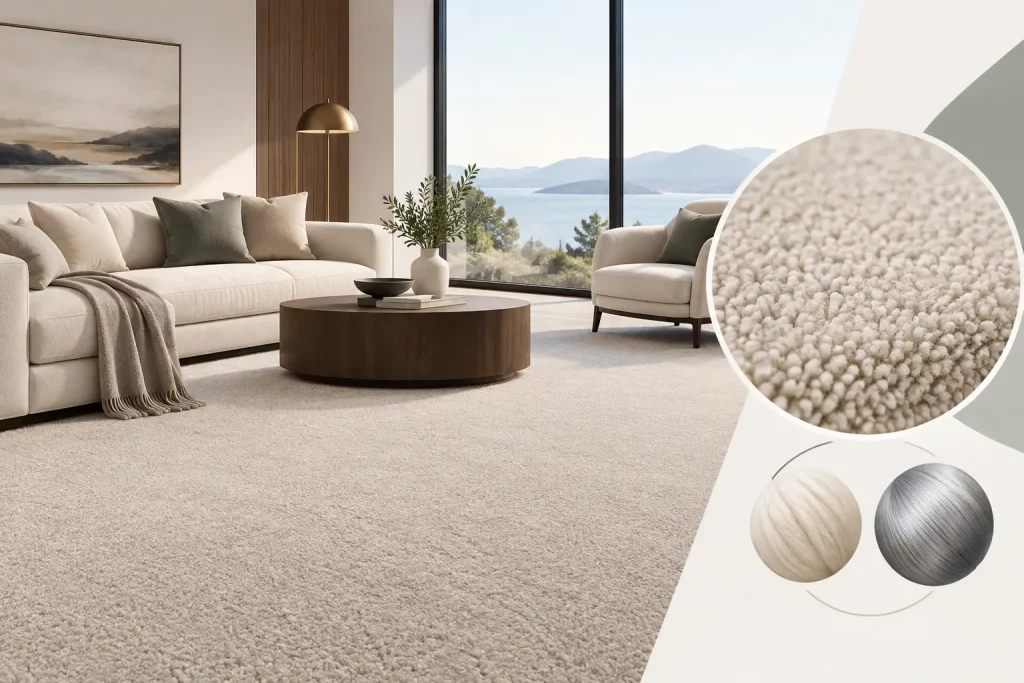
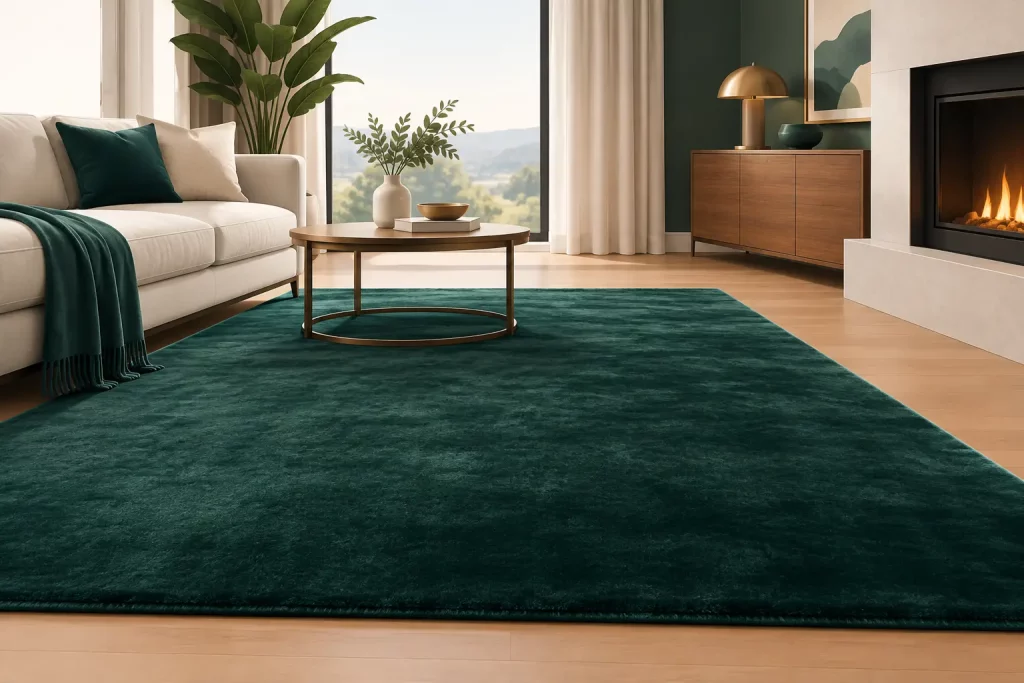
The strongest specifications begin with how the room will be used. A drawing room intended for quiet evening use may suit the softness and richness of a deep-pile velvet. A busy family room, hall or dining space may benefit from the resilience of a deep-pile twist. Neither choice is automatically better. The right pile depends on the desired look, the level of foot traffic and how the client lives in the space.
At Colourmatched Custom Carpets, rugs can be made in 100% pure new wool deep-pile velvet or 80/20 wool-nylon deep-pile twist. Pure wool offers natural warmth, depth and a luxurious feel underfoot. The wool-nylon option retains the character of wool while adding practical durability for more demanding areas. Both give a far more substantial result than a lightweight ready-made rug.
Start with the furniture plan
Measurements should follow the approved layout, not an empty room. In a seating area, decide whether the rug will sit fully beneath the furniture or support only the front legs. Both approaches can work, but consistency matters. A small rug floating in the centre with no connection to the seating usually makes a generous room feel meaner than it is.
For dining rooms, allow enough room for chairs to remain on the rug when pulled back. In bedrooms, consider where bare feet land in the morning, as well as the view from the door. A long bedside run may be appropriate in a narrow room, while a large rug placed beneath the lower two-thirds of the bed can bring balance to a wider scheme.
A professional survey is particularly valuable where walls are not square, hearths project into the room or furniture will be made to order. It removes guesswork before manufacture begins and ensures the finished rug suits the room it is intended for.
Treat colour as a material decision
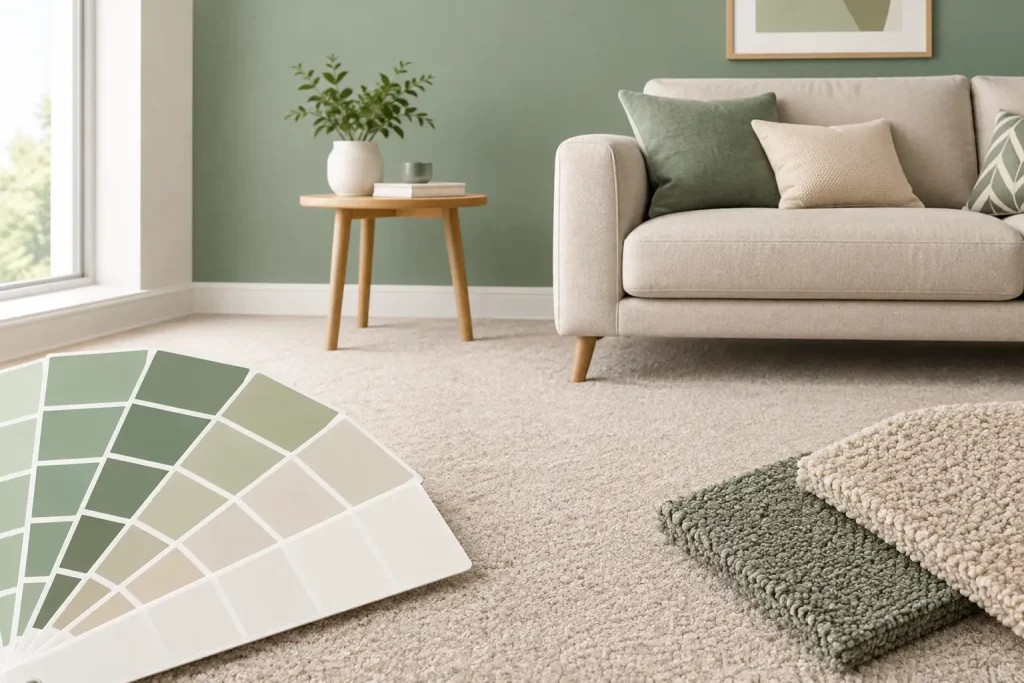
Colour matching is where bespoke rugs become especially valuable to designers. Rather than making a rug compete with curtains, paint, upholstery and joinery, the shade can be selected to support them. With more than 3,000 colour options available, it is possible to work towards a near tonal match, a quiet contrast or a purposeful architectural edge.
A plain rug in the same colour family as the walls can make a room feel expansive and calm. A darker tone can anchor pale furniture and define the centre of the room. In layered interiors, an understated rug often does more for the finished effect than a highly decorative one because it lets the textures, artwork and furniture carry the visual interest.
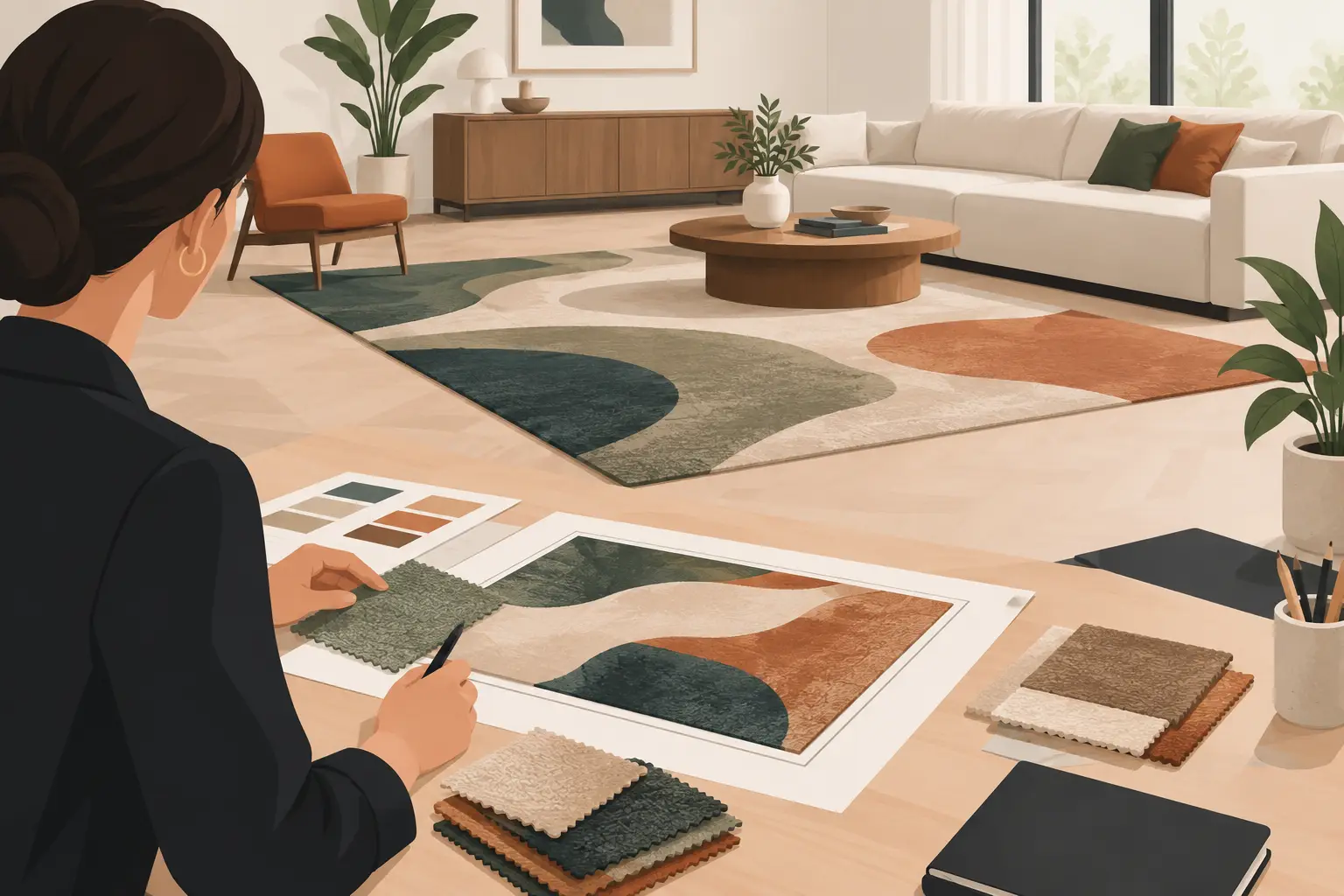
Samples remain essential. Colour shifts between daylight, evening lamp light and neighbouring finishes. Inspecting samples in the client’s room, beside fabric swatches and timber samples, is a straightforward way to avoid a costly mismatch. It is also the best moment to assess whether velvet or twist gives the intended depth and texture.
Use borders with purpose
A bordered rug can introduce structure without relying on a pattern. The border may frame a seating area, echo a painted detail in the room or create a confident break between the central field and the surrounding floor. It can be narrow and discreet, or broad enough to become a defining design feature.
The key is restraint. A border should relate to something in the interior, such as a curtain trim, a joinery colour or a metal finish. If it introduces an unrelated shade merely because it is available, it can look decorative rather than considered. A plain rug is often the stronger choice where the room already has patterned fabrics or complex architectural detailing.
The advantage of made-to-plan manufacture
For larger projects, width matters as much as length. Conventional carpet widths can force joins into a floor or lead to unnecessary waste when material is cut from a roll. Wide-width manufacture, available up to 35 feet wide, gives designers the scope to create substantial rugs and room-scale flooring without an obvious seam interrupting the surface.
This is especially useful in open-plan rooms, principal bedrooms and large reception spaces where a join would be visible in the light or run across a key furniture arrangement. A continuous expanse of carpet or a generously proportioned rug has a quieter, more refined appearance.
Made-to-plan production also means the material is manufactured for the required dimensions rather than bought off the roll and heavily trimmed. That reduces avoidable waste and gives greater control over the final result. For clients investing in premium interiors, it is a sensible balance of luxury, precision and value.
Keep the service as considered as the specification
A bespoke rug should not become a chain of separate responsibilities for the designer to manage. Measuring, quotations, sampling, manufacture, underlay and fitting all affect the finished result. When those stages are handled by different parties, small errors can become expensive delays and there is rarely one clear point of accountability.
A full service from survey to installation is therefore more than a convenience. It protects the specification. Exact site measurements inform the manufacturing plan; the selected material and colour are confirmed before production; then professional fitting ensures the rug lies correctly and feels properly supported underfoot.
Transparent pricing matters here too. Underlay and fitting can be treated as extras elsewhere, making early comparisons misleading. Stated square-metre prices that include these essential elements allow a designer and client to make decisions with a clearer view of the real project cost. Factory-direct supply also removes the unnecessary margin of a middleman while keeping control of the order with the manufacturer.
A better finish for the client and the room
Clients may first notice the softness of the wool and the visual calm of a perfectly sized rug. What they continue to appreciate is the sense that the room works. Doors clear the edge, chairs move comfortably, colours remain coherent and the floor feels as carefully resolved as the furniture above it.
For interior designers, that confidence comes from specifying the rug early, requesting samples and letting accurate measurements guide the final dimensions. A bespoke rug does not need to demand attention to prove its value. When it is made precisely for the space, it gives every other element in the room a better place to belong.