A floor can make an otherwise well-planned room look unfinished. The wrong undertone in a carpet, a visible join across a wide bedroom or a border that fights with the curtains can interrupt the whole scheme. This interior designer flooring guide sets out the decisions worth making before a carpet is ordered, so the finished room feels considered from wall to wall.
Start with the room, not the carpet sample
Flooring is often selected late in a renovation, once paint, furniture and fabrics have already been chosen. That can work in a simple scheme, but it limits your options. Carpet occupies a large visual area and changes how every surrounding colour is perceived. A pale grey wall may look crisp beside one neutral carpet and faintly lavender beside another.
Begin with the room’s fixed elements: natural light, window direction, joinery, fireplace stone, existing timber and the fabrics that are not changing. Then consider how the room will be used. A formal drawing room can accommodate a deeper pile and a more refined shade than a busy family landing, while a principal bedroom may call for softness and warmth underfoot above all else.
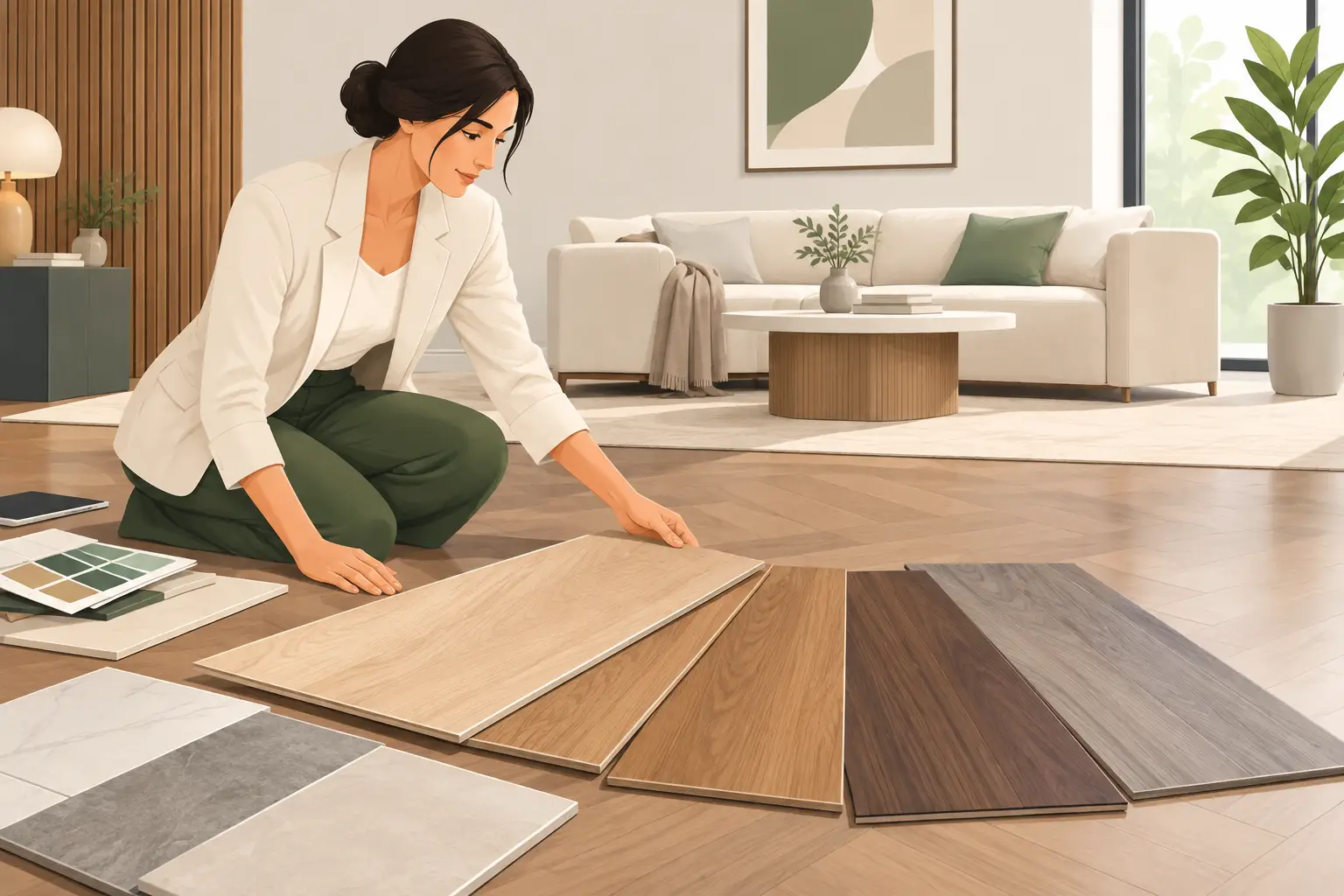
Ask for samples large enough to judge properly. A small cutting is useful for narrowing down a colour family, but it cannot show the full effect of pile direction, texture or daylight. Place samples on the floor, next to skirting and upholstery, and look at them in morning light, after dark and under the room’s usual lamps. Colour matching should be judged in the space where the carpet will live, not under showroom lighting.
Choose the fibre for performance as well as appearance
For premium residential interiors, wool remains the reference point. It has natural resilience, excellent warmth and a richness of colour that supports both classic and contemporary schemes. It also has a naturally luxurious feel that synthetic alternatives rarely reproduce.
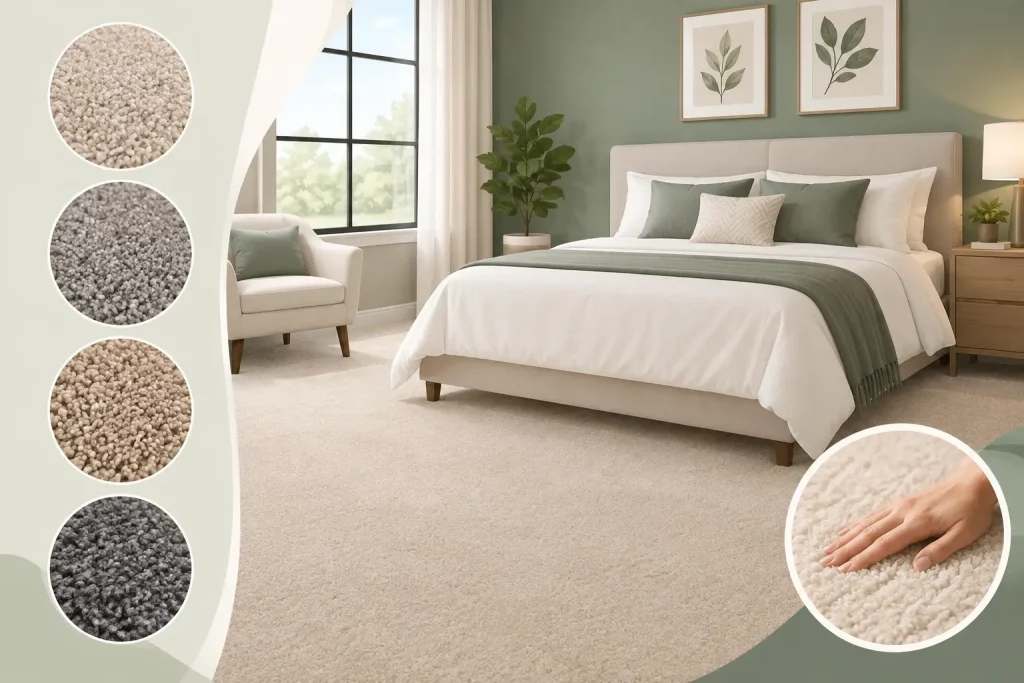
A 100% pure new wool deep-pile velvet carpet is particularly suited to bedrooms, dressing rooms, drawing rooms and other spaces where the emphasis is on a refined, soft finish. Velvet pile has a smooth, dense surface that gives colour depth and an elegant, almost tailored appearance. It rewards careful selection and professional fitting, because changes in pile direction can alter how light falls across the floor.
For areas with greater day-to-day wear, an 80/20 wool-nylon deep-pile twist is often the practical choice. The wool retains the comfort and character expected in a quality carpet, while the nylon content adds durability and helps the pile recover in hardworking spaces. Hallways, stairs, family rooms and upper landings are all likely candidates.
There is no single correct answer. A wool velvet may be perfect for a quiet bedroom but less suitable for a hall shared by children, pets and muddy shoes. Good specification is about matching the material to the room rather than using one carpet throughout simply because it is convenient.
Build the colour into the whole scheme
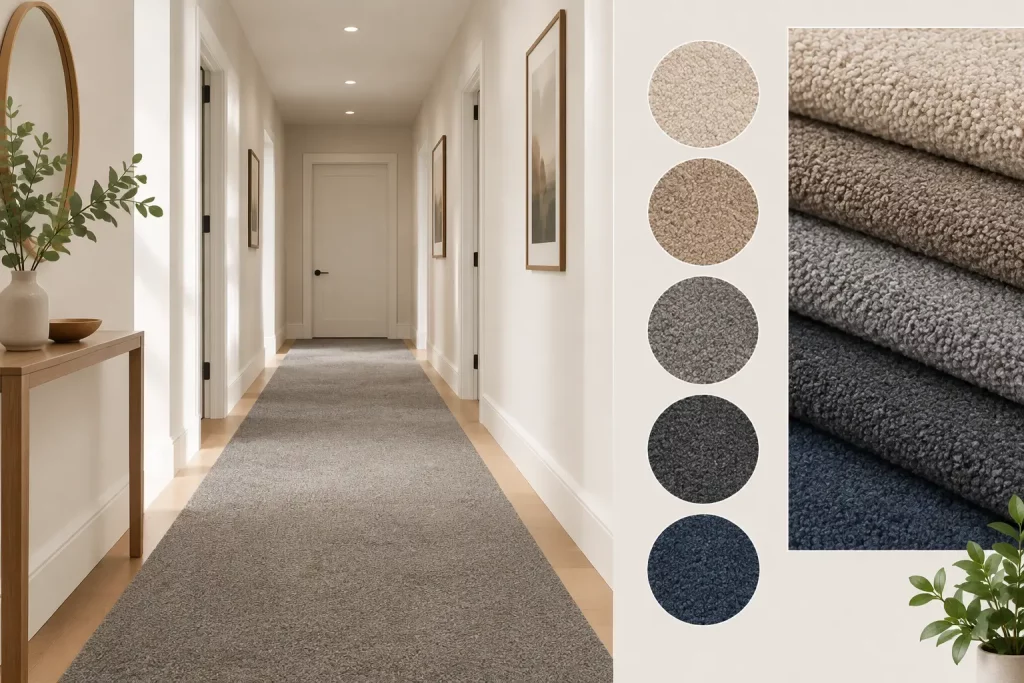
Neutral does not mean colourless. Warm stone, oatmeal, mushroom, putty, soft taupe and muted green-grey can all read as neutral, yet each will pull a room in a different direction. The key is to identify whether the wider scheme is warm, cool or deliberately balanced before settling on a carpet shade.
In north-facing rooms, a cool grey carpet can feel noticeably bluer and flatter than it did in a sample book. A warmer neutral often gives the room more life. South-facing rooms can carry cooler colours well, although strong sunshine may make very pale carpets appear brighter than expected. In either case, the aim is not to match every surface exactly. A room needs gentle contrast to feel layered.
For interior designers, a bespoke colour service is particularly valuable when the carpet needs to sit between two existing tones: perhaps the warmth of an antique timber chest and the cooler ground of a linen fabric. With more than 3,000 colour options available, it is possible to specify a colour that supports the design rather than compromising it for the nearest stock shade.
A darker carpet can add definition to a large, light room and is generally more forgiving of everyday marks. A lighter carpet can make compact rooms feel more open, but it needs a realistic conversation about use. Luxury should suit the household, not create a floor everyone is afraid to walk on.
Use width and proportion to avoid visible joins
One of the clearest differences between an ordinary installation and a tailored floor is the treatment of width. Standard carpet rolls can force joins into rooms that were never designed to have them. In an open bedroom, a long reception room or a wide landing, the resulting seam can interrupt the colour and pile, particularly in a velvet finish.
A bespoke carpet made to the room plan allows the dimensions to be considered from the outset. Manufacture in widths of up to 35 feet can remove the need for visible joins across many larger spaces, producing a cleaner, more continuous floor. It also avoids the awkward design decisions that arise when a standard roll width dictates the layout.
This matters just as much on stairs and landings. A landing carpet should relate naturally to the stair run, with pile direction, edges and any border planned as part of one composition. It should not look like an offcut placed beside a separate runner.
Made-to-plan manufacture can also reduce unnecessary material waste. Buying from a roll often means paying for more carpet than the room genuinely requires, particularly where there are bays, alcoves or irregular corners. A proper survey clarifies what is needed before production begins.
Specify borders as an architectural detail
A border can give a plain carpet the same sense of intention as a well-chosen trim on curtains or upholstery. It frames the room, sets out circulation space and can make a generous floor feel more proportioned. In a traditional interior, a contrast border can complement panelling, painted joinery or a fireplace surround. In a contemporary setting, a narrow tonal border may offer definition without looking decorative.
The width should be decided in relation to the room, not selected as a default. A narrow border can look sharp in a modest bedroom, while a larger reception room may need more presence at its perimeter. Borders are also useful where furniture is arranged centrally, creating a visual boundary around a seating area.
Consider the practical detail at doorways and transitions. A border that is beautifully balanced on a drawing can become visually awkward if it terminates too close to a threshold. This is where an experienced survey and a made-to-measure plan are worth far more than a quick measurement taken online.
Do not treat underlay and fitting as afterthoughts
The quality beneath the carpet affects the quality you feel every day. The correct underlay improves comfort, supports the pile and helps the finished carpet sit properly. It should be selected for the floor beneath and the demands of the room, rather than viewed as an optional extra to reduce at the end of the quotation.
Professional fitting is equally important, especially with deep-pile wool carpet, borders and larger uninterrupted widths. Accurate cutting around hearths, bays and fitted furniture takes care. On stairs, the alignment of the pile and the consistency of the finish are immediately visible. A premium carpet can only look as good as the installation allows.
For this reason, a single service that includes measurement, design advice, manufacture, underlay and fitting provides real reassurance. There is one accountable team from first discussion to final fitting, with fewer opportunities for dimensions or specifications to be lost between suppliers. Colourmatched Custom Carpets includes underlay and fitting in its stated square-metre prices, helping clients compare like with like rather than discovering additional costs later.
A practical specification process for designers and homeowners
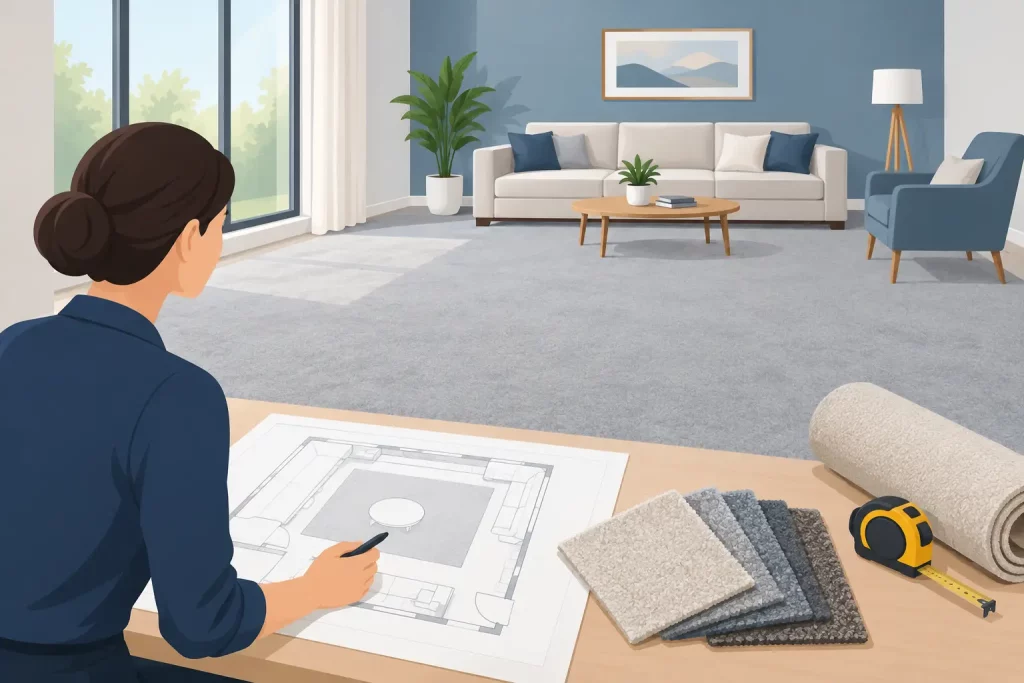
The most successful flooring projects usually follow a straightforward sequence. First, establish the room plan and take precise measurements. Next, review samples against the actual furnishings, finishes and light. Once the colour family and fibre are agreed, settle the pile type, carpet direction, width and any border detail before manufacture is authorised.
A no-obligation quotation should make clear what is included. Check whether the price covers survey, underlay, grippers, fitting, finishing at thresholds and removal of waste where required. Factory-direct pricing is valuable, but only when the scope is transparent and the finished standard is not being reduced to achieve it.
Allow sufficient time for this process. Bespoke carpet is not an off-the-shelf purchase, and it should not be rushed because decorating dates have been left too tight. The advantage is control: the colour, dimensions and finish are chosen for your room rather than adapted from a retailer’s stock.
A well-specified carpet does more than cover a floor. It quietens a room, softens the light, brings separate furnishings together and gives the interior a sense of permanence. Take the samples home, test the colours honestly and let the proportions of the room lead the design. The result should feel effortless, even though every detail has been carefully considered.