A hallway carpet has a demanding job. It is the first surface guests see, the route used most often by family life, and the place where outdoor shoes, umbrellas and school bags tend to arrive. The best carpet colours for hallways therefore need to do more than complement the paintwork: they must make the entrance feel considered while staying smart through daily use.
A successful choice usually sits between two extremes. Very pale carpet can look beautiful in a low-traffic entrance with a disciplined shoe-off routine, while very dark carpet can make a narrow or poorly lit hall feel enclosed. For many homes, the most practical and luxurious answer is a mid-tone wool carpet with enough depth and variation to soften everyday marks.
Start with the light, not just the wall colour
Hallways are often short on natural light, particularly in Victorian terraces, period houses with internal halls and homes where the front door opens directly into a central passage. Before selecting a carpet shade, look at the space at different times of day. A colour that feels warm and balanced in a sample book may read cooler, darker or more muted once it is surrounded by your own walls and joinery.
Soft stone, warm greige, mushroom and putty are dependable choices for halls that need brightness without the maintenance demands of cream. They reflect enough light to open up the space, yet their warmer undertones are more forgiving than a pale grey. These colours work particularly well with natural oak, off-white painted woodwork and traditional brass or black ironmongery.
If your hallway has generous daylight, a stronger shade can create a more confident entrance. Deep taupe, olive, slate blue and charcoal bring structure and a sense of arrival, especially in larger properties with high ceilings. The key is balance. Dark carpet looks refined against lighter walls, but can become visually heavy if paired with dark paint, limited lighting and dark timber all at once.
The best carpet colours for hallways with heavy traffic
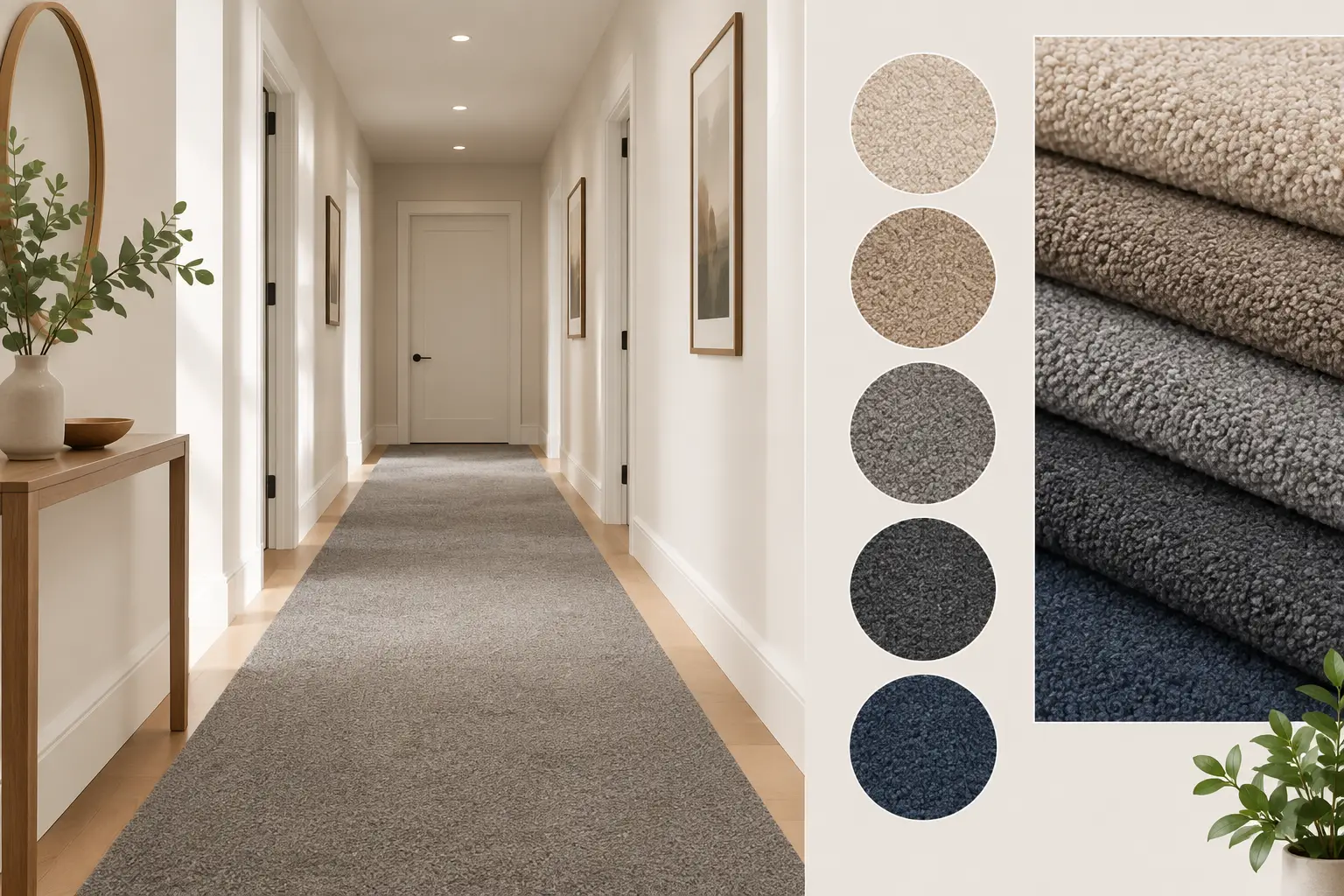
A busy family hallway benefits from colour that conceals the minor evidence of real life rather than fighting it. Mid-to-dark neutral shades are generally the safest choice, but plain does not have to mean flat or uninspiring. A carefully selected heathered tone, subtle fleck or deep-pile twist can make soil and footprints less apparent while still delivering a tailored, luxurious finish.
Consider colours such as mid-grey, taupe, pebble, flax, olive-grey and muted brown. These shades have enough visual weight to cope with repeated use, but do not dominate the room. They are also easier to live with if the hall connects to a kitchen, utility room or entrance used by children and pets.
Charcoal is a popular option, particularly for contemporary interiors, although it deserves a little caution. It can disguise darker marks well but may show pale dust, pet hair and lint. Similarly, an almost-black carpet can look striking in a grand hall yet is rarely the best answer for a compact entrance. Requesting a sample and placing it on the floor for several days gives a much more reliable view than judging it under showroom lighting.
Why pure white and very pale cream need careful planning
There is no rule against an ivory or cream hallway carpet. In the right setting, it gives a calm, hotel-like impression and can make a period hall feel wonderfully airy. It is best suited to lower-traffic spaces, homes with a separate boot room, or projects where the carpet is protected by a well-positioned entrance mat and regular professional care.
For an active household, a warmer oatmeal, biscuit or pale stone will provide a similar softness with greater practicality. The difference may look subtle on a small sample, but it is significant once the carpet is fitted from front door to staircase.
Choose an undertone that belongs with the rest of the house
The colour under the colour matters. A grey with a blue undertone can feel crisp and modern, but it may clash with creamy walls, honey-toned wood and warm lighting. A taupe or greige carries more brown or beige beneath the surface, making it easier to combine with traditional timber, warm white paint and aged brass.
For a coherent scheme, take cues from the rooms visible from the hallway. If a sitting room has olive velvet, walnut furniture or earthy artwork, a muted olive-grey or warm neutral hall carpet can create a natural transition. If the interior is more contemporary, with black-framed doors and cool white walls, a graphite, silver-grey or blue-grey carpet may be more appropriate.
This does not mean every room should use the same shade. A hallway can act as the quiet connecting space between more individual rooms. What matters is that the carpet shares an undertone or depth with the wider scheme, rather than appearing as an isolated choice.
Borders create definition without making the hall darker
A border is one of the most effective ways to give a plain hallway carpet a bespoke finish. It can frame a central field of colour, echo painted woodwork, or introduce a darker edge where the carpet meets skirting and walls. In long hallways, a border also helps define the proportions of the space and gives the floor a more deliberate, made-to-plan appearance.
A darker border around a lighter centre is a classic choice. For example, stone carpet with a taupe, charcoal or navy border provides contrast while keeping the middle of the hall open and light. It is particularly useful where a pale main colour is desired but a little extra protection around the perimeter is sensible.
The reverse can work equally well in a larger, darker hall: a deep graphite or olive field with a fine lighter border can lift the floor without reducing its richness. Border width matters. A narrow, tailored edge usually feels elegant in a compact passage, while a wider border has more presence in a generous entrance hall or landing.
Wool carpet is a practical luxury underfoot
Colour selection should never be separated from fibre and construction. Hallways need a carpet that feels inviting but also recovers well from traffic. Quality wool is naturally resilient, has an attractive depth of colour and brings a warmth underfoot that hard flooring cannot replicate.
For a more formal entrance, 100% pure new wool deep-pile velvet gives a dense, luxurious appearance and a beautifully even field of colour. It is ideal where the visual finish is paramount and the hallway is part of a carefully designed interior. An 80/20 wool-nylon deep-pile twist offers excellent durability for busier routes, combining wool’s natural character with added resilience from nylon.
Underlay is just as important as the carpet itself. The right underlay improves comfort, supports the pile and helps the finished floor feel substantial rather than thin. It also allows the carpet to perform as intended under frequent footfall.
Think about stairs, landings and visible joins
A hallway seldom stands alone. It often leads to a staircase, landing or adjoining reception rooms, so the chosen carpet needs to work across the full route. Continuing one colour through hall, stairs and landing gives a calm, expansive effect. Using a border on the stairs can add a tailored runner-style look while retaining the comfort and coverage of fitted carpet.
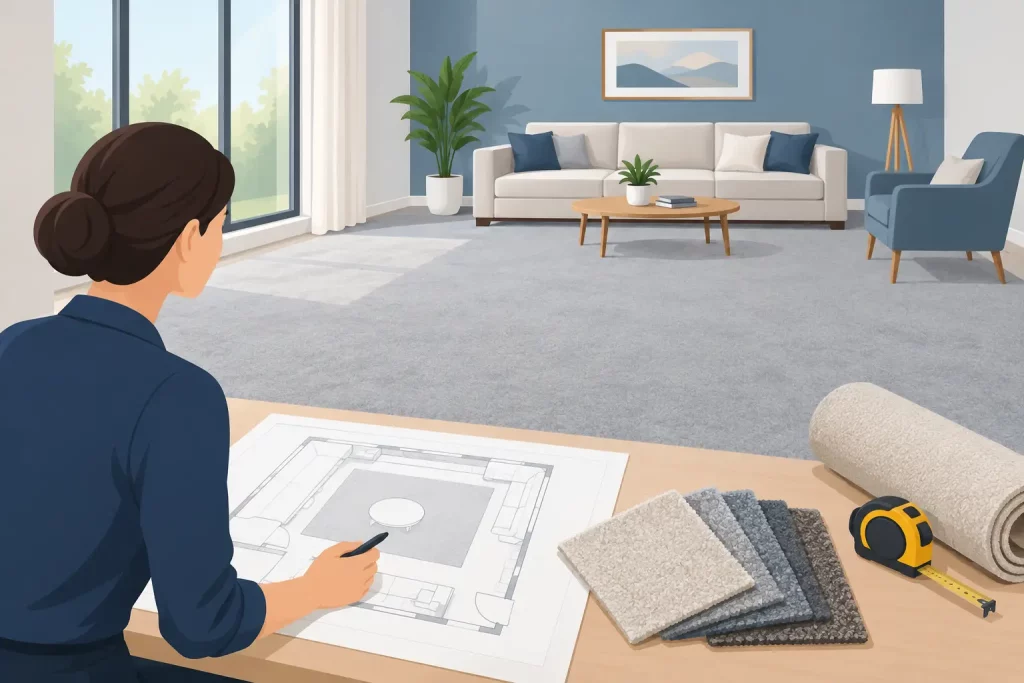
Where the area is wide or unusually shaped, standard roll widths can force visible joins or unnecessary waste. This is where custom manufacture makes a genuine difference. A carpet produced to the plan can be made to fit the space properly, including generous widths, awkward turns and border details, without compromising the visual continuity of the floor.
It is worth considering how the pile direction will run too. Light catches a carpet differently depending on the direction of the pile, which can alter the apparent shade along a long hallway. A professional survey and fitting plan will account for this before manufacturing begins.
See samples in your own hallway before deciding
The most reliable way to choose is to view substantial samples at home, next to wall paint, floor finishes, doors and furniture. Look at them in daylight, under evening lamps and with the front door open. Walk over them with shoes on if that reflects how the space will be used.
Do not be put off if a practical mid-tone initially seems less dramatic than a pale neutral. Once fitted wall to wall, carpet becomes a major surface. A calm, well-balanced colour often feels more expensive and more enduring than a fashionable shade chosen for a small swatch.
At Colourmatched Custom Carpets, our free samples, measuring service and no-obligation advice allow homeowners and designers to compare colours with confidence before a bespoke carpet is made and professionally fitted.
The right hallway carpet should make coming home feel better every day. Choose a colour that suits the light, the traffic and the character of the house, then give it the quality of material and fitting it deserves.