A generous room can make an undersized rug look like an afterthought. It is one of the most common problems in large sitting rooms, open-plan spaces and principal bedrooms: beautiful furniture, carefully chosen paintwork, then a rug that stops short of giving the scheme any real foundation. The best rugs for large rooms are not simply the largest available. They are proportioned to the layout, made from materials that suit the way the room is used, and finished in colours and details that belong to the interior.
For a room with substantial floor area, a bespoke rug is often the more considered choice. It allows the flooring to work around the furniture and architecture rather than forcing the room to fit a restricted retail size. The result is a calmer, more complete finish, with the comfort and visual weight a large space needs.
Why scale matters in large rooms
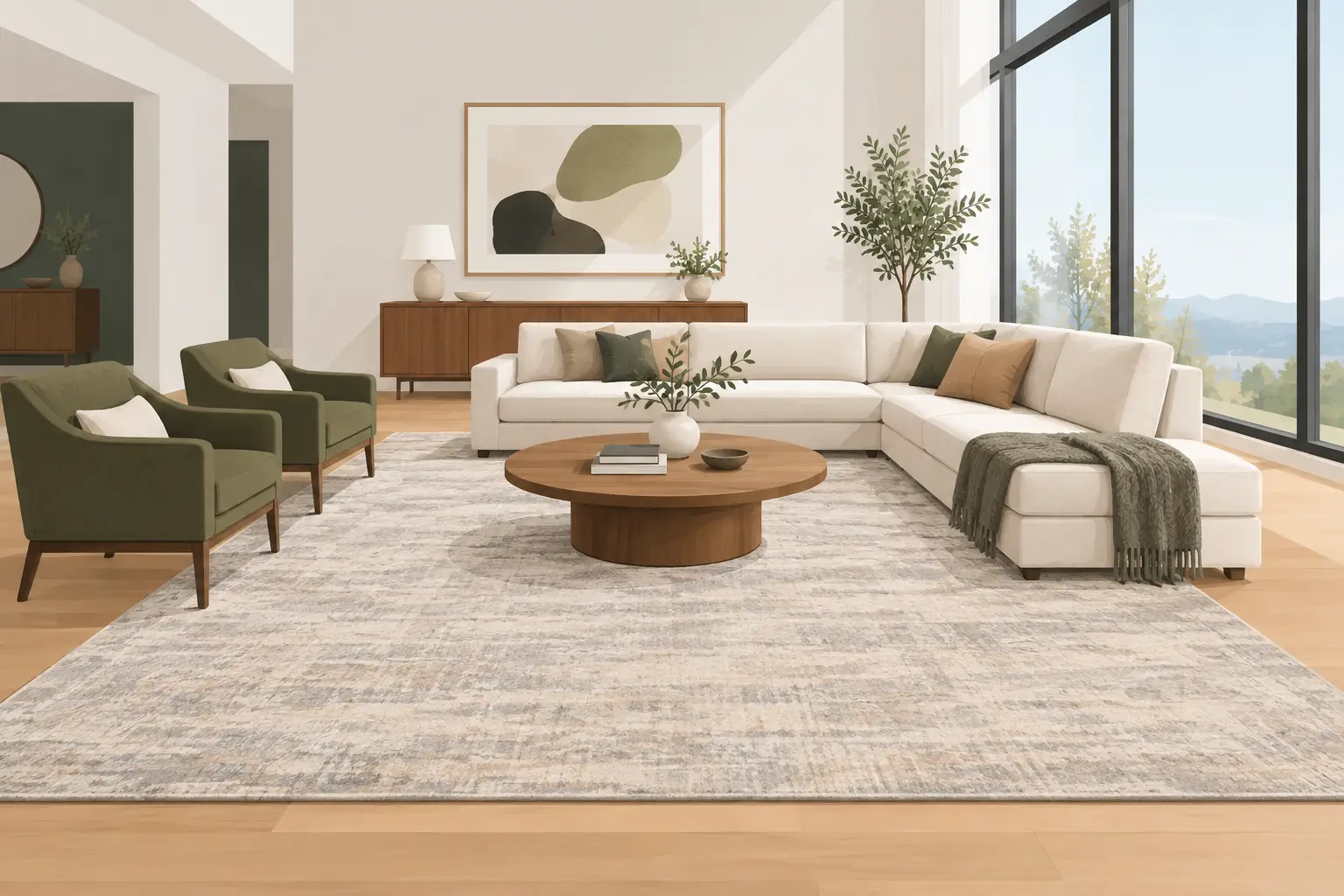
A rug should connect the elements within a room. In a formal drawing room, that usually means allowing all the principal seating to sit fully on the rug, or at the very least placing the front legs well inside its edge. A small central rug with sofas and chairs floating around it can make an otherwise generous room feel disjointed.
The same principle applies to dining rooms. The rug needs to extend beyond the dining table far enough for chairs to remain on it when pulled back. Allowing approximately 60 to 75 cm beyond the table on each side is a sensible starting point. Anything less can leave chair legs catching on the edge, which is neither elegant nor practical.
In a large bedroom, a rug should not be treated as a token patch at the foot of the bed. It may sit beneath the lower two-thirds of the bed and extend to both sides, giving a soft, warm landing underfoot. Alternatively, a room-filling fitted carpet with a tailored border can produce a particularly luxurious effect in an expansive bedroom suite.
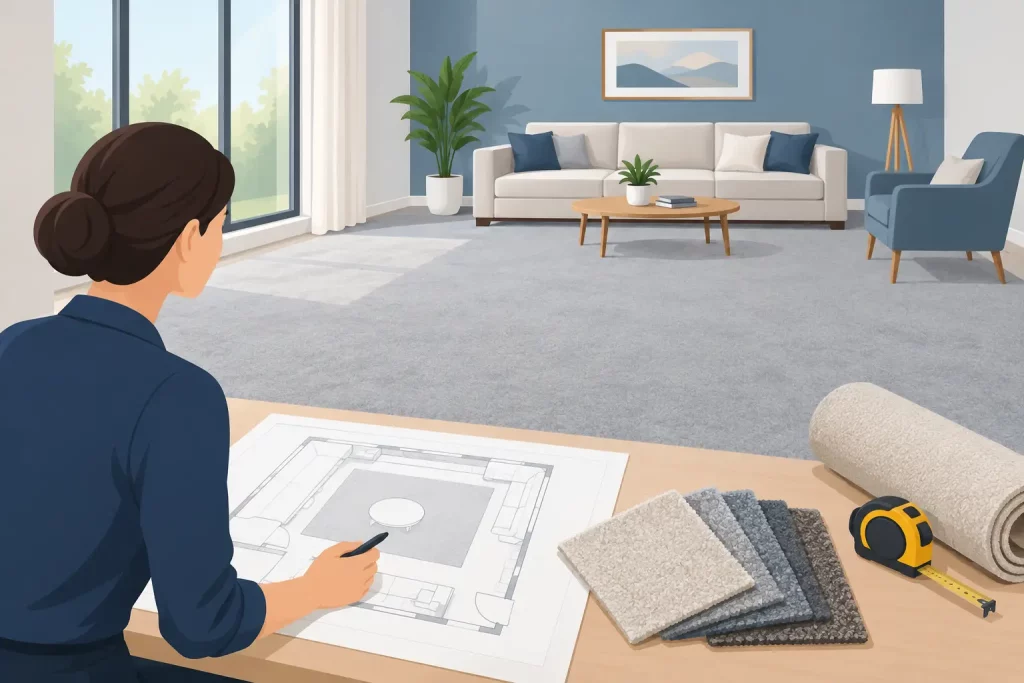
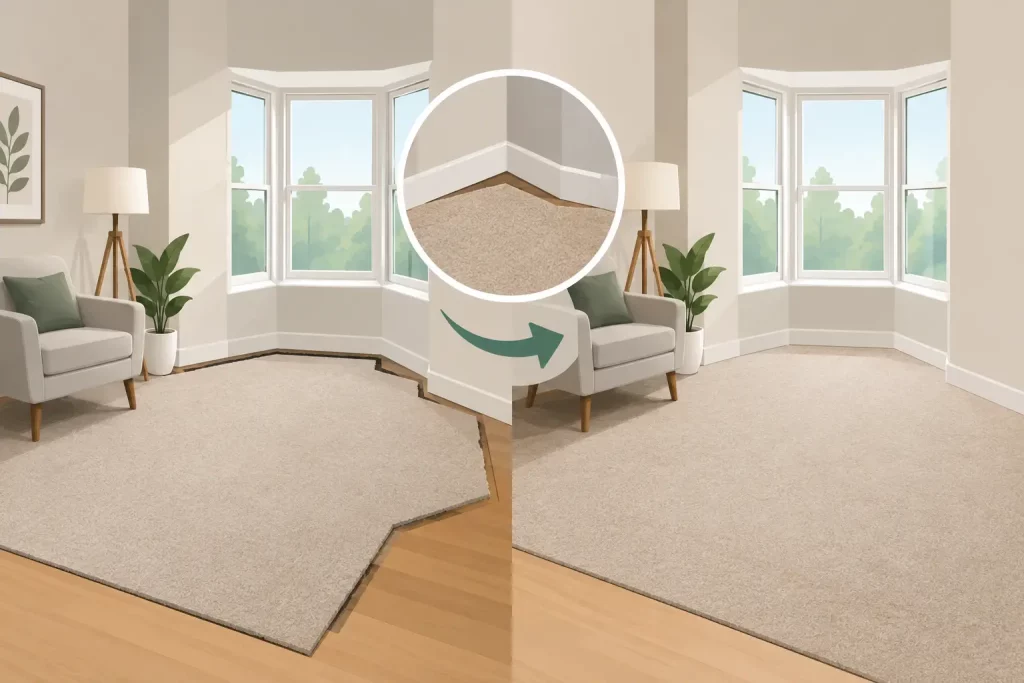
There is no single correct size because furniture placement, fireplaces, bay windows and door clearances all affect the plan. What matters is that the rug looks intentional. Measuring from the furniture outward, rather than choosing a nominal rug size first, produces far better results.
Best rugs for large rooms: choose material before pattern
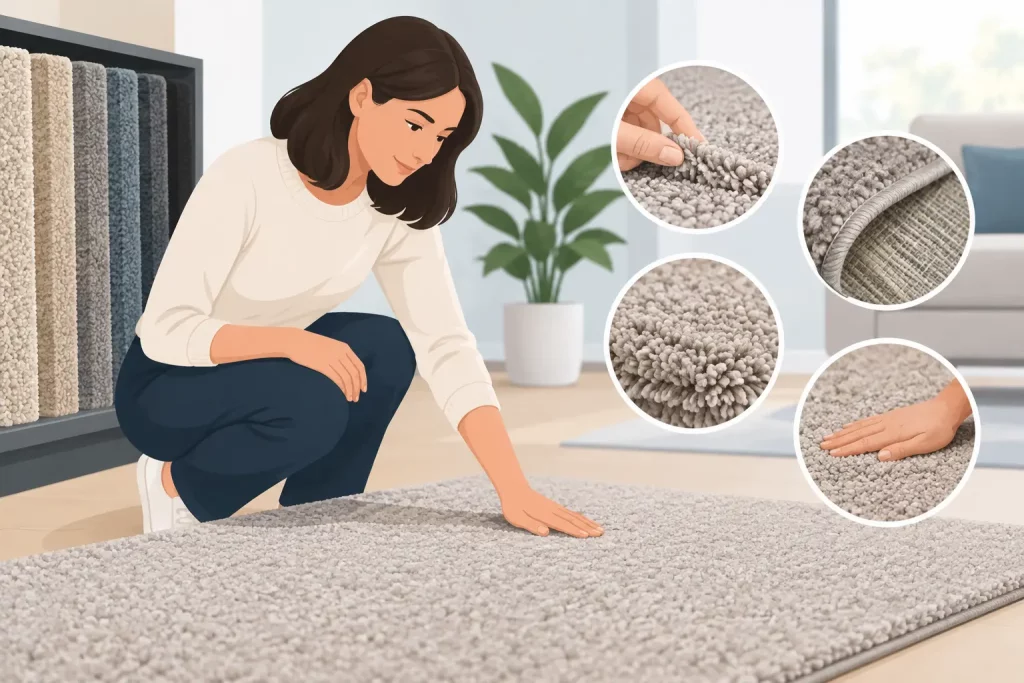
In large areas, material becomes especially noticeable. A rug covers more of the room, catches more light and receives more footfall, so its pile, texture and colour need to hold their character over time.
Pure new wool for luxury and depth
A 100% pure new wool deep-pile velvet rug offers a notably rich finish. Its dense surface has a smooth, refined appearance that suits formal reception rooms, quieter bedrooms and interiors where colour depth is a priority. Wool is naturally warm, resilient and comfortable underfoot, making it a fitting choice when the aim is pure luxury rather than a purely functional floor covering.
Velvet pile also responds beautifully to light, creating subtle movement across a large floor area. This is particularly effective in neutral schemes, where a single carefully selected shade can bring warmth and depth without introducing a busy pattern.
Wool-rich twist for active family spaces
For a large room used every day, an 80/20 wool-nylon deep-pile twist can be the more practical option. It retains the quality, warmth and natural appeal of wool while adding durability for family life, pets and regular entertaining. The textured finish is more forgiving than a velvet pile where the room sees consistent traffic.
This is not a compromise on appearance. A well-made wool-rich twist rug can still look substantial and luxurious, especially when it is cut precisely to the room plan and finished with a complementary border. The right choice depends on how the space is lived in, not just how it will look on the day of fitting.
Plan the rug around the furniture
A large rug should establish a clear zone. In an open-plan room, it can define the sitting area without the need for extra partitions or visual clutter. In a traditional reception room, it can echo the shape of the seating arrangement and leave a consistent margin of flooring around the perimeter.
A useful approach is to mark the proposed rug outline on the floor with low-tack tape. This quickly reveals whether the scale feels right and whether doors, hearths and circulation routes have been properly allowed for. It also helps distinguish between a rug intended to contain all furniture and one designed only to anchor a coffee table and front sofa legs.
Avoid leaving a narrow, awkward strip between the rug and a wall simply because a standard size dictates it. In a large room, those mismatched margins are surprisingly visible. Made-to-measure dimensions allow the rug to sit in the right place, with edges that relate neatly to the room rather than arriving at random points beneath furniture.
Use colour to unite, not overwhelm
A large rug carries considerable visual influence. A highly patterned or sharply contrasting design can be striking, but it will become one of the dominant features in the room. That may be exactly right in a restrained interior with plain upholstery and simple window treatments. In a layered scheme with artwork, fabrics and antique furniture already competing for attention, a plain wool rug in a carefully matched colour is often the stronger decision.
The benefit of bespoke production is not merely being able to choose from a swatch card. With more than 3,000 colour options available, it becomes possible to select a tone that relates properly to curtains, upholstery, wall colour or a favourite piece of artwork. A rug does not need to match everything exactly, but it should make the colours in the room feel more settled.
Lighter shades can make a large space feel airy, though they will show marks more readily in high-traffic settings. Deeper shades create a more grounded, intimate effect and can be more forgiving in a busy family room. Mid-tones are often the most versatile choice where practicality and a polished appearance must work together.
Borders give a large rug definition
A bordered rug is particularly effective in a room with generous proportions. The border frames the central field, adds definition and can subtly pick up a secondary colour from the interior. It also gives a plain rug a more architectural quality, which works well in period homes, formal dining rooms and spaces with detailed joinery.
The border does not have to be bold. A tonal variation can be enough to establish an edge, while a stronger contrast suits schemes that need a more deliberate graphic element. Width is important here. A very narrow border may disappear in a large room, whereas one that is too broad can reduce the impact of the central area. Its proportion should be designed in relation to the finished rug size.
For some contemporary interiors, no border is the right answer. A single-colour rug cut to exact dimensions can appear exceptionally clean and modern, particularly when it follows the lines of the architecture.
Avoid joins and unnecessary waste
Standard carpet widths often create difficulties when producing rugs for substantial rooms. If the required size exceeds the available width, joins may become unavoidable. Even when professionally made, a join can interrupt an otherwise uninterrupted field of colour and texture.
Wide-width manufacture changes what is possible. Rugs and carpets can be produced up to 35 feet wide, allowing many large areas to be completed without visible joins. This produces a more refined finished floor and is especially valuable where a broad, plain surface is central to the design.
Custom manufacture also avoids paying for excessive offcuts created by buying from a roll. A rug made to the plan uses material more intelligently, while giving the designer or homeowner control over the final dimensions, colour and border detail.
From sample to fitting
A large bespoke rug is worth seeing before it is commissioned. Samples should be viewed in the room itself, at different times of day, because daylight, lamp light and neighbouring colours all affect how wool appears. This is also the point to compare pile types and decide whether velvet or twist is best suited to the room’s use.
Accurate measurement is equally important. A professional survey removes uncertainty around room shape, furniture positions, thresholds and access for fitting. At Colourmatched Custom Carpets, the process can be managed from free measurement and design advice through to manufacture, underlay and professional fitting, with stated square-metre prices that include fitting rather than adding hidden extras later.
The right large rug should make the room feel finished, not merely furnished. Give it the space, material and precise dimensions it deserves, and it will bring the whole interior into proportion.