A bay window that refuses to line up with the walls, a sweeping staircase, a narrow landing or a large open-plan room can turn a straightforward flooring decision into a compromise. The right awkward room carpet solution is not to force a standard roll into an irregular space. It is to have carpet made around the room, its proportions and the finish you want to achieve.
For homeowners and interior designers, this approach avoids the familiar frustrations of unnecessary joins, excessive waste, limited colours and fitting costs that only emerge late in the process. A properly planned bespoke carpet gives the room a calmer, more intentional appearance, particularly where every architectural detail is on show.
Why standard carpet can struggle in awkward rooms
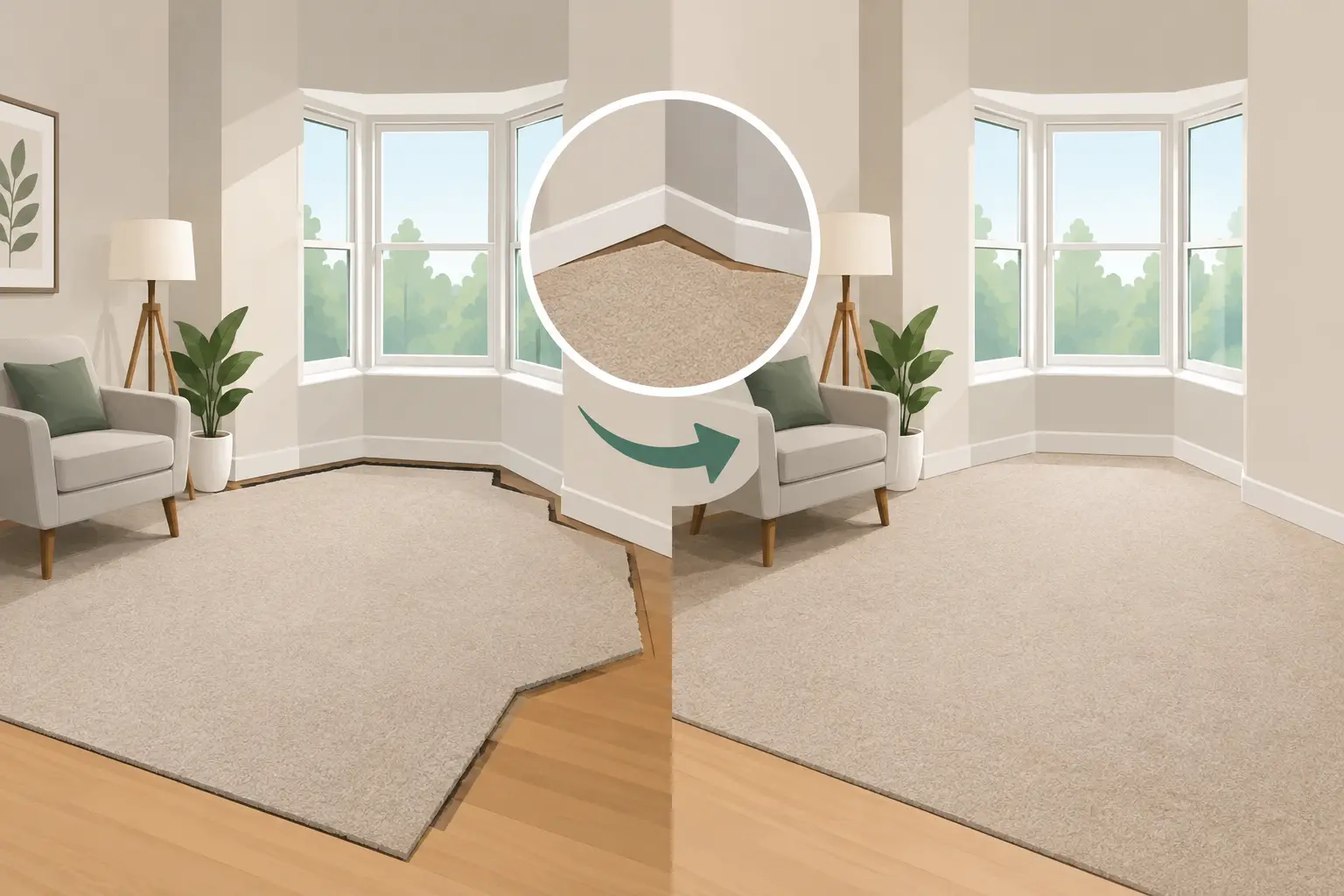
Most retail carpet is supplied in fixed widths. That works well for uncomplicated rectangular rooms, but it becomes restrictive when the room is especially wide, shaped around a chimney breast, interrupted by alcoves or arranged on several angles.
The fitter may need to introduce a join to make the dimensions work. Even when neatly completed, a join can catch the light differently and become more apparent across a large expanse of plain carpet. In a premium scheme, that interruption can detract from the clean, uninterrupted finish the rest of the room has been designed to achieve.
There is also the issue of waste. Buying from a fixed-width roll often means paying for carpet that will be cut away to accommodate projections, curves or changes in direction. Some waste is unavoidable in any flooring project, but made-to-plan manufacture can reduce it substantially. This is better value and a more considered use of quality material.
An awkward room carpet solution starts with the plan
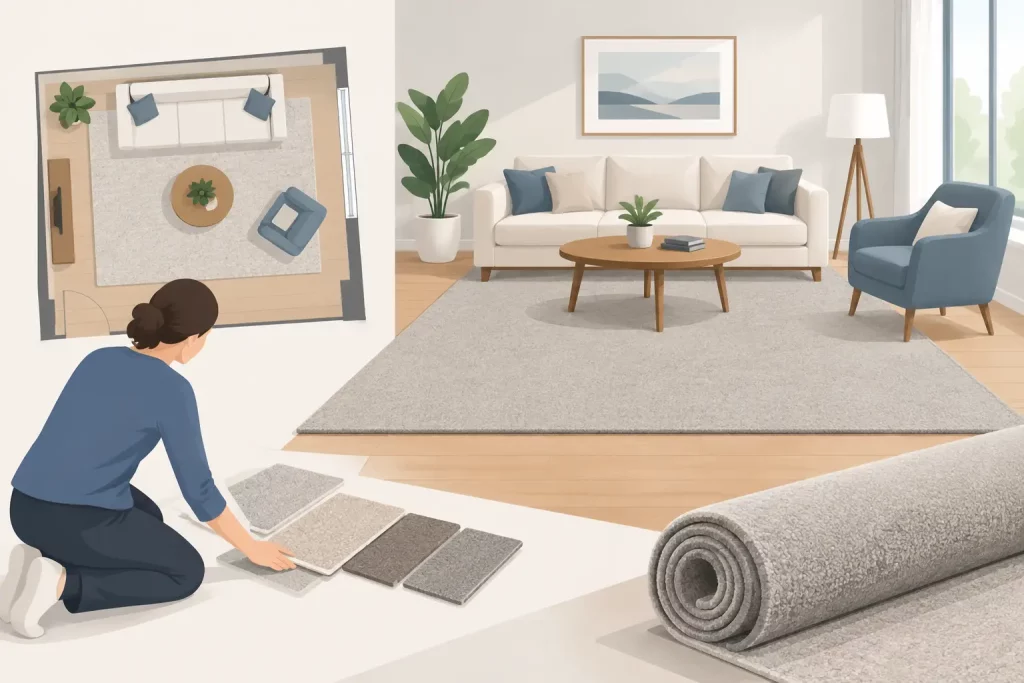
The most successful projects begin before a colour or pile is chosen. Accurate measuring establishes not only the room’s maximum length and width, but also its recesses, door positions, bay angles, hearths, threshold details and any areas where the floor level changes.
A professional survey is especially worthwhile where a room is wider than typical carpet widths, or where the carpet will continue through doorways, onto stairs or into adjoining spaces. It allows the carpet to be planned in the direction that looks best and performs well, rather than simply in the direction that wastes the least material.
At Colourmatched Custom Carpets, the process can include free measurement, design advice, a no-obligation quotation, manufacture and professional fitting. Having one specialist responsible from survey through to installation removes the uncertainty that can arise when carpet, measuring and fitting are arranged separately.
Think about sightlines, not just measurements
A room rarely looks awkward because of its floor plan alone. It looks awkward when visual lines are broken in the wrong places. In a long room, for example, the pile direction should be considered in relation to daylight from windows and the main entrance. In a room with a bay, the carpet should make the bay feel like part of the room rather than an add-on.
Where a join cannot be avoided, careful planning can place it away from the principal sightline. However, custom manufacture in widths up to 35 feet can often eliminate the need for a visible join altogether. This is particularly valuable in wide drawing rooms, principal bedrooms and open-plan spaces where a continuous surface creates a more refined result.
Choose a carpet that suits the room’s use
Bespoke dimensions solve the shape of the room, but the carpet construction determines how it feels to live with. The right choice depends on the traffic level, the desired appearance and the atmosphere of the scheme.
A 100% pure new wool deep-pile velvet carpet offers a smooth, luxurious surface with rich colour depth. It is a natural choice for bedrooms, dressing rooms and formal reception spaces where comfort and elegance take priority. The pile reflects light beautifully, which can make a carefully selected colour feel particularly sophisticated.
For busier family rooms, halls, stairs and areas that see regular use, an 80/20 wool-nylon deep-pile twist provides excellent practicality while retaining a substantial, luxurious feel underfoot. The wool gives warmth, texture and natural resilience, while the nylon component supports everyday durability.
Neither construction is automatically right for every room. A deep velvet can look exceptional in a peaceful principal suite, while a twist may be the more sensible choice for a heavily used hallway. Samples should be viewed in the actual room, at different times of day, before making a final decision.
Use colour to bring an irregular room together
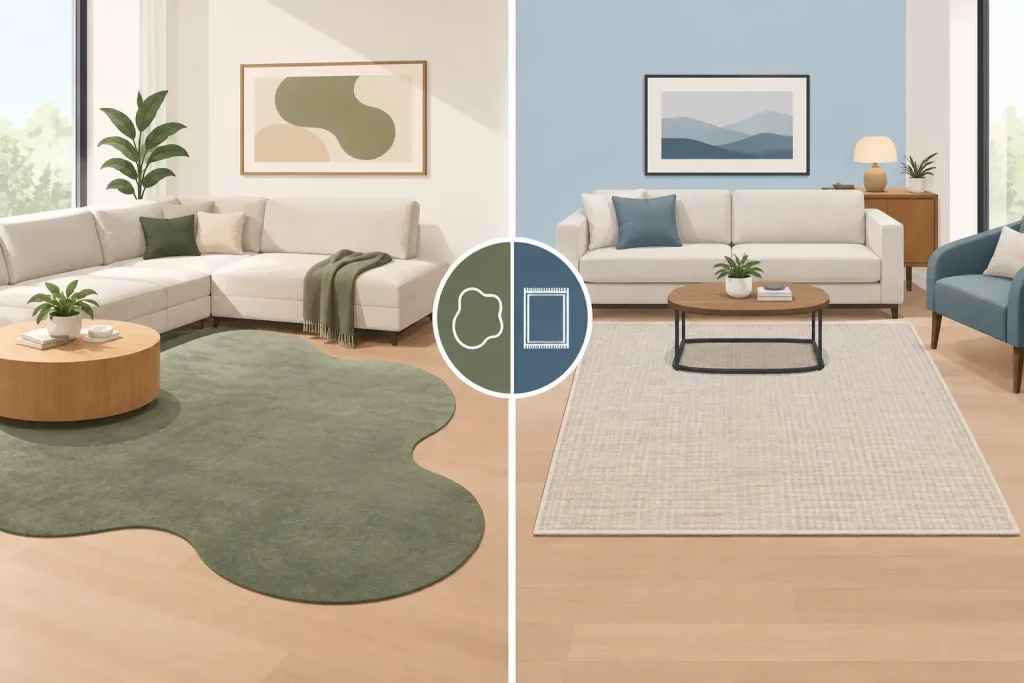
An unusual floor plan can become a design feature when the carpet colour is chosen with the wider interior in mind. Rather than treating the flooring as a background purchase, consider it as one of the largest visible surfaces in the room.
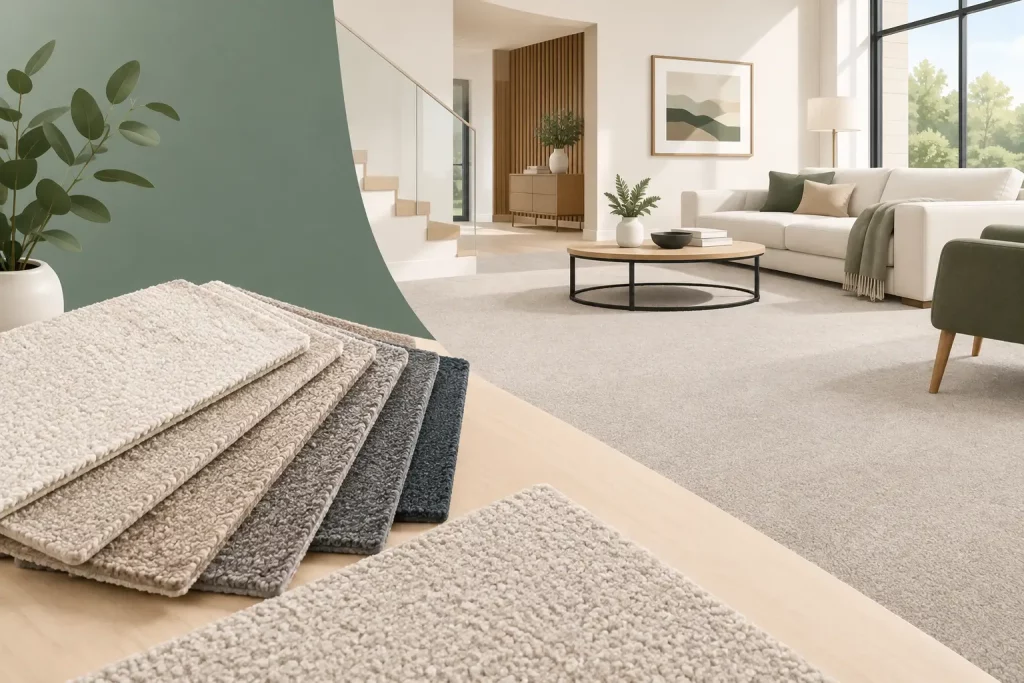
A colour-matched carpet can pick up the undertone of painted joinery, curtains, upholstery or a statement wallcovering. This creates continuity through alcoves, bays and connecting areas, helping the room read as one considered space. With more than 3,000 colour options, it is possible to pursue a quiet tonal match or a more deliberate contrast without being confined to a short retail swatch card.
Paler shades can help a small or angular room feel more open, although they may demand more care in high-traffic areas. Deeper colours add definition and can make a large room feel more grounded, but they will show lint or pet hair differently depending on the shade and pile. The practical realities matter just as much as the initial visual impact.
Borders can give the room a deliberate edge
A bordered carpet is often an excellent answer to an awkwardly proportioned room. The border can frame the floor area, echo a trim colour elsewhere in the scheme and create a tailored finish around the perimeter. It is particularly effective in bedrooms, dining rooms and sitting rooms where the furniture layout leaves an exposed margin of carpet.
The border width should relate to the room size. Too narrow and it can disappear; too broad and it may make a compact room feel pinched. A survey and design discussion will help establish the right proportion, while ensuring that the border works neatly around bays, fireplace openings and doorways.
Do not overlook underlay and fitting
Even the finest carpet will not perform or look its best if it is poorly prepared or fitted. Quality underlay improves comfort, supports the carpet pile and contributes to a more substantial feel underfoot. It can also help the carpet sit smoothly across minor imperfections in the subfloor.
Professional fitting is crucial in irregular rooms, where the carpet needs to be carefully shaped around curves, corners and fixed features. Poor cutting or rushed seaming is immediately noticeable in plain, deep-pile carpet. The objective is a crisp, secure edge and a finish that appears effortless.
When comparing quotations, ask what is included. A lower headline price can become less attractive once underlay, grippers, delivery, fitting and removal of offcuts are added. Clear square-metre pricing that includes underlay and fitting gives a more realistic basis for comparison and helps avoid unwelcome extras.
A better route than making do
An awkward room does not need an awkward flooring result. It simply needs a carpet planned for its exact dimensions, selected for how the room is used and fitted by people who understand the importance of the final detail.
Order samples, look at them beside your paint and furnishings, then have the room measured properly. The result can be pure luxury underfoot, with no unnecessary joins, no off-the-roll compromise and a finish that makes the room feel as though it was designed that way from the start.