A premium carpet can look right in a sample and still disappoint once it covers the floor. The difference usually lies in the specification: the fibre, pile construction, width, finish and fitting details that determine how the carpet feels, wears and sits within the room. This carpet specification guide is designed for homeowners and interior designers who want a tailored result rather than a compromise from stock widths and limited shades.
Start with the room, not the carpet sample
Carpet should be specified around how a room is used, how it is furnished and the effect you want to create. A formal drawing room, a busy family staircase and a quiet principal bedroom may all suit wool carpet, but they do not necessarily call for the same construction.
Consider footfall first. Areas used daily by children, pets and guests need a finish that will retain its appearance through regular use. Bedrooms and occasional rooms allow more freedom to prioritise softness and depth underfoot. Light levels also matter. A room with strong natural daylight can show tonal changes, pile shading and tracking more readily than a darker space.
Then consider the wider scheme. The carpet should relate to wall colour, upholstery, joinery and curtains, rather than simply matching one item exactly. Ordering samples and viewing them in the actual room is the sensible way to make the decision. Natural and artificial light can alter the apparent warmth, depth and undertone of a colour considerably.
Carpet specification guide: choose the right fibre
For a luxury fitted carpet, wool remains the benchmark. It has a naturally warm, comfortable feel, takes colour beautifully and brings a depth that synthetic-only alternatives rarely achieve. Wool also has natural resilience, which helps it recover after compression from normal household use.
A 100% pure new wool deep-pile velvet is chosen primarily for refinement. Its dense, smooth surface creates an elegant, almost furniture-like finish, particularly effective in bedrooms, dressing rooms, reception rooms and low-to-medium traffic spaces where appearance is paramount. As with any velvet carpet, the pile can show footprints, vacuum marks and light-and-dark shading. That is part of the character of the construction, not a defect. It is worth embracing only where that sophisticated directional effect suits the room.
An 80/20 wool-nylon deep-pile twist combines the natural quality of wool with the added durability of nylon. It is often the more practical specification for halls, stairs, landings, family rooms and other hardworking areas. The twist construction has a more textured surface than velvet, which can make it more forgiving of everyday marks and pile movement while still delivering a substantial, luxurious feel.
Neither option is universally better. The best choice depends on whether the priority is the exceptional smoothness of a velvet finish or the more resilient, practical character of a deep-pile twist.
Understand pile, weight and appearance
Pile is the visible surface of the carpet. Deep pile creates comfort, richness and a sense of luxury, but it also needs proper support beneath it. A suitably specified underlay helps the carpet feel better underfoot, improves insulation and contributes to a more stable finished floor.
When comparing carpets, avoid judging solely by a small piece in a showroom or by a single weight figure. Weight can be useful, but it does not tell the complete story. Fibre quality, yarn twist, pile density, backing and manufacturing standard all influence performance. A well-made wool carpet should feel substantial, recover well and hold a pleasing, even appearance across the room.
A sample should be inspected from more than one direction. Velvet piles naturally reflect light differently when brushed in opposite ways, while twist carpets tend to have a more relaxed, textured appearance. This is particularly relevant in rooms with large windows, where the floor will be seen in changing light throughout the day.
Specify width before finalising the layout
Standard carpet widths are a frequent source of unnecessary compromise. If the room is wider than the available roll, a join may be required. Even when carefully fitted, joins can be visible in certain lights or beneath a low-angle view, especially in plain carpet. They may also interrupt the clean, uninterrupted appearance expected from a premium interior.
Made-to-measure production changes the calculation. Carpet manufactured in wide widths, up to 35 feet where the design permits, can often cover substantial rooms without visible joins. This is especially valuable for open-plan spaces, long reception rooms, large bedrooms and projects where a continuous floor is central to the design.
Accurate measurement is essential at this stage. Bay windows, chimney breasts, alcoves, angled walls, wardrobes and door thresholds all affect the plan. Ordering extra material “just in case” can create costly waste, while ordering too tightly can lead to avoidable complications during fitting. A professional survey establishes the actual dimensions and identifies issues before manufacture begins.
For designers, this is also the point to think about pile direction. In plain carpet, light will travel differently across the pile depending on the direction it is laid. The direction should be agreed as part of the room plan, particularly where connected spaces are intended to read as one considered scheme.
Colour matching is more than choosing a shade
The right carpet colour does not have to be an exact copy of the walls or curtains. Often, a closely related tone with a slightly different depth gives the room more dimension. A warm neutral carpet can soften cooler grey joinery; a muted green or blue-grey can connect upholstery and painted cabinetry without making the floor feel overly assertive.
For projects requiring precision, a wide colour range makes a meaningful difference. More than 3,000 colour options allow you to select a near tonal match, a deliberate contrast or a colour developed around an existing fabric or finish. This is particularly useful where a scheme has been built around an inherited rug, a distinctive curtain fabric or bespoke painted furniture.
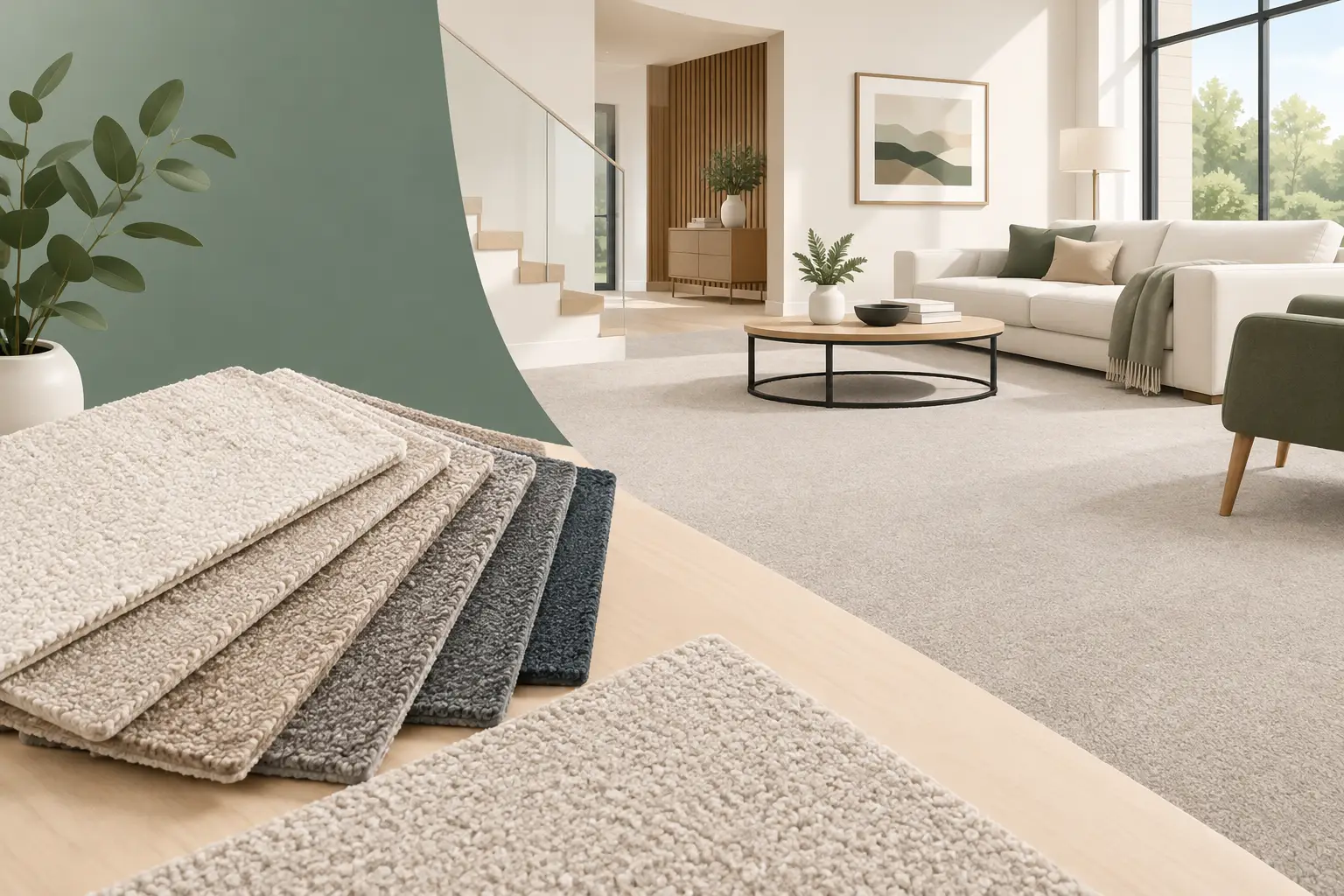
Always assess samples alongside the materials they need to complement. Place them on the floor rather than holding them vertically, because the pile and room lighting will change how the colour reads. Look at them in morning light, evening light and under the room’s main artificial lighting before confirming the order.
Borders and custom rug details
A bordered carpet or rug can bring definition to a large floor and introduce a tailored, architectural detail. Borders may be used to frame a seating area, echo the colour of painted skirting or joinery, or create a calm contrast around a central field colour.
Proportion matters. A narrow border can look crisp and understated, while a wider border makes a stronger decorative statement. The size of the room, furniture placement and distance from the wall should guide the final dimensions. A border that disappears beneath furniture may not deliver the intended effect, whereas one positioned to frame a bed or seating group can give the scheme real structure.
Custom-made rugs offer similar control. They can be made to sit precisely beneath a dining table, within a dressing area or at the centre of a large bedroom, avoiding the familiar problem of standard rug sizes looking either too small or unnecessarily oversized.
Do not treat underlay and fitting as extras
The quality of a carpet installation is every bit as important as the carpet itself. Even the finest wool pile cannot compensate for poor preparation, unsuitable underlay or careless fitting. Existing floorboards may need attention, subfloors may require smoothing and thresholds must be planned so that doors operate properly and adjoining floors meet neatly.
Underlay should be selected for the room and subfloor, not as an afterthought. It supports the carpet, contributes to comfort and can help with thermal and acoustic performance. On stairs, proper fitting and secure finishing are particularly important for both appearance and day-to-day use.
Ask for clarity on what the stated price includes. A low carpet-only figure can become less attractive once underlay, delivery, measuring, grippers, door bars and fitting are added. A genuinely transparent quotation should show the full scope of work, including any preparation that is required before installation.
A better way to commission bespoke carpet
A bespoke order should feel considered, not complicated. The strongest process begins with a conversation about the room, followed by samples, a professional measure and a clear quotation. Manufacturing then takes place to the agreed plan, with fitting arranged by people who understand the material and the intended finish.
Colourmatched Custom Carpets manages this process from survey through to professional installation across the UK, with underlay and fitting included in its stated square-metre prices. That single responsibility matters: there is no confusion between a retailer, a separate surveyor, a delivery firm and an independent fitter if a detail needs resolving.
Give the specification enough time. View the samples at home, think through how the room will be used and have every dimension checked before manufacture. The right carpet is not merely something beneath your feet; it is the surface that makes the whole room feel finished.