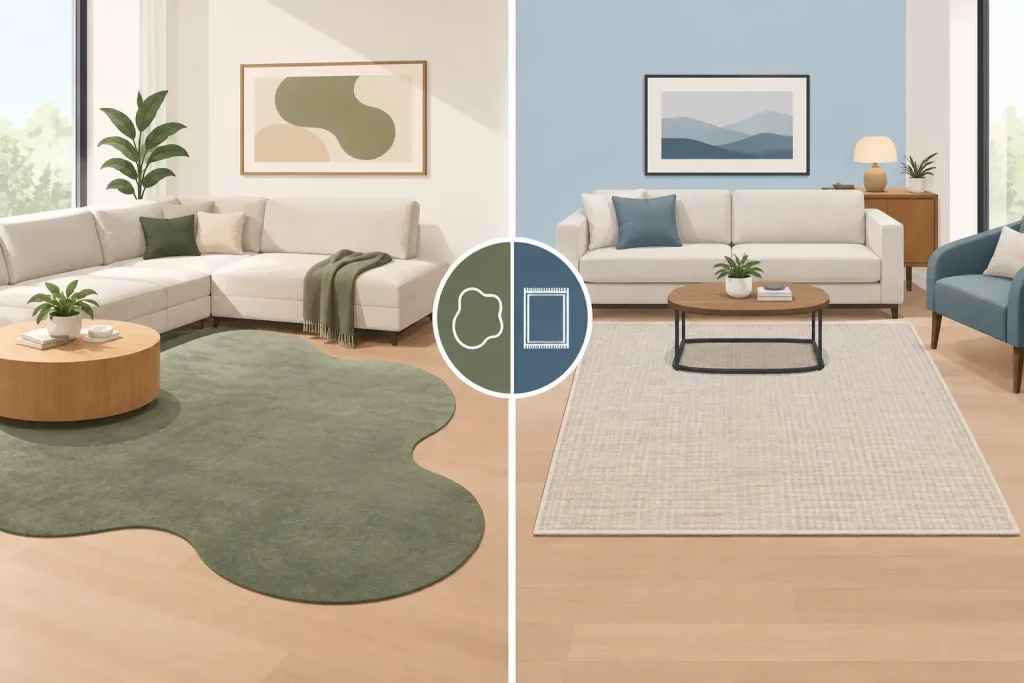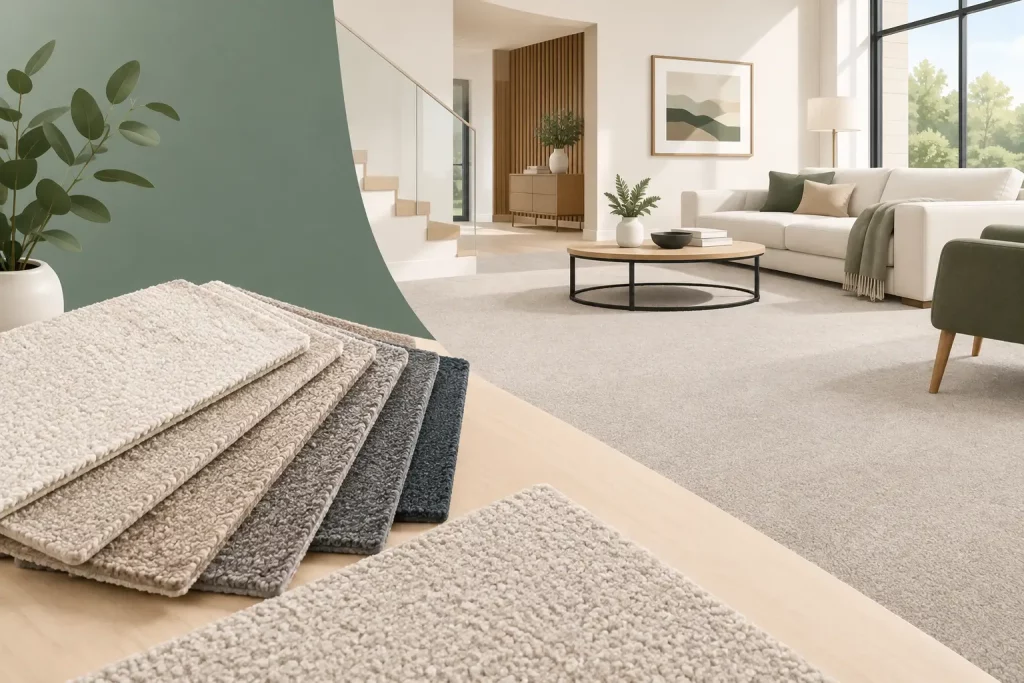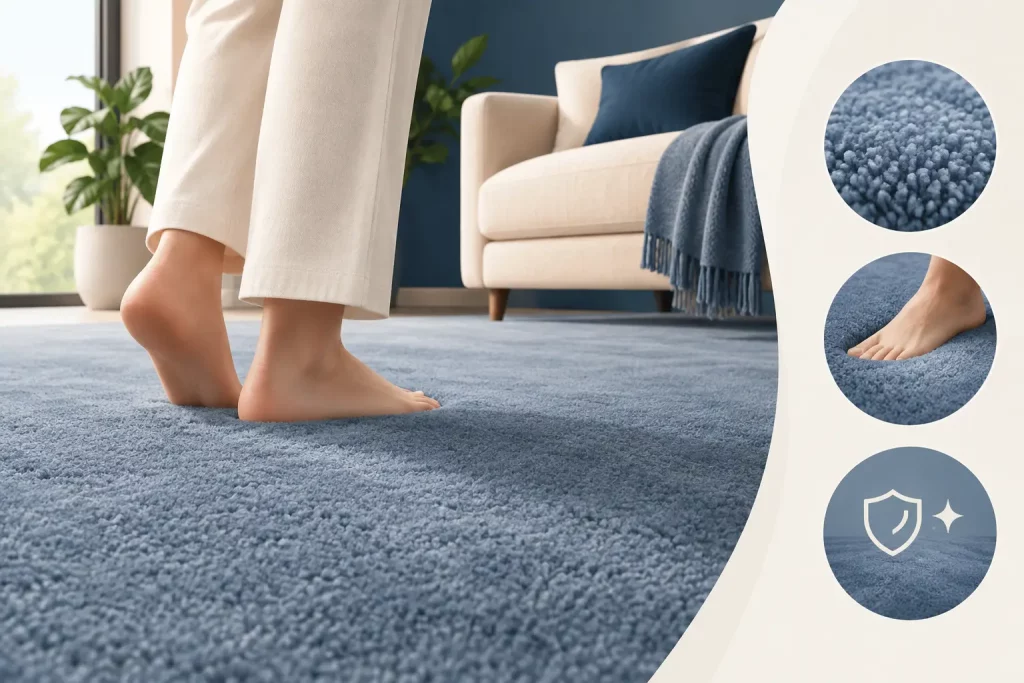
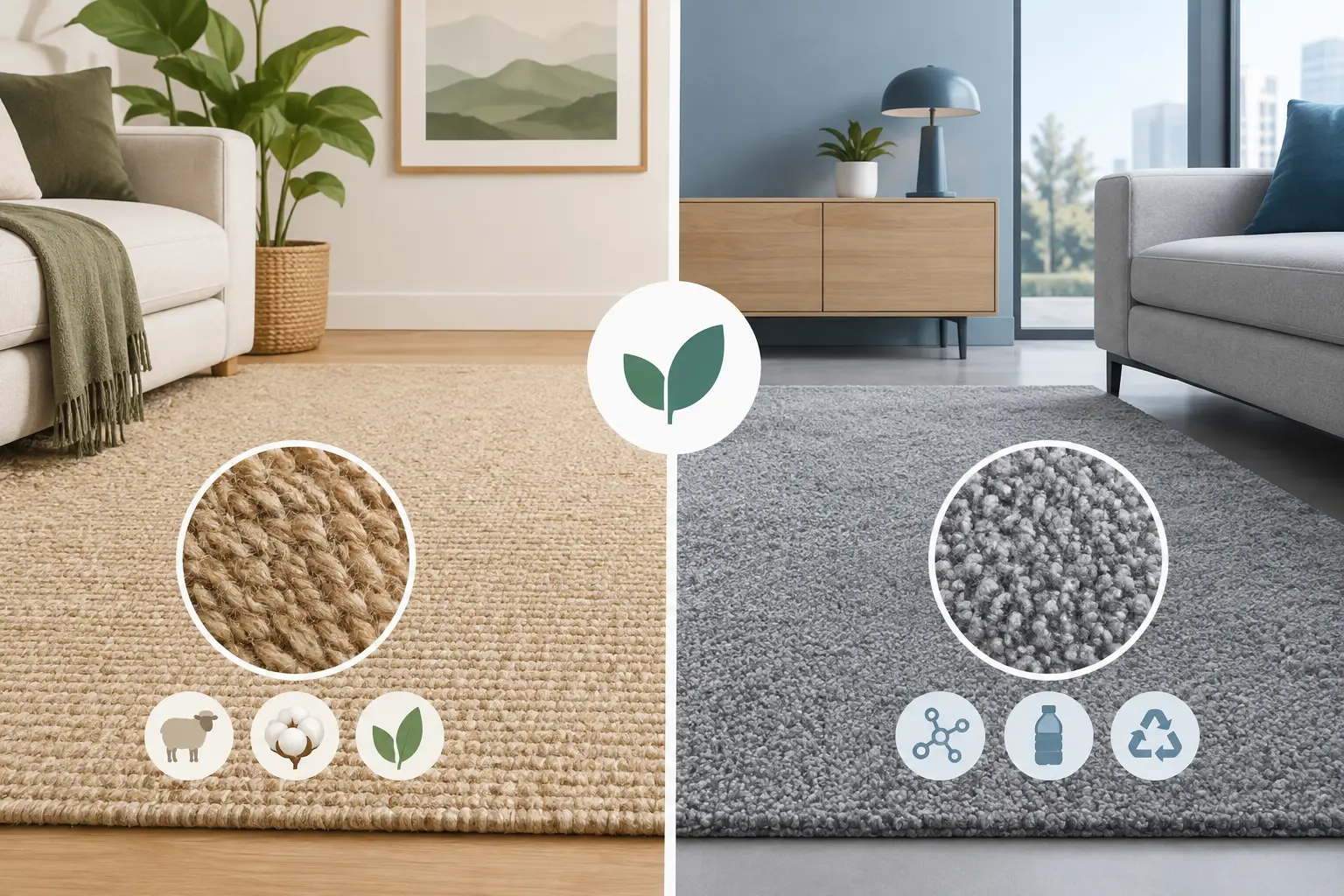
A carpet choice becomes far more visible once the furniture is in place. Light catches the pile, colours sit beside paintwork and curtains, and every step reveals whether the floor feels considered or merely convenient. When comparing natural versus synthetic carpets, the right answer is not simply a matter of price. It is about the room, the level of use, the finish you want and how long you expect the floor to serve your home.
For a principal bedroom, drawing room or carefully designed renovation, a natural wool carpet often brings the depth, softness and character that synthetic alternatives struggle to reproduce. Yet synthetic fibres have a useful role in hard-working areas where stain resistance and a lower initial outlay take priority. Understanding the differences allows you to choose with confidence rather than compromise on a stock roll that is almost right.
Natural versus synthetic carpets: the essential difference
Natural carpets are made from fibres produced by nature, most commonly wool. Wool remains the benchmark for luxury fitted carpet because it has a naturally resilient crimp, a rich appearance and a wonderfully comfortable feel underfoot. It can be used in a dense deep-pile velvet for a more formal, luxurious finish, or in a twist construction that is practical while still feeling substantial.
Synthetic carpets are generally made from man-made fibres such as polypropylene, polyester or nylon. Their performance varies considerably by fibre and construction. Polypropylene is widely selected for its stain resistance and value, while nylon is stronger and often blended with wool to improve wear in busy rooms.
The comparison is not always wool against plastic. An 80/20 wool-nylon twist, for example, combines the natural look and handle of wool with added nylon resilience. For many family homes, this is a sensible middle ground: a premium carpet with a practical edge.
Why wool remains the luxury choice
Wool has an unmistakable quality that is felt as much as it is seen. A well-made wool carpet has a full, inviting pile and a depth of colour that complements painted walls, timber furniture and layered fabrics. In a room where the flooring is intended to be part of the scheme rather than a background surface, this matters.
Its natural crimp helps wool fibres recover after pressure. A dining chair or occasional table will still need sensible use of protective cups, but a quality wool carpet is far less likely to look permanently flattened than a cheaper, loosely made alternative. Dense construction, good underlay and professional fitting all support this recovery and help preserve the carpet’s appearance.
Wool also offers useful natural properties. It absorbs moisture from the air and releases it again as conditions change, which can contribute to a comfortable indoor environment. It provides warmth and acoustic softness too, making it particularly appealing in bedrooms, lounges, studies and upstairs rooms where a quieter feel is valued.
There is a practical point to make about maintenance. Wool is naturally resistant to soiling, but it is not invulnerable to spills. Prompt blotting remains essential, particularly with strong drinks, cosmetics or pet accidents. A homeowner who wants a pale, luxurious carpet throughout a house with young children and an enthusiastic dog may be better served by choosing a forgiving shade, a twist pile, or a wool-nylon blend in the busiest spaces.
The visual difference is in the pile
Fibre is only one part of the decision. A deep-pile wool velvet has a smooth, plush surface that creates pure luxury underfoot. It is ideal for spaces where the carpet is treated gently and appearance is the priority. The pile direction can create subtle shading, known as tracking, which is a normal characteristic of velvet rather than a fault. For many interiors, it is part of the appeal.
A deep-pile twist has more texture and is often more forgiving of everyday footprints. It remains a refined choice, especially in an 80/20 wool-nylon specification, and suits hallways, stairs, bedrooms and living spaces that need to work hard without looking utilitarian.
Where synthetic carpet makes sense
Synthetic carpet is not automatically a lesser choice. In the right setting, it is a practical solution. A playroom, rental property, utility-adjacent room or heavily used family space may benefit from a fibre designed to resist common household spills. Many synthetic carpets can be cleaned more aggressively than wool, although the manufacturer’s care guidance should always be followed.
The lower initial cost can also be attractive when a room has a short-term purpose or is due for a future redesign. However, it is worth comparing the full installed cost and expected lifespan rather than the roll price alone. A low-cost carpet that loses its pile, shows traffic lanes or needs replacing sooner can prove less economical than a better-specified alternative.
What synthetics tend not to offer is the same natural warmth, colour complexity or enduring handle of high-quality wool. Some perform very well at first glance, but can feel flatter and less substantial over time. This is especially noticeable in a large reception room or open-plan scheme where the carpet covers a significant visual area.
Durability depends on more than the fibre
It is tempting to assume that synthetic always means tougher. In reality, durability depends on the combination of fibre, yarn quality, pile density, backing, underlay, room use and fitting. A dense, well-made wool carpet can give many years of excellent service in the right environment. Equally, a poorly constructed synthetic carpet may flatten quickly despite its stain-resistant claims.
The room should guide the specification. A formal lounge used mainly in the evenings can justify a sumptuous pure new wool velvet. A staircase experiences concentrated wear on narrow treads and benefits from a durable twist. In a hallway, a darker or flecked shade can be a sensible design decision, reducing the visibility of daily traffic without sacrificing quality.
Underlay is often overlooked, yet it makes a marked difference. The correct underlay improves comfort, supports the pile, helps the carpet wear well and can enhance insulation. It should be selected for the carpet and the subfloor, not treated as an optional extra to be cut back on at the end of a project.
Colour, width and the finished appearance
A beautiful carpet can still look disappointing if the colour is slightly wrong or a join interrupts the room. Standard retail widths force many homeowners to accept seams, unnecessary offcuts or a colour chosen from a limited range. This is where bespoke manufacture changes the comparison between natural and synthetic options.
With a made-to-plan wool carpet, the dimensions can be tailored to the room and the colour chosen to sit precisely with the wider interior. A soft stone may need to lean warmer beside oak joinery; a grey may need a hint of blue to work with daylight; a border may be required to frame a seating area or echo a curtain trim. These details create the polished finish associated with a properly planned interior.
Wide-width manufacture can also remove visible joins in larger rooms. Rather than treating a seam as inevitable, it allows the carpet to read as one uninterrupted surface. This is particularly valuable in principal bedrooms, drawing rooms and spaces with strong natural light, where joins are easier to notice.
Colourmatched Custom Carpets manufactures bespoke carpets and rugs to plan, with more than 3,000 colour options, so homeowners and interior designers can select a floor finish that belongs to the scheme rather than simply fills the room.
Cost, value and responsible material use
Pure new wool is usually a greater investment than a standard synthetic carpet. That reflects the material, the quality of manufacture and the performance expected from a luxury floor covering. The more useful question is whether that investment is appropriate for the room and the project as a whole.
For a long-term home, spending more on a carpet that feels better, wears gracefully and supports the design can be worthwhile. For a room where spills, heavy use or a limited budget are the overriding concerns, a carefully chosen synthetic option may be the more rational decision. There is no benefit in installing a delicate pale velvet where the household routine will not allow it to be enjoyed.
Bespoke production can also reduce waste. Ordering carpet to the actual plan of a room avoids the excessive offcuts that frequently come with buying from a fixed-width roll. It is a more considered approach, particularly for unusual room shapes, wide spaces and projects with matching rugs or bordered details.
How to choose with confidence
Start with how the room is genuinely used, not how you hope it will be used. Consider footfall, pets, children, daylight, furniture and the level of care you are comfortable providing. Then look at real samples in the room itself. Daylight, artificial lighting and surrounding finishes can alter a colour dramatically, while a sample lets you assess texture and pile in person.
For premium renovations, professional measuring is equally valuable. Accurate dimensions establish whether a seamless width is possible, where a border will sit and how the pile should run. They also make quotations clearer, particularly when underlay and fitting are included rather than appearing later as hidden additions.
The most satisfying choice is usually the one that gives the room what it needs: wool velvet for softness and visual richness, wool-nylon twist for a luxurious but hard-working finish, or a well-chosen synthetic where practical resilience must lead. Take time to see the samples under your own light, and choose a carpet that will still feel right after the novelty of the new room has passed.