A carpet can look impressive in a small showroom swatch yet feel tired, flatten quickly or show every footprint once it is laid across a room. Knowing how to assess carpet quality means looking beyond colour and a tempting price per square metre. The right choice should suit the way you live, complement the room and retain its appearance for years.
For a premium renovation, quality is not one single specification. It is the balance of fibre, construction, pile density, backing, underlay and professional fitting. A beautifully made wool carpet with the wrong underlay, for example, will not deliver the comfort or longevity it should. Equally, a very heavy carpet is not automatically the best option if its fibre or construction is unsuitable for the room.
How to assess carpet quality: start with the fibre
The fibre tells you a great deal about how a carpet will look, feel and wear. For many homeowners and interior designers, wool remains the benchmark for luxury flooring. It has a naturally warm, comfortable feel, takes colour exceptionally well and brings a depth of finish that synthetic alternatives often struggle to match.
A 100% pure new wool carpet is particularly suited to bedrooms, drawing rooms and other spaces where a rich, soft finish is the priority. Wool has natural resilience and a pleasing lustre, especially in a deep-pile velvet construction. It is also a practical choice for a considered interior scheme because colour can be matched with real depth and subtlety, rather than limited to standard retail shades.
For busier areas such as stairs, halls and family rooms, an 80/20 wool-nylon blend is often a sensible alternative. The wool retains the warmth, comfort and refined appearance homeowners expect, while nylon adds extra resistance to crushing and everyday wear. This is not a compromise on quality. It is about selecting the right construction for the level of traffic the carpet will receive.
Be wary of descriptions that simply say “wool feel” or focus only on softness. A soft carpet may be pleasant underfoot, but softness alone says little about its ability to recover after furniture, foot traffic and regular use. Ask exactly what the carpet is made from and in what proportion.
Look closely at pile density, not just pile height
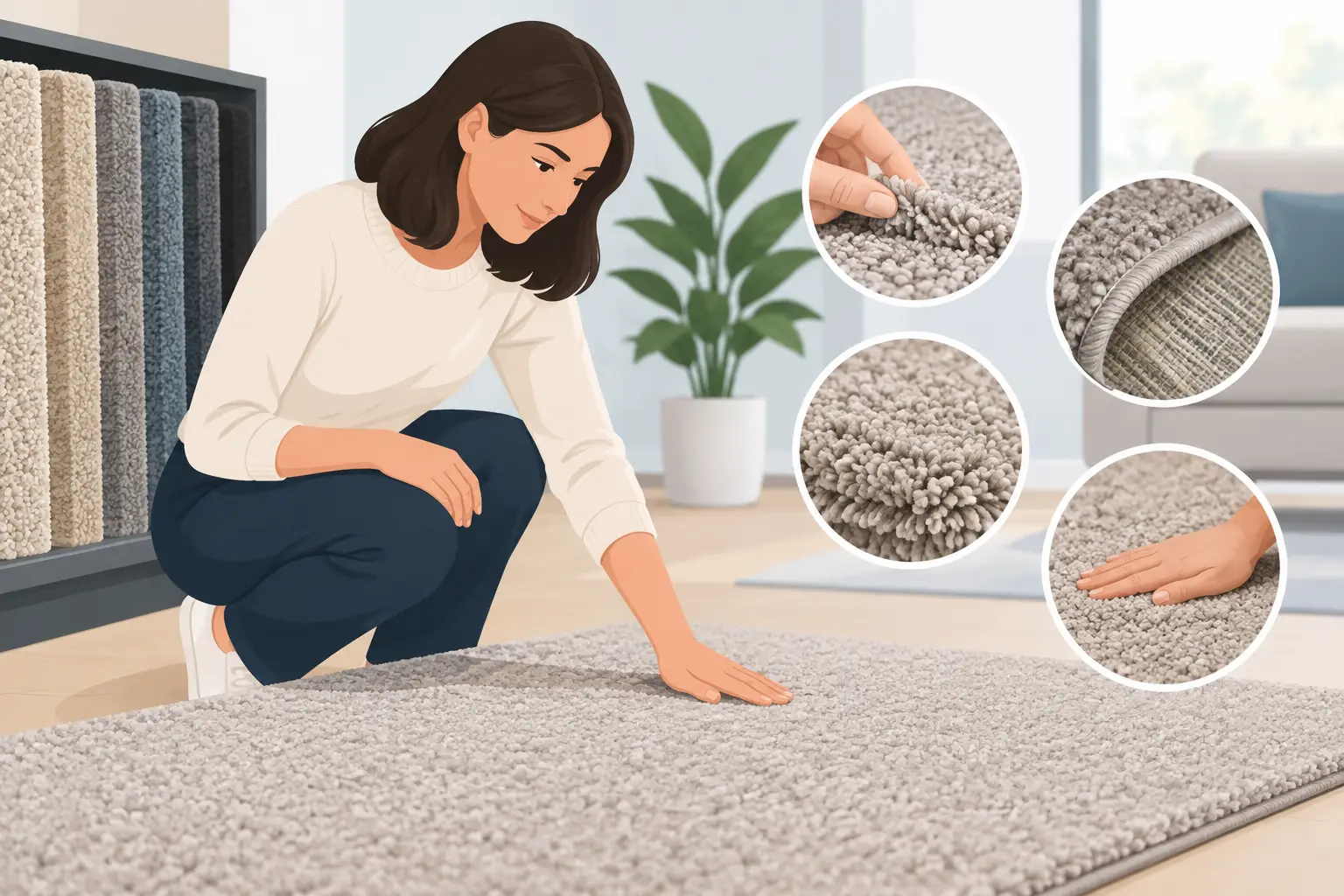
A tall pile can feel luxurious, but height is only part of the picture. A quality carpet should have enough yarn packed into its backing to create a dense, substantial surface. When you gently part the pile with your fingers, you should not immediately see large areas of backing beneath.
Dense pile supports the yarn and helps the carpet retain its appearance. It will generally feel more substantial underfoot and cope better with regular use than a loose, open pile. This is particularly relevant with velvet carpets, where a close, even surface creates the smooth, tailored appearance associated with luxury flooring.
Pile weight can be useful when comparing like for like, but it should never be viewed in isolation. A heavier carpet may contain more yarn, but the fibre type, pile style and density all matter. Compare two wool twist carpets of similar construction and pile weight becomes more meaningful. Compare a deep-pile velvet with a loop pile or a synthetic saxony, and the number alone tells you very little.
Velvet or twist: choose for the room as well as the look
Deep-pile velvet has a smooth, elegant surface that suits formal rooms, bedrooms and interiors where colour and texture need to appear especially refined. It offers pure luxury underfoot, although its directional pile can show light and dark shading, footprints and vacuum marks. This is a normal characteristic of a quality velvet, not a fault.
Deep-pile twist has a more textured appearance, as the yarn is tightly twisted before being cut. It is often more forgiving in active family spaces and on stairs because the texture helps disguise day-to-day marks. Both constructions can be excellent. The better choice depends on whether you want a perfectly sleek finish or a more relaxed, practical surface.
Test the sample properly at home
A sample is there to be inspected, not merely admired. Place it in the room where the carpet will be fitted and look at it in morning light, evening light and artificial light. Colour can change considerably between a north-facing room and a bright room with warm-toned lamps.
Run your hand across the pile in both directions. With velvet, this will show how the shade changes with the lay of the fibres. It is a useful test, particularly if you are choosing a pale neutral, because it gives a realistic sense of how the whole floor will look once fitted.
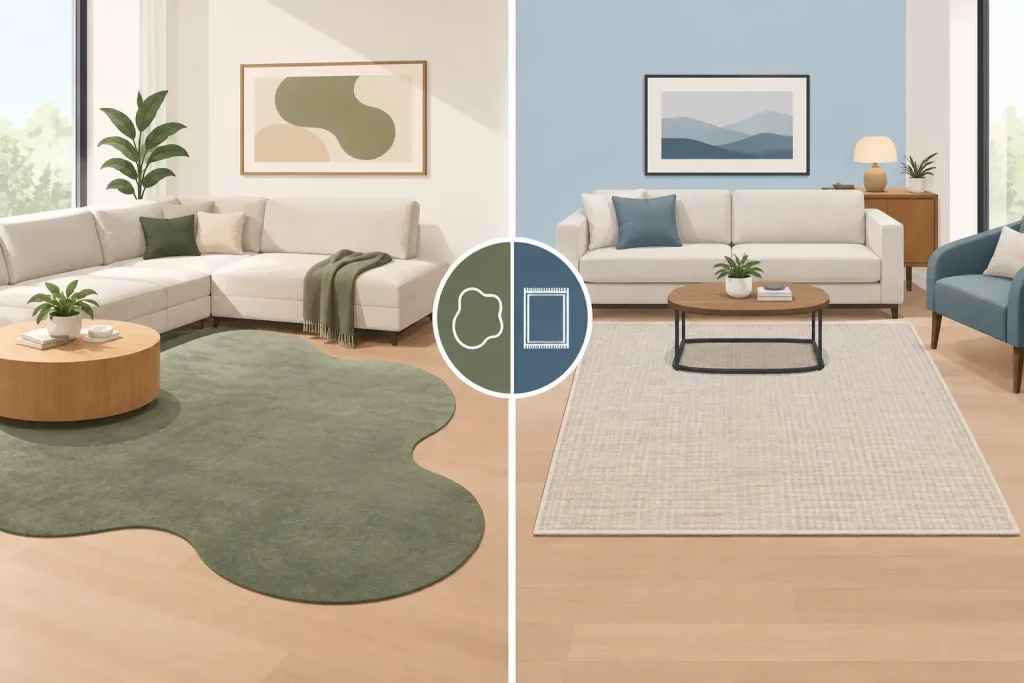
Check the sample alongside paint, curtains, upholstery, timber and metal finishes. A carpet is a large area of colour, so an almost-right shade can become very noticeable across an entire room. For a tailored scheme, the ability to select from thousands of colours or arrange precise colour matching can make a marked difference to the finished interior.
Inspect the backing and ask how the carpet will be made
The backing may not be visible once the floor is complete, but it has a direct effect on stability, fitting and long-term performance. A well-made carpet should feel secure and evenly constructed when handled. There should be no obvious inconsistencies in the pile, loose tufts or irregular edges on the sample.
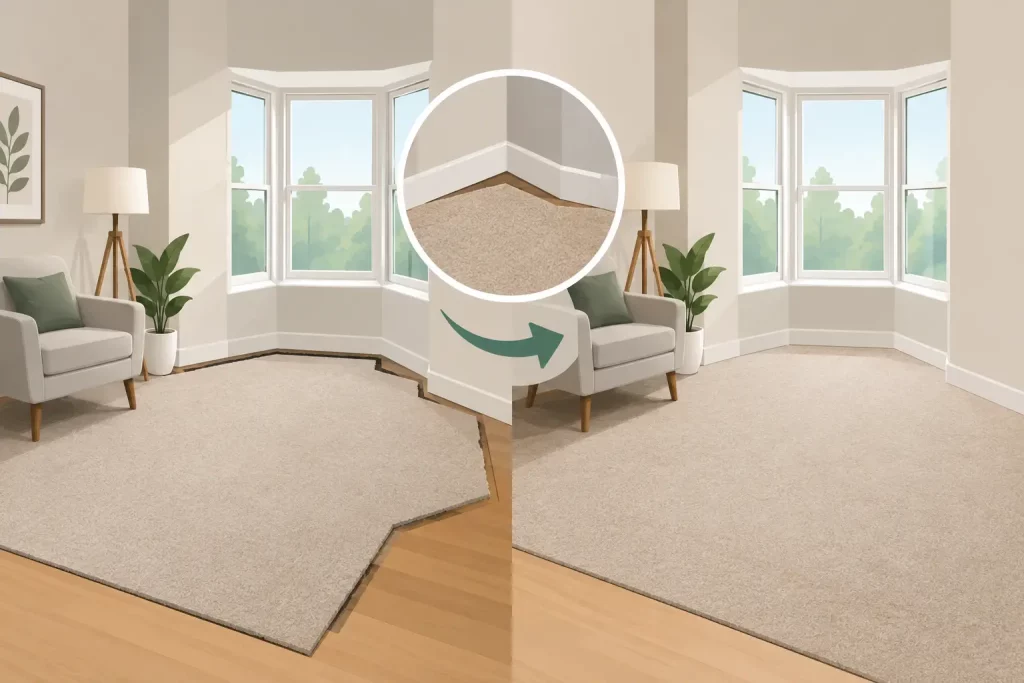
It is also worth asking whether the carpet will be cut from a standard roll or manufactured to your room plan. Standard retail widths can force unnecessary joins, awkward offcuts and wasted material, especially in larger or unusually shaped rooms. A join may be unavoidable in some projects, but it should never be treated as an afterthought.
Bespoke wide-width manufacture can remove visible joins across many rooms and deliver a more continuous, refined floor. It also allows borders, inset details and custom dimensions to be planned properly rather than improvised on site. For interior designers, this level of control is often what separates a competent installation from a finished scheme that feels complete.
Do not judge carpet without considering underlay and fitting
Underlay is not an optional extra to be selected at the lowest possible cost. It affects comfort, insulation, sound reduction and the way the carpet wears. A suitable underlay supports the pile, helps reduce pressure on the backing and makes a quality carpet feel noticeably better underfoot.
The right underlay depends on the subfloor and the room. A concrete floor, suspended timber floor, staircase and underfloor heating system can all require different considerations. Thickness is not the only measure of quality here either. An overly soft underlay may make a carpet feel plush at first, but it may not provide the right support for every pile type or high-traffic area.
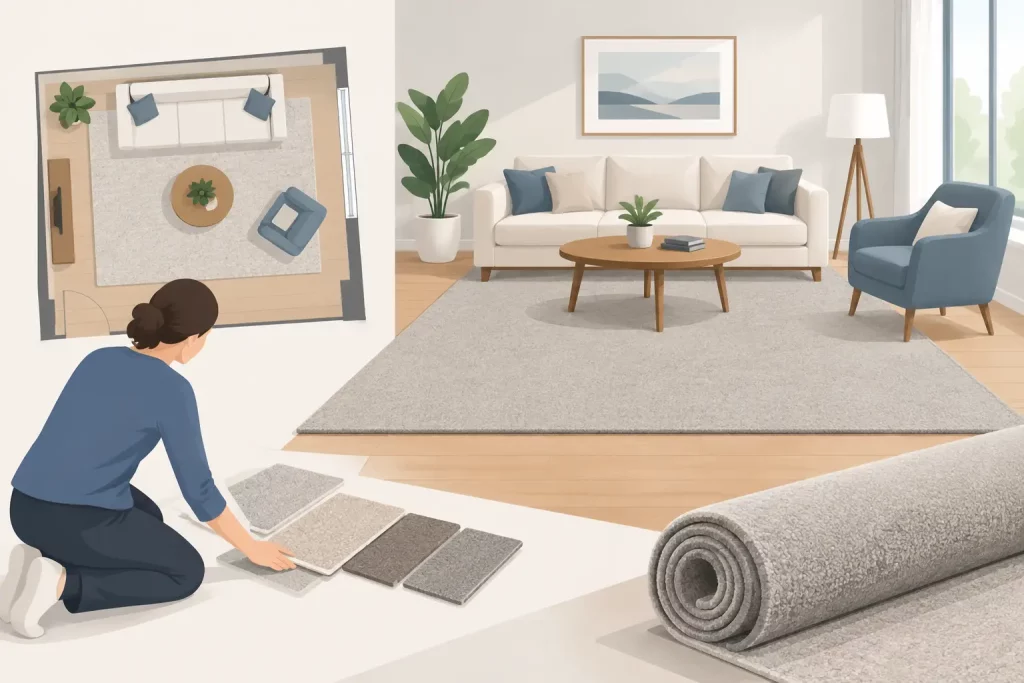
Professional measuring and fitting are equally important. Poorly planned seams, badly stretched carpet or rushed edging can undermine even the finest wool product. A proper survey identifies room dimensions, door clearances, radiator pipes, transitions to other flooring and any areas that may need special attention. It also gives you a clear price before work begins, rather than leaving fitting, underlay and finishing details as unexpected extras.
Compare quotations on the finished result
When comparing carpet prices, check what is actually included. One quote may cover carpet only, while another includes measuring, underlay, delivery, fitting and waste removal. A lower headline figure can quickly become more expensive once these essentials are added.
Ask for the fibre composition, pile construction, width, underlay specification and fitting details in writing. If your room requires a border, custom shape or colour match, make sure that is included too. Transparent pricing is especially valuable with bespoke work because it lets you compare the complete installed floor, not an incomplete material cost.
At Colourmatched Custom Carpets, the process is designed around this complete view: from survey and design advice through to manufacture and fitting, with stated square-metre prices that include underlay and fitting. It gives homeowners and designers one accountable specialist throughout the project, rather than separate suppliers for each stage.
The best carpet is the one that remains a pleasure to live with after the novelty of a new floor has passed. Take time with the sample, ask direct questions about construction and ensure the installation is planned as carefully as the colour. That is how a carpet earns its place in a well-finished home.