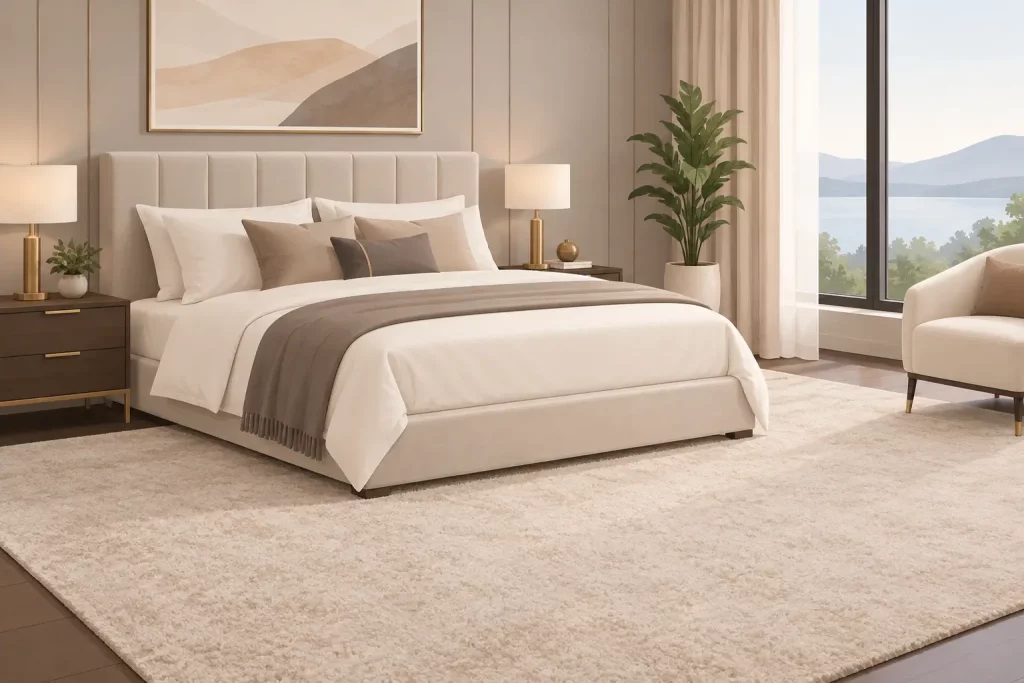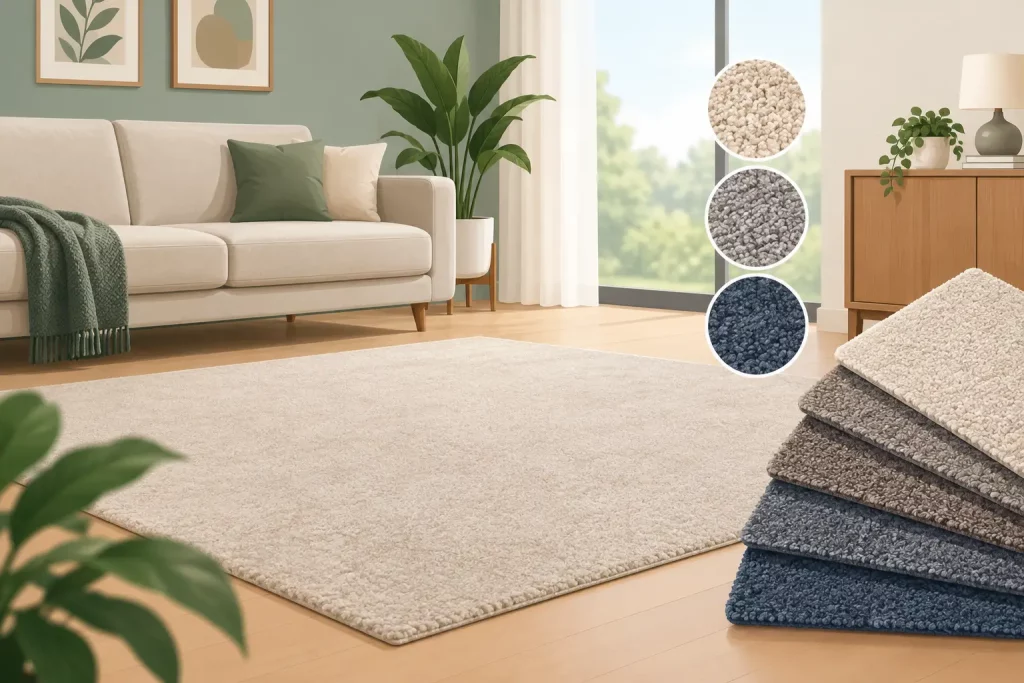
A carpet can be the largest visible surface in a room, yet its pile texture is often chosen from a small sample without enough consideration. Comparing carpet pile textures properly reveals why two carpets in a similar shade can look, feel and perform very differently once fitted across a lounge, bedroom or staircase. The right choice is not simply about softness. It is about how the carpet suits the room, the light, the level of use and the finish you want to achieve.
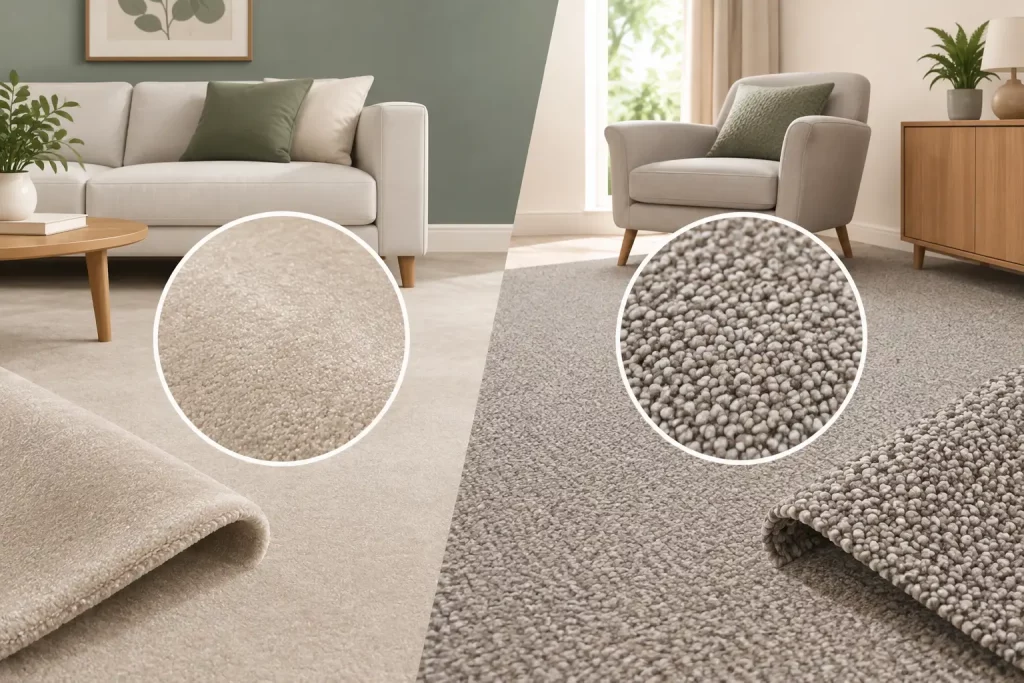
For a tailored interior, colour and texture should be selected together. A deep-pile velvet gives a beautifully smooth, luxurious plane of colour, while a deep-pile twist brings a more textured, practical character. Both can look exceptional in quality wool carpet, but they create different effects underfoot and in the room as a whole.
Comparing Carpet Pile Textures: Velvet, Twist and Loop
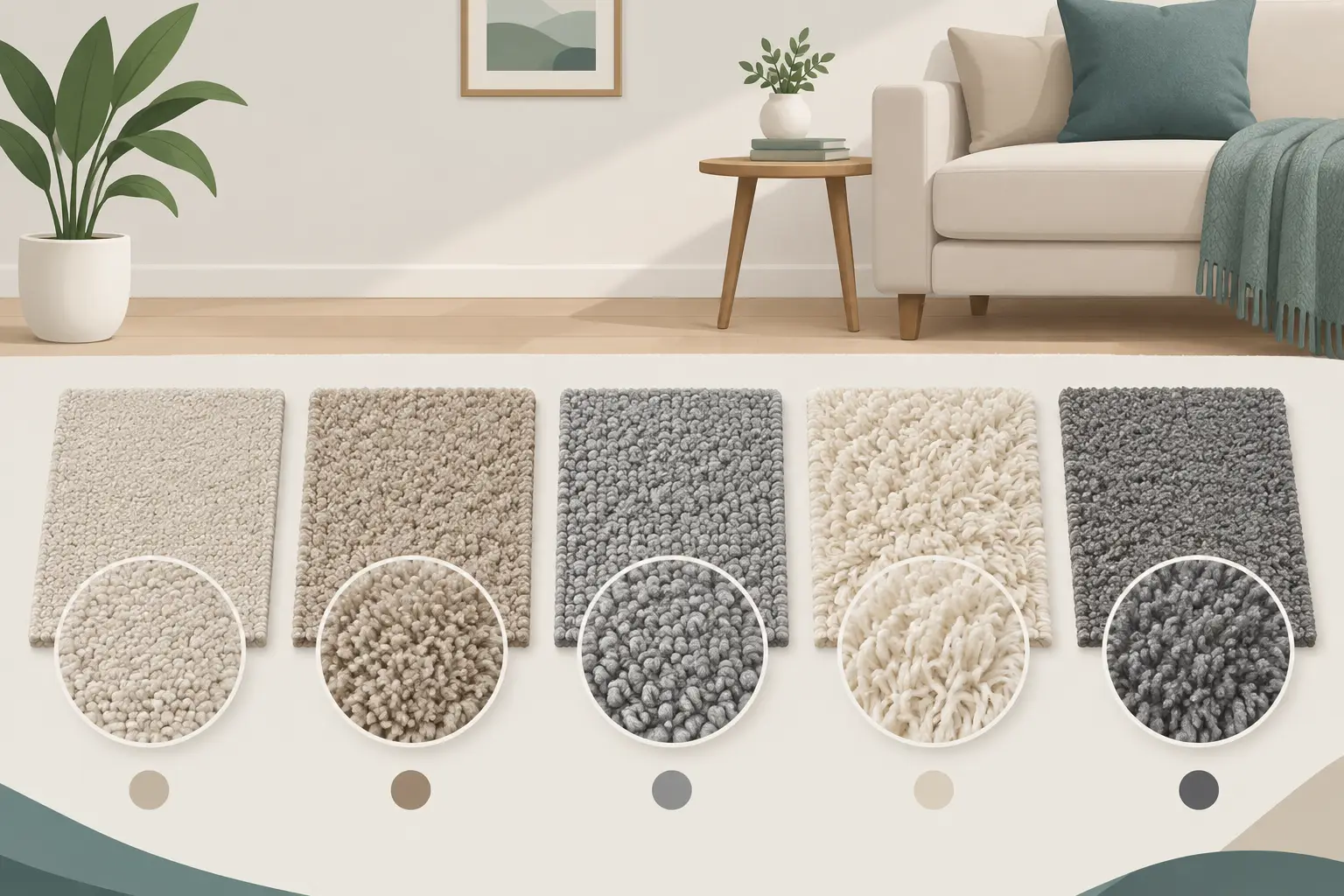
Carpet pile describes the surface formed by the yarn. Its construction affects the way it reflects light, how clearly it shows footprints and shading, and how well it copes with day-to-day traffic. The three broad categories most homeowners encounter are cut-pile velvet, cut-pile twist and loop pile.
Deep-pile velvet: smooth, rich and refined
Velvet carpet is a cut pile with yarn ends closely packed to create a dense, even surface. In a high-quality wool velvet, the result is pure luxury underfoot: soft, warm and visually calm. It is particularly effective where you want a room to feel considered and elegant, such as a drawing room, principal bedroom or formal dining room.
The smooth surface gives colour real depth. This matters when you are matching carpet precisely to paint, curtains, upholstery or a bespoke border. A single, uninterrupted expanse of velvet can make a room appear more generous and more composed, especially when manufactured in a width that avoids visible joins.
There is a practical trade-off. Velvet can show tracking, footprints and vacuum marks more readily than a twist. This is not a fault. It is a natural characteristic of the pile moving in different directions and reflecting light differently. Some clients enjoy this soft, changeable appearance; others prefer a texture that disguises everyday movement. In a busy family hallway or on heavily used stairs, velvet may require more considered maintenance and a realistic expectation of its lived-in character.
Deep-pile twist: texture with everyday resilience
Twist carpet is also cut pile, but the yarn is tightly twisted before being cut. This gives the surface a more granular, textured appearance than velvet. It still feels substantial and comfortable, particularly in a deep pile, but it is less formal and generally more forgiving of foot traffic, marks and light variations.
An 80/20 wool-nylon twist combines the natural warmth, appearance and comfort of wool with the added resilience of nylon. It is a strong choice for active lounges, stairs, landings and family homes where the carpet needs to work hard without losing its quality feel. The texture breaks up the light, so footprints and vacuum lines tend to be less obvious than on a smooth velvet.
Twist is often the practical answer when a client wants one carpet to run through several connected areas. It offers a consistent, welcoming finish in spaces where people actually live, rather than a surface that feels too precious to use. That said, a deep-pile twist remains a luxury product when made with quality yarn and correctly fitted over suitable underlay.
Loop pile: structured and casual
Loop pile leaves the yarn uncut, forming loops across the carpet surface. Depending on the construction, these may be level loops for a neat, uniform effect or multi-level loops for a more pronounced pattern. The look is textural, tailored and often more contemporary than a traditional velvet.
Loop pile can suit lower-key interiors and is valued for its ability to disguise general wear. However, it is not automatically the best choice for every household. Loops may catch on pet claws, sharp furniture feet or snags, and a pulled loop should be dealt with carefully rather than tugged. It also gives a firmer feel than a deep-pile cut carpet, which may not suit clients seeking the plushest possible result in a bedroom or lounge.
How Light Changes the Appearance of Carpet Texture
Texture is never seen in isolation. Daylight, lamp light and the direction of the pile can all affect how a carpet reads. A velvet in a rich neutral may appear lighter from one end of the room and deeper from the other. This is part of its appeal, but it is worth seeing a generous sample in the intended space before confirming your order.
Twist carpet generally gives a more stable visual impression because its irregular texture diffuses light. That can make it particularly useful in rooms with strong south-facing sunlight, patio doors or large windows. It is also reassuring in busy spaces where a perfectly uniform surface is unlikely to stay visually uniform for long.
Colour remains central. Pale shades can make a room feel open but may show soiling sooner in entrance areas. Dark tones can be dramatic and grounding, though they may reveal lint or dust. Mid-tones and flecked twists are often forgiving, while a carefully colour-matched velvet can provide the most striking finish when the room is designed around it.
Choosing the Right Pile for Each Room
There is no single best pile texture for an entire house. The right specification depends on how each area will be used and whether continuity or individual character matters more.
In bedrooms, comfort and atmosphere usually lead the decision. A 100% pure new wool deep-pile velvet can create an indulgent, restful surface that feels exceptional on bare feet. A twist remains a sensible alternative for children’s rooms or bedrooms with regular access to gardens, pets or outdoor shoes.
For lounges and reception rooms, choose according to the formality of the space. Velvet has an unmistakably polished appearance and works beautifully with bespoke rugs, borders and carefully layered furnishing schemes. Twist offers a relaxed luxury that is well suited to family life and frequent entertaining.
Staircases and landings deserve particular attention because they take concentrated wear. A deep-pile twist is often the more practical option, especially in a busy household. If you choose velvet for stairs, professional fitting, good-quality underlay and regular care become even more important to preserve its appearance.
Pile Texture Is Only Part of the Specification
A beautiful carpet can disappoint if it is supplied in unsuitable widths, fitted with joins in prominent areas or installed over poor underlay. The finished floor should be considered as one system: pile texture, fibre blend, pile density, shade, carpet width, underlay and fitting all contribute to the result.
This is where bespoke manufacture offers a clear advantage. Rather than choosing the nearest available roll width and accepting unnecessary waste or seams, carpet can be made to the plan of the room. Wide-width production is especially valuable in larger spaces, where eliminating joins gives velvet and twist carpets the uninterrupted finish they deserve.
Borders can also alter how texture is perceived. A contrasting or tonal border can frame a plain carpet, echo a fabric or paint colour, and give the room a defined architectural edge. On a smooth velvet, the effect can be particularly elegant. On a twist, it can introduce a more tailored detail without making the room feel overly formal.
Samples, Surveys and Honest Expectations
Never select pile texture from an online image alone. Ask to see samples at home, place them beside flooring, curtains and painted walls, and look at them in morning, afternoon and evening light. Stroke the pile in different directions and consider whether you like the natural shading this creates.
A proper measure is equally valuable. It identifies awkward areas, stairs, door thresholds and potential joins before manufacture begins. It also allows the carpet direction to be planned carefully, which is essential for a consistent finish. At Colourmatched Custom Carpets, the process is designed to take the project from free measurement and design advice through to manufacture and professional fitting, with clear square-metre pricing that includes underlay and fitting.
The most satisfying choice is usually the one that balances the look you want with the way you live. Choose velvet when its smooth depth and luxurious movement suit the room, choose twist when texture and resilience need to work harder, and always judge both beneath the light of your own home before making the final decision.