A carpet can look perfect on a small showroom sample and still disappoint once it is laid across a large room. The colour may pull too warm beside painted walls, a standard width may create an awkward join, or the border may sit out of proportion to the furniture. Choosing a bespoke carpet manufacturer gives you control over those details before production begins, rather than asking a fitter to make a stock product work after the event.
For homeowners and interior designers, this is not simply a question of ordering a carpet in a preferred shade. It is about commissioning a floor covering that suits the room’s dimensions, light, architectural features and overall scheme. Done properly, bespoke carpet delivers pure luxury underfoot while avoiding the compromises that often come with off-the-roll flooring.
What a Bespoke Carpet Manufacturer Should Provide
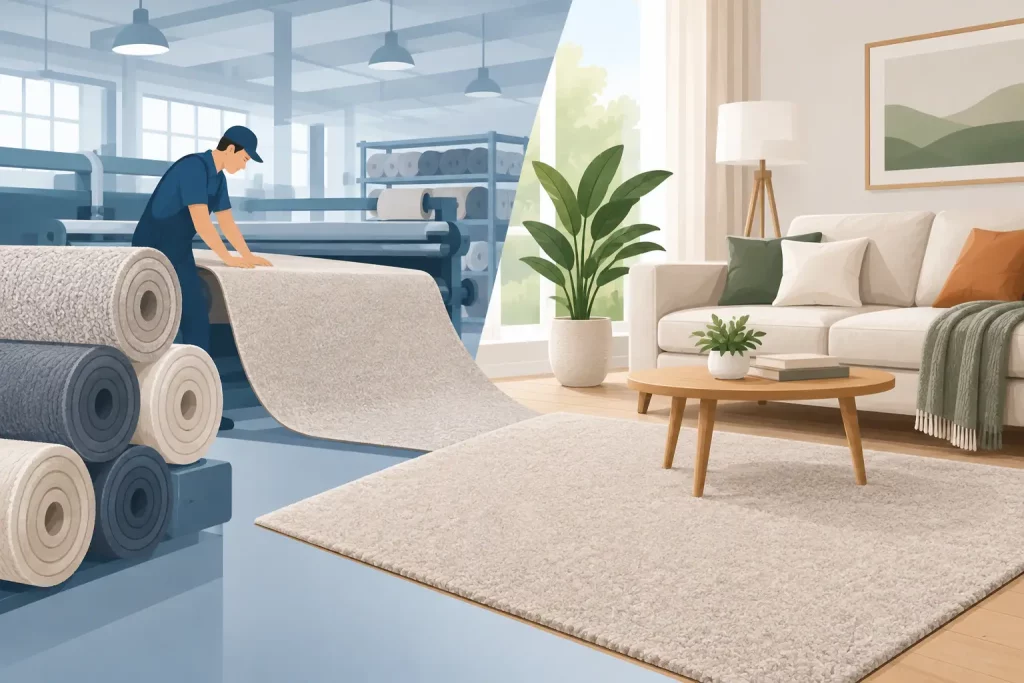
A genuine manufacturer starts with the room rather than a roll in a warehouse. The carpet is made to your plan, in the dimensions required, with the chosen pile, colour and finish specified from the outset. This makes a significant difference in larger rooms, long hallways, stair landings and spaces with bay windows or irregular edges.
Width is one of the most practical advantages. Standard retail carpets are commonly supplied in restricted widths, which can force a visible join through the middle of a room. A manufacturer able to produce wide-width carpet, up to 35 feet wide where required, can create a far more refined finished floor. Fewer joins mean a cleaner appearance, particularly in deep-pile carpets where changes in pile direction can catch the light.
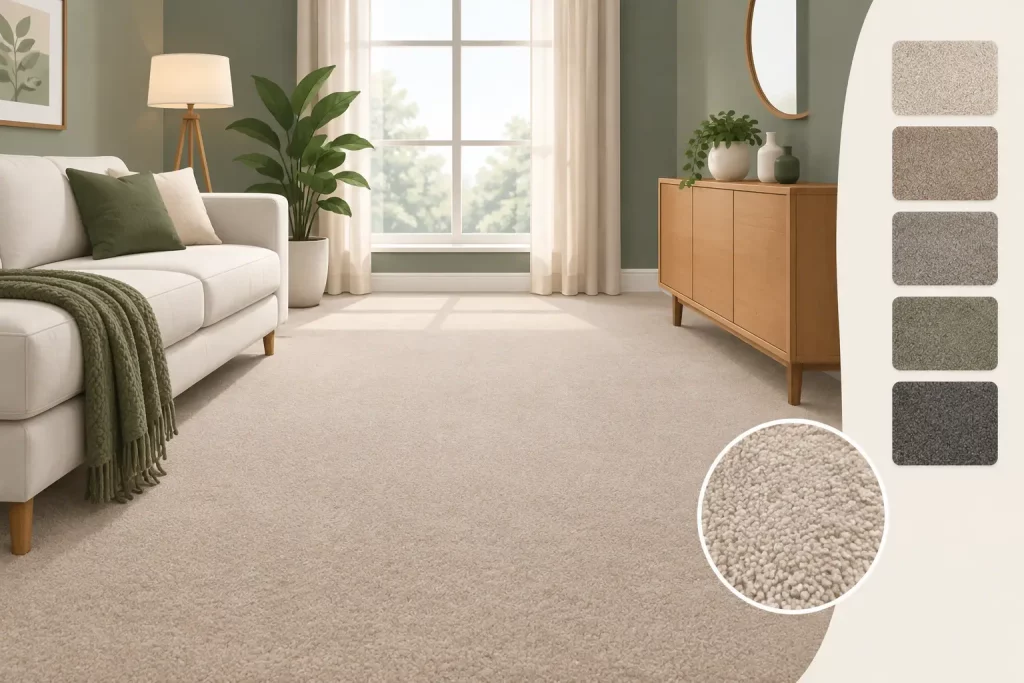
Colour choice is equally important. A carpet is one of the largest surfaces in a room, so even a slight mismatch can alter the balance of a scheme. With more than 3,000 colour options and colour-matching capability, you can select a shade that works with upholstery, curtains, wall finishes or a designer’s sample. This is particularly valuable when the required colour is not available from a conventional retail range.
The best service also takes responsibility for the complete process: measurement, design advice, quotation, manufacture, supply and fitting. When these elements are passed between separate businesses, errors can be difficult to resolve and costs can become unclear. One specialist overseeing the order provides a single accountable point of contact from the first survey to the final fitting.
Start With the Room, Not the Sample
The most successful bespoke carpet projects begin with practical questions. How is the room used? Is it a formal drawing room, a busy family space, a principal bedroom or an elegant hallway? Is the aim to make a compact room feel calmer and more expansive, or to introduce contrast with a bordered carpet or custom-made rug?
Natural light must be considered as carefully as artificial light. A grey that appears crisp in a north-facing sample room may look noticeably cooler in a shaded home. Warm neutrals can bring softness to traditional interiors, while richer tones can give a larger room definition and character. Samples should always be viewed in the room where the carpet will be used, at different times of day and alongside surrounding finishes.
Scale matters too. In a large open room, a plain carpet in a carefully matched colour can create an unbroken, luxurious base for the scheme. In a more formal setting, a contrasting border can frame the room and echo a curtain trim, paint colour or upholstery detail. The border width needs to be planned in relation to the space, however. Too narrow and it can look incidental; too broad and it may dominate the floor.
A free professional measure removes much of the uncertainty. It allows dimensions, access, thresholds, hearths, doors and existing floor levels to be assessed properly before the carpet is manufactured. It also reduces the risk of ordering excess material simply because a standard roll size dictates the calculation.
Choosing the Right Pile and Fibre
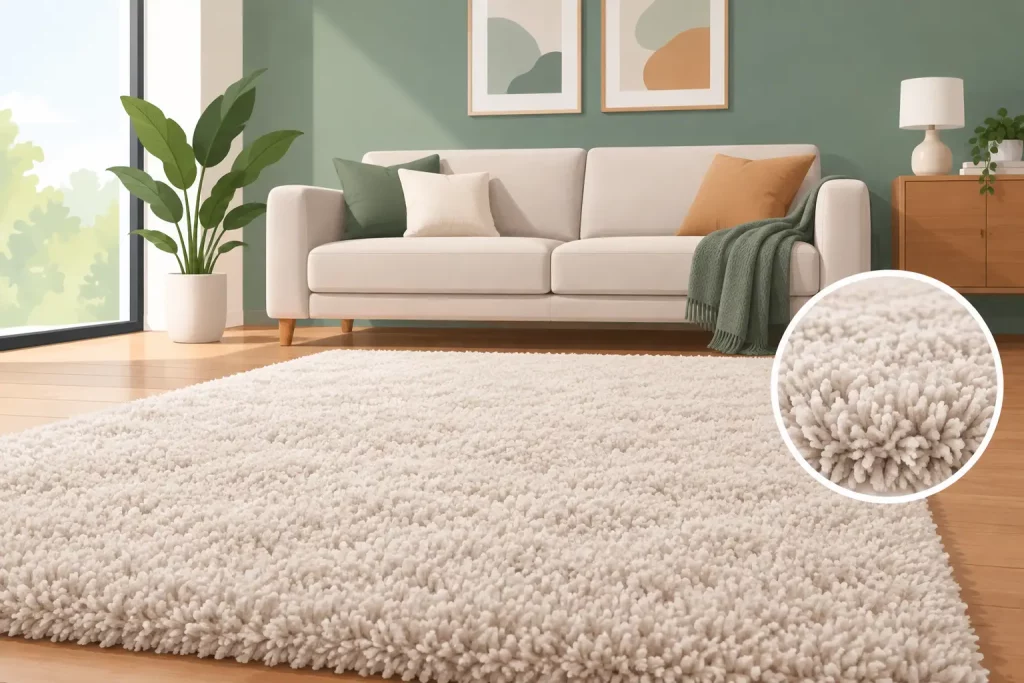
A luxury carpet should feel as good as it looks, but the right specification depends on where it will be used. Deep-pile velvet in 100% pure new wool offers exceptional softness, richness of colour and a beautiful, subtle change in appearance as the pile moves. It is a superb choice for bedrooms, reception rooms and spaces where comfort and visual depth are the priority.
An 80/20 wool-nylon deep-pile twist is often the more practical option for areas that receive heavier daily use. The wool gives warmth, resilience and natural character, while nylon adds durability. Hallways, stairs, family rooms and other active areas can benefit from this balance.
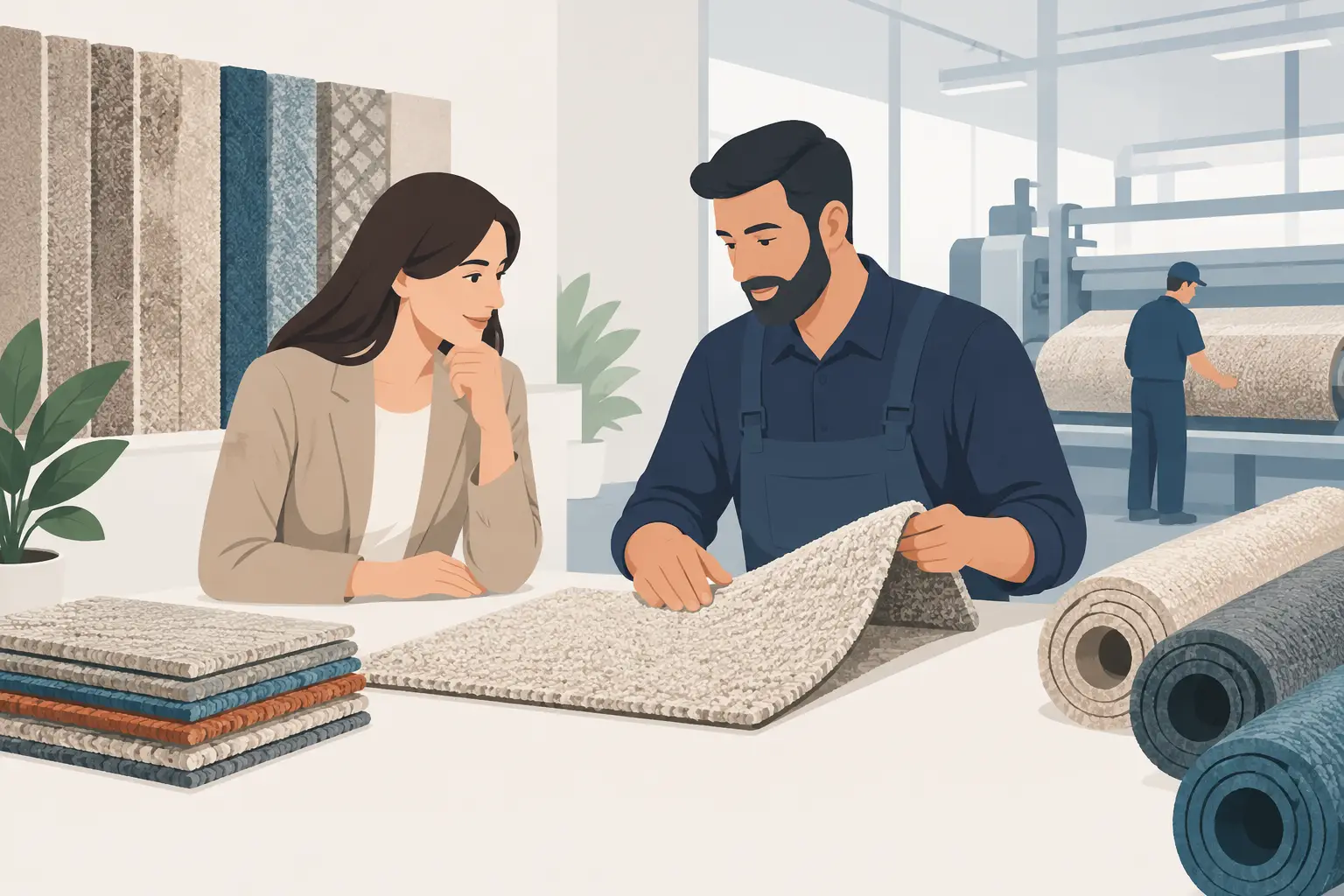
Neither option is automatically better. Pure wool velvet has a particularly sumptuous finish, while a wool-nylon twist may suit a household that needs greater everyday resilience. A specialist should explain the difference clearly and provide samples, allowing you to judge the texture, weight and colour in your own home without pressure.
Underlay deserves the same attention. It affects comfort, insulation, sound reduction and the way a carpet wears over time. It should not be treated as an afterthought or introduced as an unexpected extra at the quotation stage. Where underlay and professional fitting are included in the stated square-metre price, you can compare the real project cost with confidence.
Why Factory-Direct Manufacture Creates Better Value
Bespoke does not have to mean inflated pricing. The value comes from producing only what the room requires and selling directly rather than adding layers of retail margin. Made-to-plan manufacture helps avoid costly material waste, especially in rooms where a standard roll would leave large unusable offcuts.
Factory-direct pricing should still be transparent. Ask whether the quotation includes measuring, underlay, delivery, fitting and any finishing details such as borders. A lower initial figure can quickly become less attractive when essential elements are added later. A clear all-in price makes it easier to plan a premium flooring project properly.
There is also a quality benefit in dealing directly with the manufacturer. The people advising on colour, widths and construction understand how the carpet is made and fitted. They can identify potential issues early, whether that is a join that can be avoided, a border proportion that needs adjustment or a colour that would benefit from viewing in a larger sample.
At Colourmatched Custom Carpets, the complete service is controlled from free measurement and design advice through to UK-wide professional fitting. That direct approach keeps the process personal, avoids middlemen and allows customers to buy at genuine factory prices.
Questions Worth Asking Before You Order
Before confirming a bespoke carpet, establish whether the supplier will measure the room themselves, provide physical samples and explain the material specification in plain terms. You should also ask how widths will be planned, whether joins are likely, and what the final installed price includes.
For a bordered carpet or rug, request guidance on border placement and width rather than choosing from a photograph alone. The relationship between the border, skirting, furniture and room shape is what makes the result look intentional. A well-designed border should feel part of the architecture, not like an afterthought.
It is sensible to discuss fitting conditions as well. Existing flooring may need to be removed, furniture may need moving and door clearances may require checking. Good planning keeps installation day straightforward and protects the quality of the finished result.
A Floor Made for the Finished Room
A bespoke carpet is most rewarding when it is treated as part of the interior design, not a final purchase made after every other decision. The right colour can tie a scheme together; the right width can remove distracting joins; the right pile can change how a room feels the moment you step into it.
Take time to view samples at home, ask for a proper measure and choose a manufacturer that will stand behind every stage of the work. The result should not merely cover the floor. It should make the whole room feel considered, comfortable and complete.