A deep pile carpet changes more than the feel beneath your feet. It affects how a room holds colour, absorbs sound and presents itself as a finished interior. In a bedroom, drawing room or dressing area, the right deep pile can bring a softness and sense of quiet luxury that hard flooring and lower-profile carpet rarely match. The key is choosing a quality construction, a suitable fibre and a made-to-measure finish that suits the way the room will be used.
For homeowners and interior designers, this is where standard off-the-roll choices can become restrictive. Carpet width, colour, borders and fitting details all influence the final result. A carefully specified bespoke carpet gives you control over those details rather than asking you to compromise around them.
What makes deep pile carpet feel luxurious?
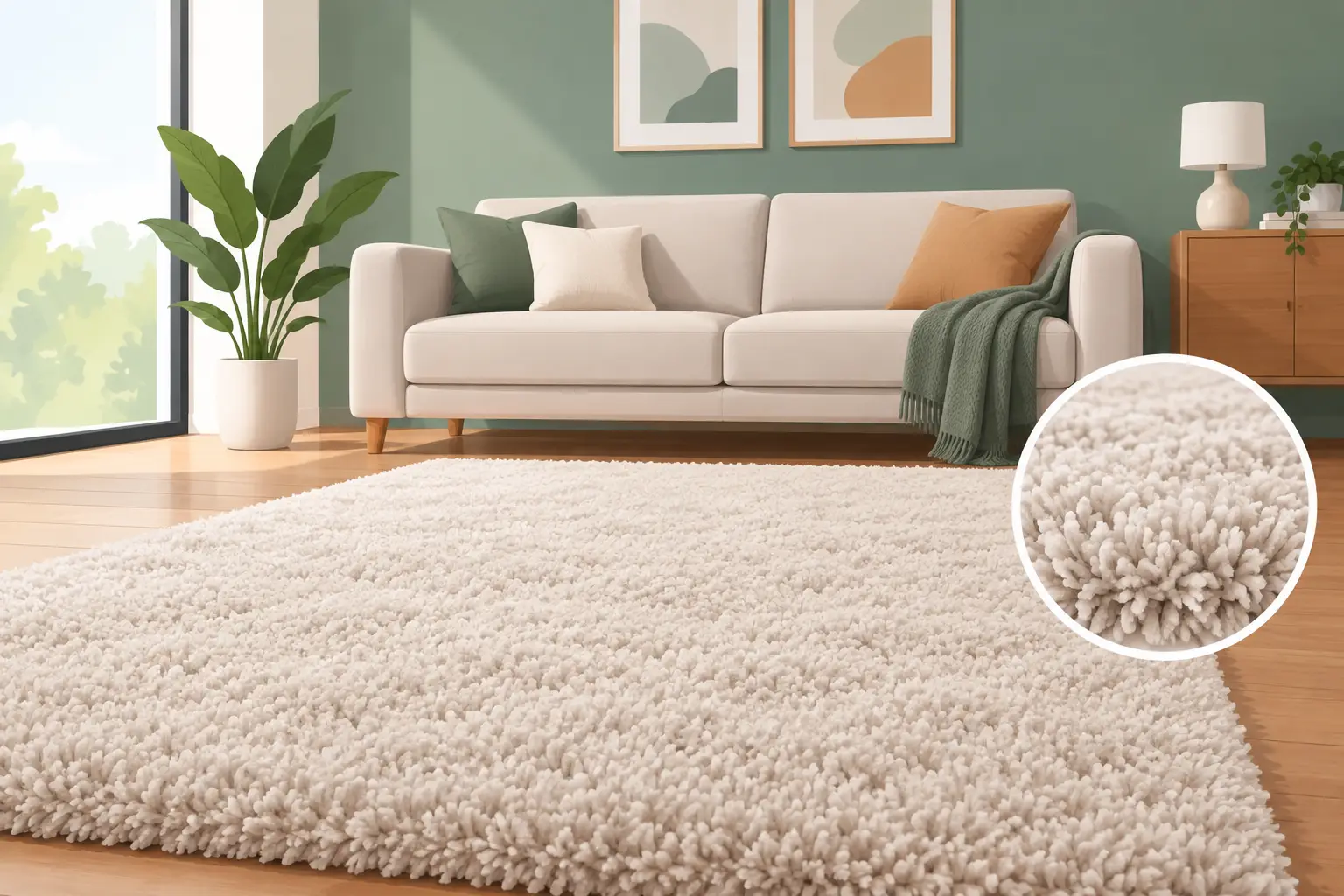
Pile is the visible surface of the carpet: the yarn that stands above the backing. A deeper pile has more height and presence underfoot than a close, low-profile construction. It can feel sumptuous, but depth alone is not a measure of quality. The density of the pile, the quality of the yarn and the support provided by the underlay matter just as much.
A well-made deep pile carpet should recover after normal foot traffic, feel substantial rather than loose, and carry its colour with depth. This is particularly apparent in wool. Wool has a naturally rich appearance, a comfortable warmth and a gentle resilience that makes it exceptionally well suited to premium interiors.
There are two popular directions for luxury deep-pile flooring. Velvet carpet has a closely sheared, smooth surface that gives a more formal and refined look. Light falls across it differently depending on the direction of the pile, producing attractive shading and a beautifully even field of colour. Deep-pile twist has a more textured surface, with twisted yarns that create a relaxed, tactile character and can be a practical choice for rooms with more regular use.
Neither is automatically better. A pure new wool velvet may be ideal for an elegant principal bedroom or a formal sitting room, while an 80/20 wool-nylon deep-pile twist can be a sensible choice where durability is a stronger consideration. The best option depends on the room, the household and the look you want to achieve.
Where does deep pile carpet work best?
Deep pile is at its best in rooms where comfort and appearance take priority. Bedrooms are a natural fit: the first step out of bed feels warmer, and the carpet gives the room a softer, more restful finish. It also works exceptionally well in lounges, snug rooms, dressing rooms and private studies, where a generous surface helps the space feel composed and inviting.
It can be used in a hallway or on stairs, but this needs a more considered specification. These areas experience concentrated traffic, outdoor dirt and frequent compression from footwear. A durable twist construction, a carefully selected colour and professional fitting are particularly valuable here. Very pale velvet may look striking in the right home, but it will show shading, footprints and daily wear more readily than a mid-tone textured pile.
For a home with children, pets or a busy family routine, there is no need to rule out luxury carpet. It simply pays to be realistic about placement. Reserve the most delicate, light-toned velvet for quieter rooms, and choose a practical deep-pile twist or deeper neutral shade where life is more active.
Colour, texture and the effect on the room
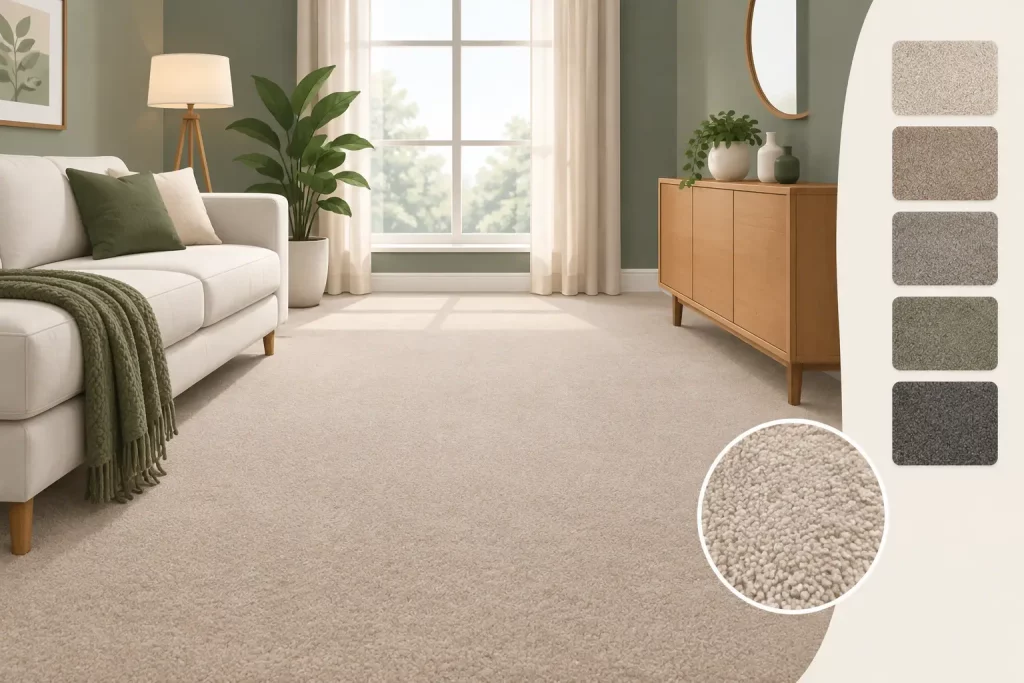
Carpet occupies a large visual area, so its colour has a powerful effect on the scheme. Deep pile tends to make colour appear fuller and more enveloping than a flatter floor covering. Soft stone, mushroom, warm grey and muted green shades can ground a room without making it feel cold. Richer shades such as navy, forest green, burgundy or charcoal can create real drama when balanced with considered lighting and lighter walls.
Velvet deserves special attention during colour selection. Its smooth surface creates pile reversal and shading, meaning the colour may look lighter or darker when viewed from opposite sides of the room. This is not a fault. It is one of the characteristics that gives velvet its movement and luxury. Samples should be viewed in the room itself, in daylight and evening light, alongside paint, curtains, upholstery and timber finishes.
For a scheme requiring a precise tone, colour matching offers far more freedom than a limited retail rack. Colourmatched Custom Carpets can produce bespoke carpet across more than 3,000 colour options, allowing the flooring to support the wider interior rather than becoming a near-enough compromise.
Why bespoke width makes a visible difference
Many carpets are sold in standard widths. If a room is wider, longer or shaped awkwardly, the installer may need to introduce joins. Even when expertly made, joins can interrupt the clean appearance of a deep, plain pile, especially in rooms with strong natural light or a simple, uncluttered design.
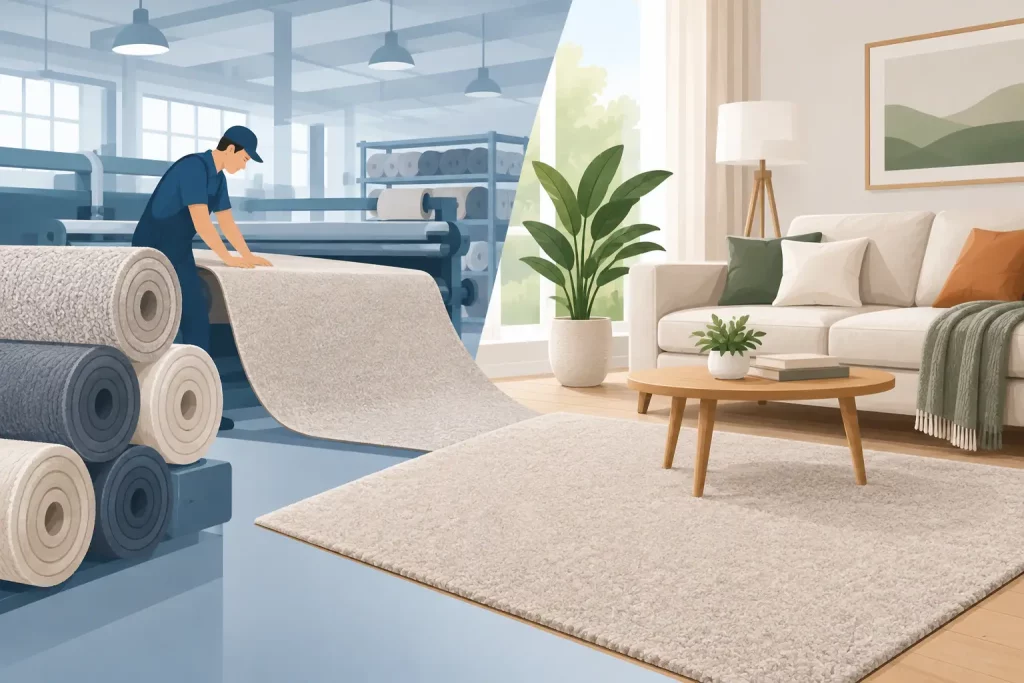
Made-to-plan manufacture allows the carpet to be produced for the room rather than cut down from whatever roll is available. Wide-width production, including dimensions up to 35 feet wide, can remove the need for visible joins across large spaces. The result is a more refined expanse of colour and texture, particularly valuable in principal bedrooms, large living rooms and open-plan areas where the floor is always in view.
It also reduces unnecessary waste. Buying from a standard roll often means paying for material that must be cut away to accommodate the room. Bespoke manufacture uses the agreed dimensions and plan, helping to avoid that costly excess while giving a more exact finished fit.
Borders and rugs can define a space
A deep pile carpet does not have to run wall to wall without detail. A contrasting or tonal border can frame a room, pick up a curtain fabric or create a more architectural edge around the perimeter. It is particularly effective in larger bedrooms and drawing rooms, where it introduces definition without the interruption of separate floor coverings.
Custom-made rugs offer another option. A deep-pile rug can bring the same luxurious material beneath a seating group or under a bed while retaining timber, stone or tiled flooring around it. The border, size and colour can be tailored to the furniture layout, which is far more convincing than selecting a standard rug that is merely close to the required dimensions.
Underlay and fitting are part of the specification
A luxury carpet will only perform as well as the foundation beneath it. The correct underlay supports the pile, improves underfoot comfort and helps the carpet retain its appearance. It can also contribute to warmth and sound reduction, both welcome benefits in bedrooms and upstairs living spaces.
Fitting is equally important. Deep pile requires careful handling so that edges sit neatly, transitions are finished properly and the pile direction is considered throughout the room. Poor fitting can spoil an otherwise excellent material, while a professional installation gives the carpet the tension, alignment and clean perimeter finish it needs.
When comparing prices, ask exactly what is included. A low initial figure can become less attractive once survey costs, underlay, grippers, delivery and fitting are added. A clear square-metre price that includes underlay and fitting makes budgeting more straightforward and avoids unwelcome extras later in the project.
From sample to finished floor
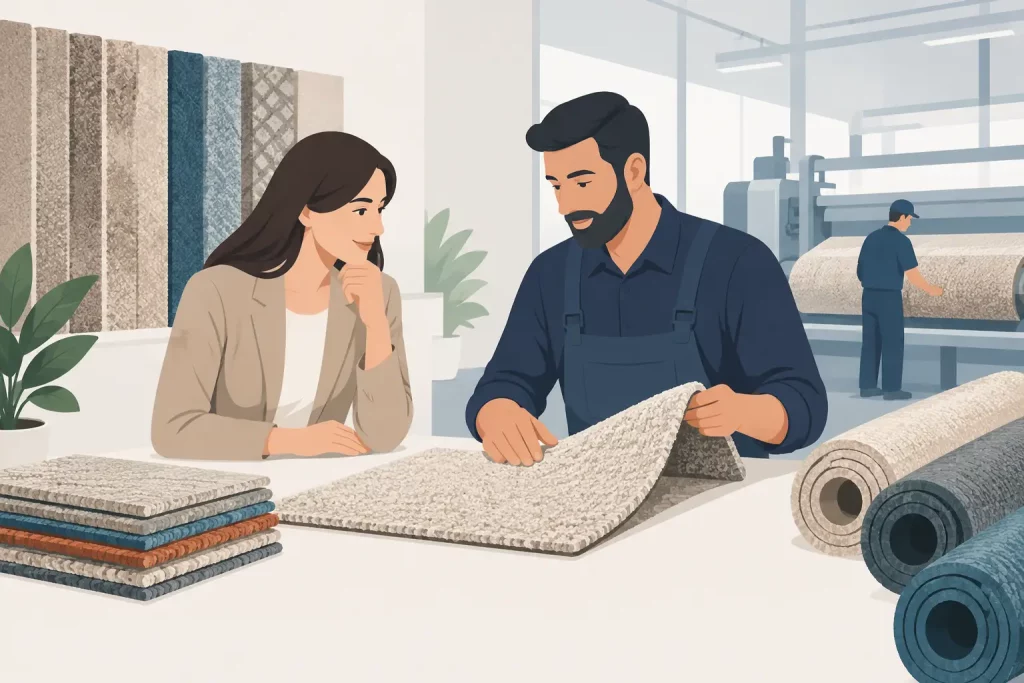
Bespoke flooring should not feel complicated. The most reliable process starts with seeing and feeling samples at home, where colour can be judged in the actual room. From there, a proper measure confirms the dimensions, identifies any unusual angles or thresholds, and establishes whether a join can be avoided.
Design advice is useful at this stage, particularly when choosing between velvet and twist, deciding on a border or coordinating carpet with existing finishes. Once the plan and quotation are agreed, the carpet can be manufactured to order and fitted by professionals who understand the original specification. Having one accountable provider from survey through to installation removes the usual uncertainty of dealing with separate retailers, suppliers and fitters.
Looking after a deep pile carpet
Deep pile does not require fussy treatment, but it does reward regular care. Vacuum routinely using the setting recommended for the carpet type, without being overly aggressive on a velvet surface. Attend to spills promptly by blotting rather than rubbing, and use a professional cleaner when needed rather than risking unsuitable household products.
Expect some shading and tracking on velvet, especially in areas where people walk or where furniture has been moved. This is part of its natural character, not evidence that the carpet has worn out. Rotating furniture where practical and using protective feet beneath heavy pieces will help spread pressure more evenly.
The strongest results come from specifying the carpet honestly around the room it will serve. Choose the colour you genuinely want to live with, the construction that suits the traffic, and a bespoke width that lets the floor read as one continuous, beautifully finished surface. That is when deep pile becomes more than a soft flooring choice – it becomes part of the room’s design.