A beautiful carpet can look deceptively simple once it is fitted: one continuous field of colour, a luxurious pile and clean edges against the skirting. Yet what affects carpet installation cost is rarely just the size of the room. The material, room layout, preparation work and fitting method all shape the final figure – and they also determine whether the finished floor feels truly considered for years to come.
For homeowners and interior designers, the most useful comparison is not simply a price per square metre. It is understanding exactly what that figure includes, how the carpet has been planned and whether the supplier is accountable from initial measurement through to final fitting.
What affects carpet installation cost most?
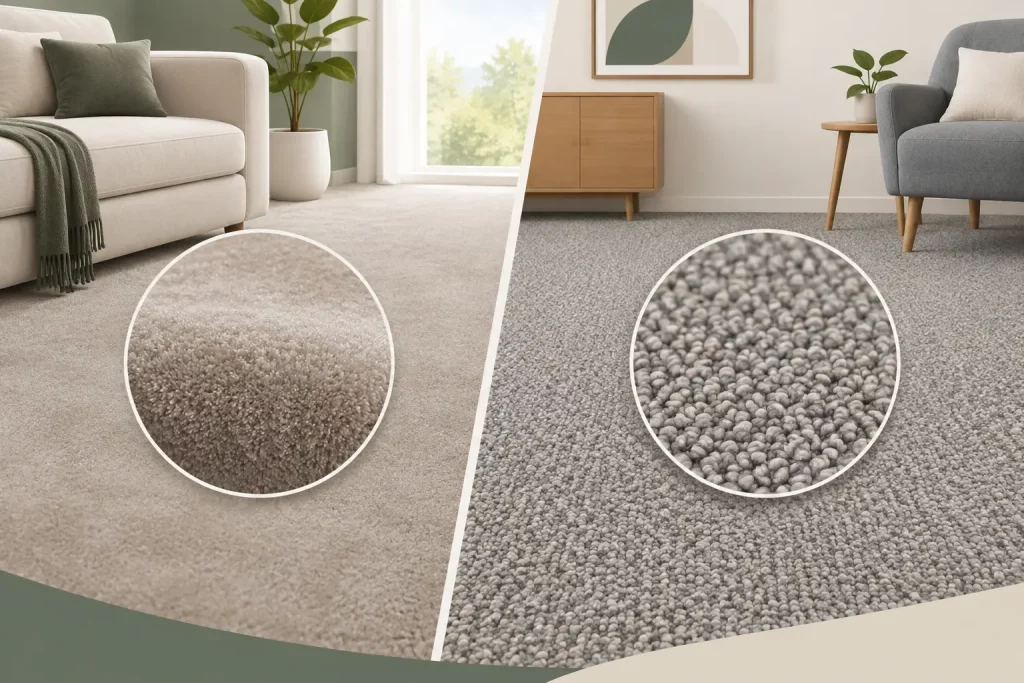
The first factor is the carpet itself. A deep-pile 100% pure new wool velvet has a different material cost and character from an 80/20 wool-nylon twist. Pure wool brings exceptional softness, depth of colour and natural resilience, making it a superb choice for bedrooms, drawing rooms and refined living spaces. A quality wool twist offers a more practical balance for busy family rooms, halls and stairs where extra durability is valuable.
These are not interchangeable products, so a lower headline price can be misleading if it compares different fibre blends, pile weights or manufacturing standards. The density of the pile, quality of the backing and finish of the yarn all contribute to how the carpet looks under changing light and how well it wears over time.
Bespoke colour also influences cost. Matching a carpet to upholstery, painted joinery or a carefully built interior scheme requires specialist production rather than selecting the nearest shade from a standard stock range. For many projects, that precision is worth far more than a small initial saving. It prevents the compromise of building an entire room around a colour that was merely available.
Room size is only part of the calculation
Carpet is priced by area, but the room’s proportions have a major effect on how efficiently that area can be covered. Standard broadloom carpets are commonly supplied in restricted widths. When a room exceeds those widths, the installer may need to introduce joins, order additional material or cut around awkward dimensions. This can increase both material use and labour.
A made-to-plan carpet can reduce unnecessary waste because it is produced for the dimensions of the space. Custom widths, including especially wide carpets for larger rooms, can also avoid visible joins across the floor. The result is not only more refined visually; it can be a more efficient use of material than buying off the roll and discarding large cut-offs.
That said, a larger or unusually shaped room will still require more carpet and more planning. Bay windows, angled walls, chimney breasts, fitted furniture and curved thresholds all add measuring and cutting time. Accurate surveying matters here. A small measurement error can cause expensive delays, particularly with a custom-made carpet that cannot simply be replaced from a warehouse roll.
Stairs, landings and multiple levels
Stairs are usually more labour-intensive than an open rectangular room. Each tread, riser, turn and landing must be measured and fitted precisely, while pile direction and pattern alignment need careful consideration. A plain carpet may appear straightforward, but its pile must still run consistently to maintain an even appearance.
The same applies where several rooms are being carpeted together. There can be savings in arranging one coordinated visit, but each doorway, change of level and transition to another flooring type needs a proper finishing detail. A reliable quotation should identify this work rather than leaving it as an unexpected extra on fitting day.
Underlay and preparation are not optional details
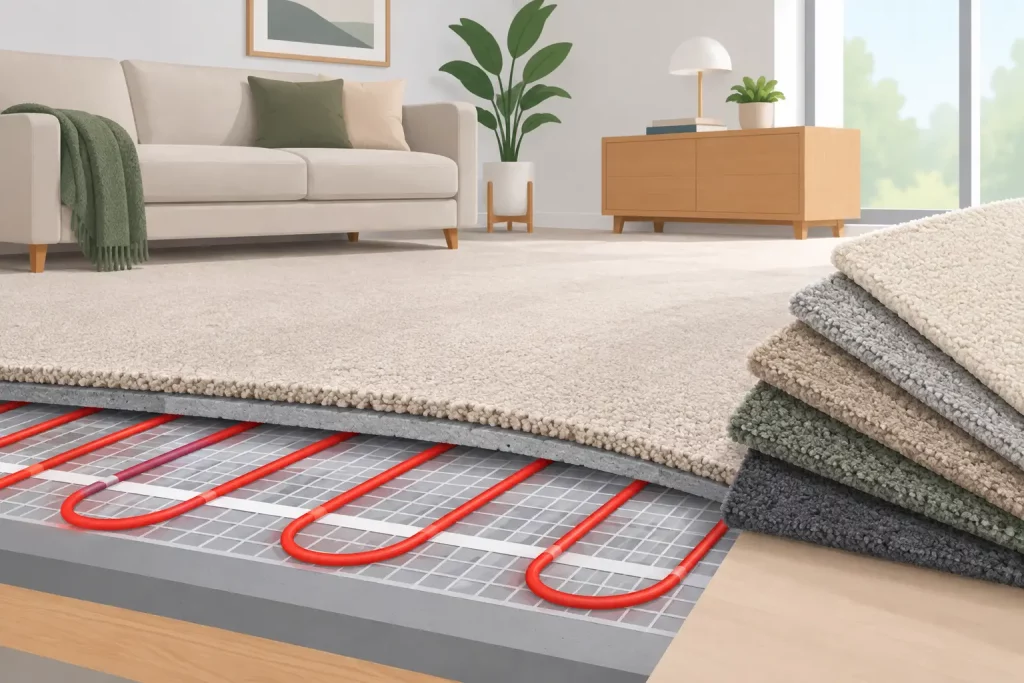
Underlay is one of the most important elements beneath a luxury carpet. It improves comfort underfoot, supports the pile, helps the carpet recover after foot traffic and can improve thermal and acoustic performance. Choosing underlay solely on the basis of the lowest cost is often a false economy, particularly under a dense wool carpet.
The condition of the subfloor can affect installation costs too. Floorboards may need securing, uneven areas may require levelling, and old adhesive, gripper or worn underlay may need removing. These requirements vary considerably between properties, especially period homes where floors may have settled over decades.
A professional survey gives the opportunity to identify potential work before an order is placed. That is far preferable to discovering a loose board or unsuitable surface once fitters have arrived. It also makes it clearer which elements are included in the quotation and which site repairs, if necessary, sit outside normal carpet fitting.
Borders, finishes and design details
A bordered carpet or custom-made rug involves more than selecting two colours. The border width, placement, mitred corners and relationship to the room perimeter must all be planned. These details require additional manufacturing and fitting skill, but they create a tailored result that standard carpet cannot offer.
The same is true of rugs made to exact dimensions. A rug designed to sit beneath a dining table, frame a seating area or align with architectural features needs appropriate allowances for furniture and walkways. Its cost reflects the chosen carpet, size, edging and construction, but it also reflects the care taken to make it belong in the room rather than look dropped into it.
Door bars, stair rods, thresholds and specialist edge finishes can add to the final price where required. None is inherently a problem, but each should be specified in advance. Good installation is as much about the details at the perimeter as it is about the carpet in the centre of the room.
Labour, access and professional fitting
Professional fitting is a skilled part of the purchase, not an afterthought. A quality carpet can be spoiled by poor stretching, careless trimming or an obvious join. Conversely, experienced fitters can make a challenging room look calm and effortless, with secure edges and a smooth, even finish.
Access affects the time involved. Upper-floor rooms, restricted parking, narrow staircases, occupied properties and furniture that cannot be moved all need consideration. In some homes, existing carpet and underlay removal is required; in others, the room is empty and ready for fitting. These practical differences influence labour, even when the floor area is the same.
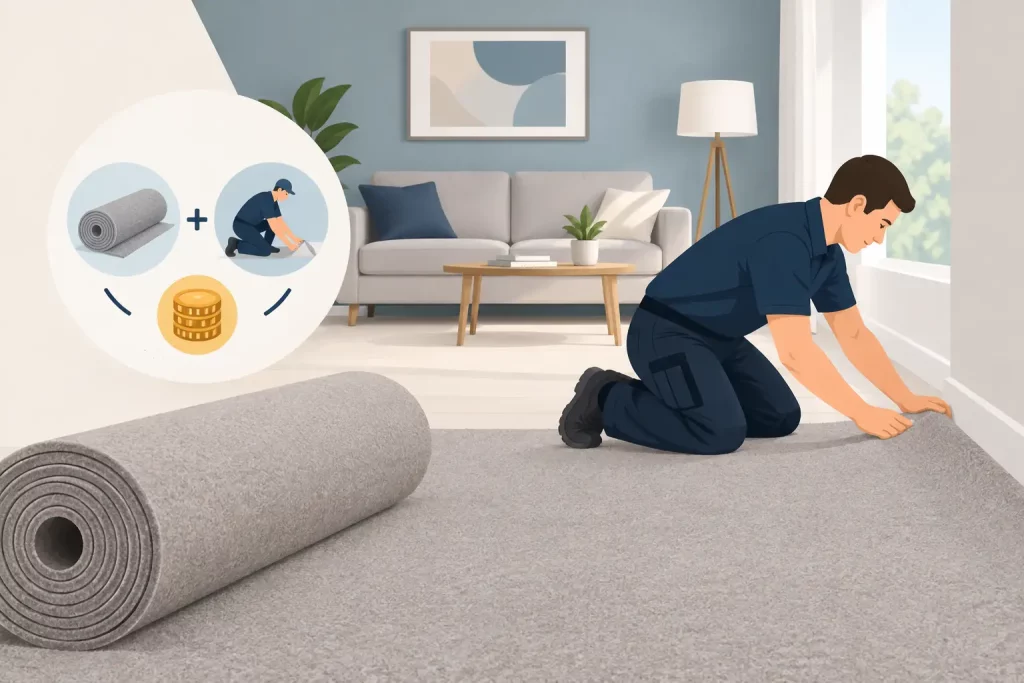
It is worth asking whether fitting and underlay are included in the stated square-metre price. A cheap carpet quotation can become less attractive once survey fees, underlay, grippers, delivery, fitting and disposal are added separately. Transparent pricing allows a like-for-like comparison and helps clients plan their renovation budget with confidence.
Why factory-direct planning can offer better value
Buying directly from a specialist manufacturer can change the cost equation. Rather than passing through several layers of retail margin, the carpet can be measured, designed, manufactured and fitted through one accountable service. This gives greater control over colour, dimensions and production while keeping the process clear for the customer.
At Colourmatched Custom Carpets, stated square-metre prices include underlay and fitting, with a free measure and no-obligation quotation available throughout the UK. That approach is designed to remove the uncertainty that often surrounds carpet pricing, particularly for bespoke widths, colour-matched schemes and rooms where joins would compromise the final look.
Free samples are equally valuable before committing. Wool has texture, depth and a changing response to natural and artificial light that no screen can fully reproduce. Viewing a sample alongside paint, curtains and upholstery is the sensible way to judge whether a colour is right.
Getting a quotation you can trust
The most accurate quotation begins with a proper conversation about the room and how it will be used. A formal reception room may justify the pure luxury of deep-pile wool velvet, while a high-traffic hallway may call for a hard-wearing wool twist. Neither choice is universally better; the right answer depends on the space, the desired look and the demands placed on it.
Ask for clarity on material specification, dimensions, underlay, preparation assumptions, fitting, joins and any finishing details. If a price is significantly lower than another, establish what has been excluded rather than assuming the carpets are equivalent. The best value is a floor that has been correctly specified, carefully made and professionally fitted once – not a lower initial figure followed by compromises or additional charges.
A well-planned carpet should feel like part of the architecture of the room. Start with samples, arrange an accurate measure and let the final design be guided by the finish you want to live with, not simply the first price you see.