A choice between velvet versus twist carpet changes far more than the feel beneath your feet. It affects how light moves through a room, how the floor copes with daily use and whether your finished scheme feels formal, relaxed or somewhere in between. For a room planned around carefully chosen paint, fabrics and furniture, the pile is every bit as significant as the colour.
Both styles can provide genuine quality and warmth underfoot. The right answer depends on the room, the level of traffic and the look you want to live with. A soft, refined velvet has a very different character from a textured deep-pile twist, so it is worth seeing and feeling both before committing to a made-to-measure floor.
Velvet versus twist carpet: the essential difference
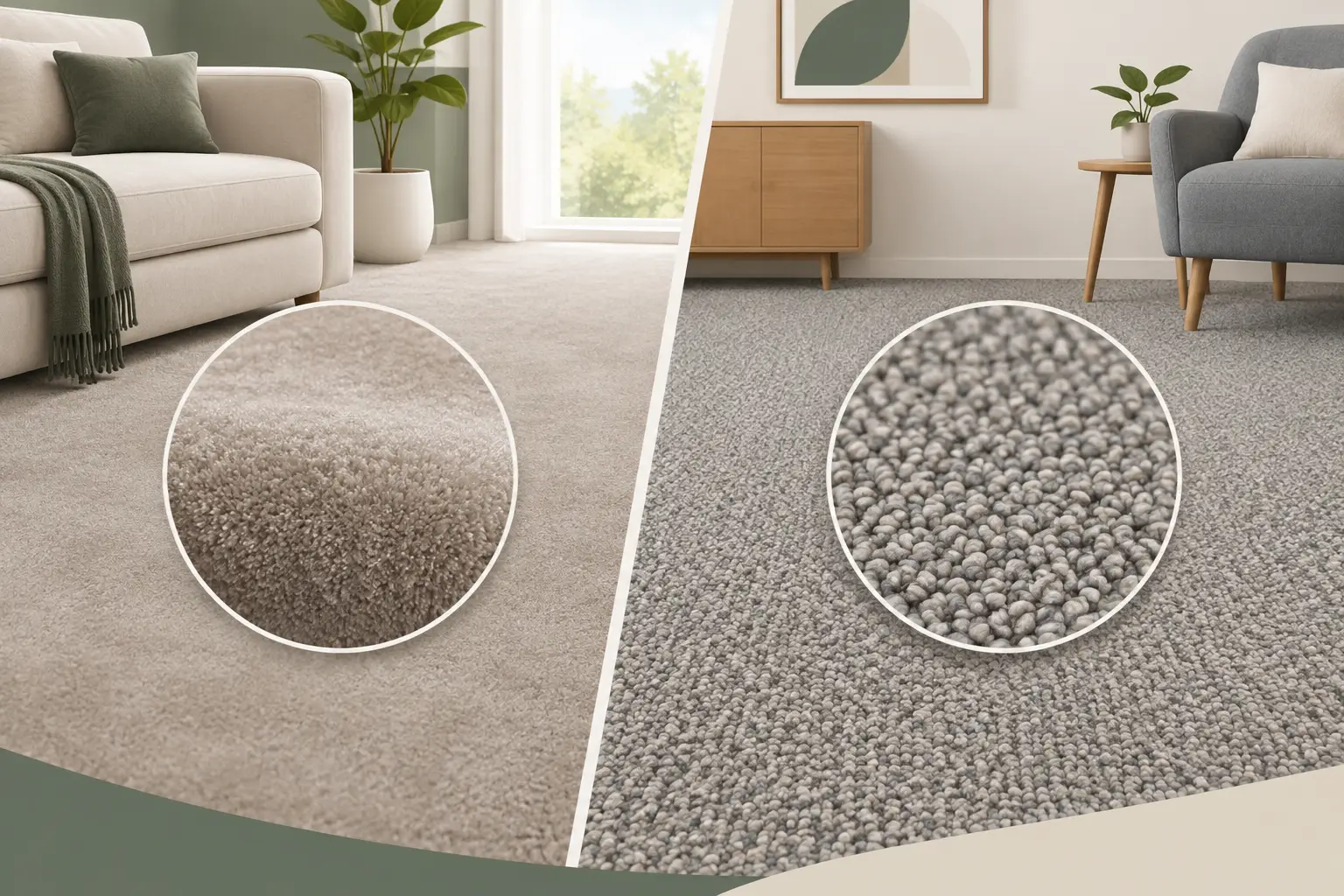
Velvet carpet has a closely cut, even surface. Its pile is sheared to create a smooth, dense finish that feels particularly soft and looks beautifully uniform when viewed from a distance. In a quality 100% pure new wool velvet, that surface brings a sense of quiet luxury to bedrooms, drawing rooms and other spaces where appearance and comfort take priority.
Twist carpet is also cut pile, but the yarn is tightly twisted before it is set into the carpet. This produces a more textured, slightly grainier surface with a less formal appearance. An 80/20 wool-nylon deep-pile twist combines the natural character of wool with nylon reinforcement, making it a highly practical choice for busy family homes, stairs, halls and frequently used living areas.
Neither is automatically better. Velvet is the more polished choice; twist is generally the more forgiving one. The best carpet is the one that suits the way the room will actually be used, rather than simply the one that looks best in a small sample.
The look of a velvet carpet
A velvet pile gives a room a calm, tailored foundation. Because the fibres lie in a consistent direction, the carpet can show subtle changes in shade as you walk around it or as daylight shifts during the day. This is known as shading or pile reversal, and it is a normal feature of a cut-pile carpet rather than a fault.
That gentle variation is often part of velvet’s appeal. It gives a plain colour depth and movement, particularly in deeper tones such as navy, forest green, charcoal or rich burgundy. In pale shades, it can make a room feel lighter and more expansive, with an almost upholstered quality underfoot.
Velvet tends to suit rooms where the floor is intended to look pristine and deliberate. A principal bedroom, formal lounge, dressing room or a quiet study can all benefit from its smooth finish. It also works exceptionally well in interiors with clean-lined joinery, statement curtains and considered furniture, where the carpet needs to support the scheme without competing with it.
The trade-off is visibility. Footprints, vacuum tracks and temporary pressure marks may show more readily on a velvet surface than on a twist. This does not mean the carpet is fragile, but it does mean it rewards regular, correct care and an understanding that a living floor will not look identical from every angle.
Why wool velvet feels different
Pure new wool has a natural resilience, warmth and softness that synthetic-heavy alternatives struggle to replicate. Its fibres spring back after compression, help regulate the feel of a room and offer a rich, substantial handle. In a deep-pile velvet, those qualities create pure luxury underfoot.
For homeowners selecting a bespoke colour, velvet provides an especially elegant canvas. A precisely matched tone can run from wall to wall without the interruption of a standard retail width or a visible join, allowing the colour to read as one continuous surface.
The character and practicality of twist carpet
Twist carpet has a more relaxed visual texture. The twisted yarn disguises everyday marks better than a smooth velvet pile, making it an excellent all-round choice where children, pets, visitors and regular movement are part of normal life. It can still look luxurious, particularly in a dense deep-pile quality, but its appeal is more practical and adaptable than formal.
An 80/20 wool-nylon twist is designed for durability as well as comfort. Wool contributes warmth, texture and a naturally premium appearance, while nylon helps the pile resist flattening in harder-working spaces. For a busy staircase, landing or family room, that extra resilience can be a sensible investment.
Twist is often the easier choice if you prefer a carpet that looks consistently tidy without worrying about every footprint. Its texture breaks up the surface visually, so it is less likely to reveal changes in pile direction. It is also very effective in mid-tones and flecked colourways, although a bespoke plain twist can be equally successful when the shade is chosen with the room’s light levels in mind.
This does not make twist a purely functional option. In the right colour, with a well-made border or a carefully planned fitting, it can deliver a smart, high-end finish throughout a home. It simply has a less silky, more tactile appearance than velvet.
Which rooms suit each pile?
Bedrooms are the natural home for velvet, especially where comfort is the priority. The first step out of bed onto a deep, pure wool pile is a small daily pleasure, and a smooth surface contributes to the restful character most people want in a sleeping space. A low-traffic sitting room or elegant reception room can also be an ideal setting.
For halls, stairs and landings, twist is usually the more sensible starting point. These areas take concentrated wear, often in the same walking lines every day. A deep-pile 80/20 twist gives the warmth and quality of wool while being better equipped for repeated use.
Living rooms require a more personal judgement. A calm adult household might choose velvet for its refined appearance, while a family room that sees toys, pets and regular entertaining may be better served by twist. If your sitting room is both the centre of family life and the room you most want to look immaculate, request samples of both in your chosen colour and assess them in the actual space.
Light is another consideration. South-facing rooms can make pile direction and colour shifts more noticeable on velvet, particularly in very pale or very dark shades. Twist diffuses that effect more readily. Conversely, a north-facing room can benefit from the luminous, smooth finish of a lighter velvet.
Colour, borders and a join-free finish
Pile style should be selected alongside colour, not afterwards. Velvet often gives saturated colours a particularly rich appearance, while twist can add visual interest to softer neutrals and practical mid-tones. With more than 3,000 colour options available for bespoke manufacture, there is no need to settle for a near match to a wall colour, curtain fabric or upholstery scheme.
Borders add another dimension. A contrasting or coordinating border can frame a large room, define a seating area or echo a colour elsewhere in the interior. Velvet works beautifully for a crisp, tailored bordered carpet, while twist can create a more relaxed but equally considered result. The key is proportion: a border should complement the scale of the room and furniture rather than draw a hard line through the scheme.
Width matters, too. Standard roll widths can force joins across a room, even when the carpet itself is of good quality. Bespoke manufacture up to 35 feet wide makes it possible to plan many larger spaces as a single, uninterrupted expanse. The result is cleaner, more refined and avoids the disruption of unnecessary seams.
Care, fitting and long-term value
Both velvet and twist benefit from regular vacuuming with the correct setting for the pile. This removes surface dust before it works into the fibres and helps preserve the carpet’s appearance. Treat spills promptly by blotting rather than rubbing, and use a professional cleaner with suitable experience in wool carpet when a deeper clean is required.
The quality of the underlay and fitting is just as important as the carpet chosen. A properly specified underlay improves comfort, insulation and support, while careful fitting protects the appearance of the finished floor. It is particularly important with a bespoke border, a large room or a staircase, where inaccurate measuring can waste valuable material or spoil the intended proportions.
With Colourmatched Custom Carpets, the process is managed from free measurement and design advice through to manufacture and professional fitting nationwide. Underlay and fitting are included in the stated square-metre price, so you can compare options without hidden extras appearing later. Made-to-plan production also avoids the unnecessary waste that often comes with buying broadloom carpet off the roll.
Before deciding, ask for samples and place them where the carpet will be fitted. Look at them in morning light, evening light and artificial light, then run your hand across the surface and imagine the room in daily use. A few minutes spent comparing velvet and twist in your own home can make the final choice feel completely clear.