A rug that is too small can make an otherwise beautifully furnished room feel disconnected. One that is too large can conceal the proportions of the floor and leave little breathing space around the perimeter. Knowing how to select rug size is therefore less about choosing the nearest standard dimension and more about planning the room as a whole: its furniture, circulation space, focal point and finished look.
For a premium interior, a made-to-measure rug gives you far more control. It can be produced to sit exactly beneath a seating arrangement, define a dining area without obstructing chairs, or introduce a precise border detail that ties in with upholstery, paintwork and curtains. The aim is a rug that looks intentional from every angle, rather than simply placed where it happens to fit.
Start with the furniture, not the empty floor
The most reliable way to choose a rug is to measure the footprint of the furniture it needs to unite. In a sitting room, this usually means the sofa, occasional chairs and coffee table. In a dining room, it means the table and the fully pulled-out position of every chair. In a bedroom, it depends on whether the rug will sit beneath the bed or frame it from the sides.
Mark out your proposed rug size with masking tape, newspaper or a sheet. This simple exercise shows how the rug will affect walkways and reveals whether table legs, doors or radiators will cause practical problems. It is especially valuable in period homes and irregularly shaped rooms, where a standard retail size can look oddly positioned.
Leave a visible margin of flooring around the rug wherever possible. In a generously proportioned room, 20 to 45cm between the rug edge and the walls often creates a balanced result. Smaller rooms may need a narrower margin, while a large open-plan space can carry more. There is no fixed rule that suits every property, but symmetry and clear circulation should guide the final decision.
How to select rug size in a sitting room
A living-room rug should gather the seating area into one considered composition. The best size depends on the room and on the furniture layout, but the following approaches work consistently well.
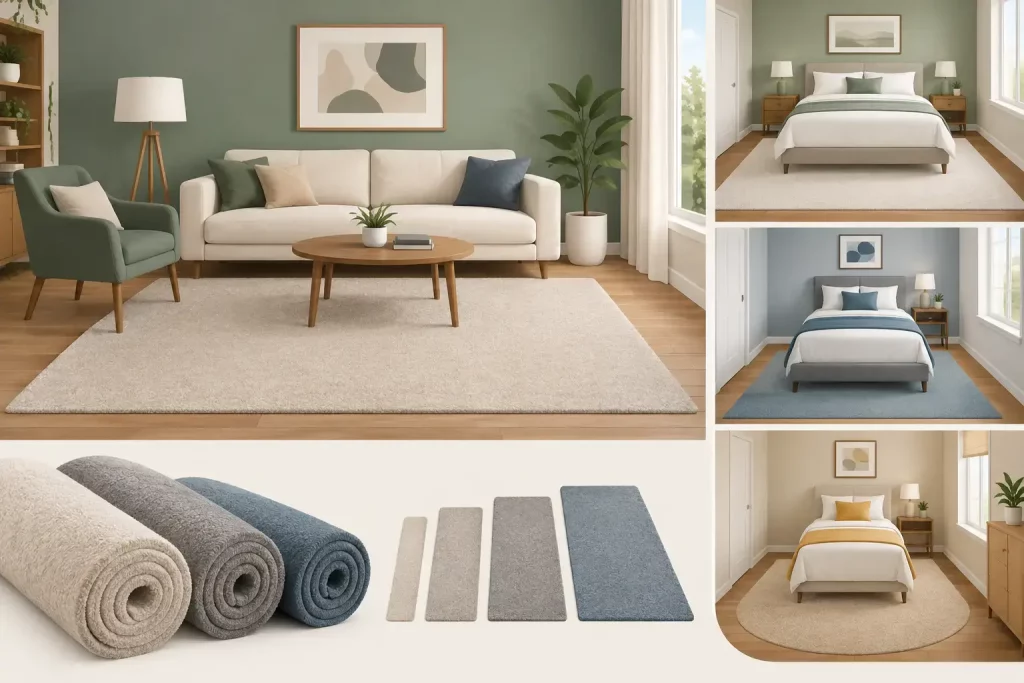
The most luxurious option is a rug large enough for all front furniture legs to sit on it. A sofa, armchairs and coffee table then share a common foundation, which makes the room feel more generous and settled. This is particularly effective in larger reception rooms, open-plan lounges and spaces with a central fireplace or media wall.
Where a full-size rug would reach too close to the walls, place the front legs of the sofa and chairs on the rug instead. This still connects the arrangement without making the room feel crowded. A smaller rug that sits only under the coffee table can work in a compact room, but it needs to be deliberately proportioned. If it is too narrow to reach towards the seating, it can make expensive furniture look as though it is floating apart.
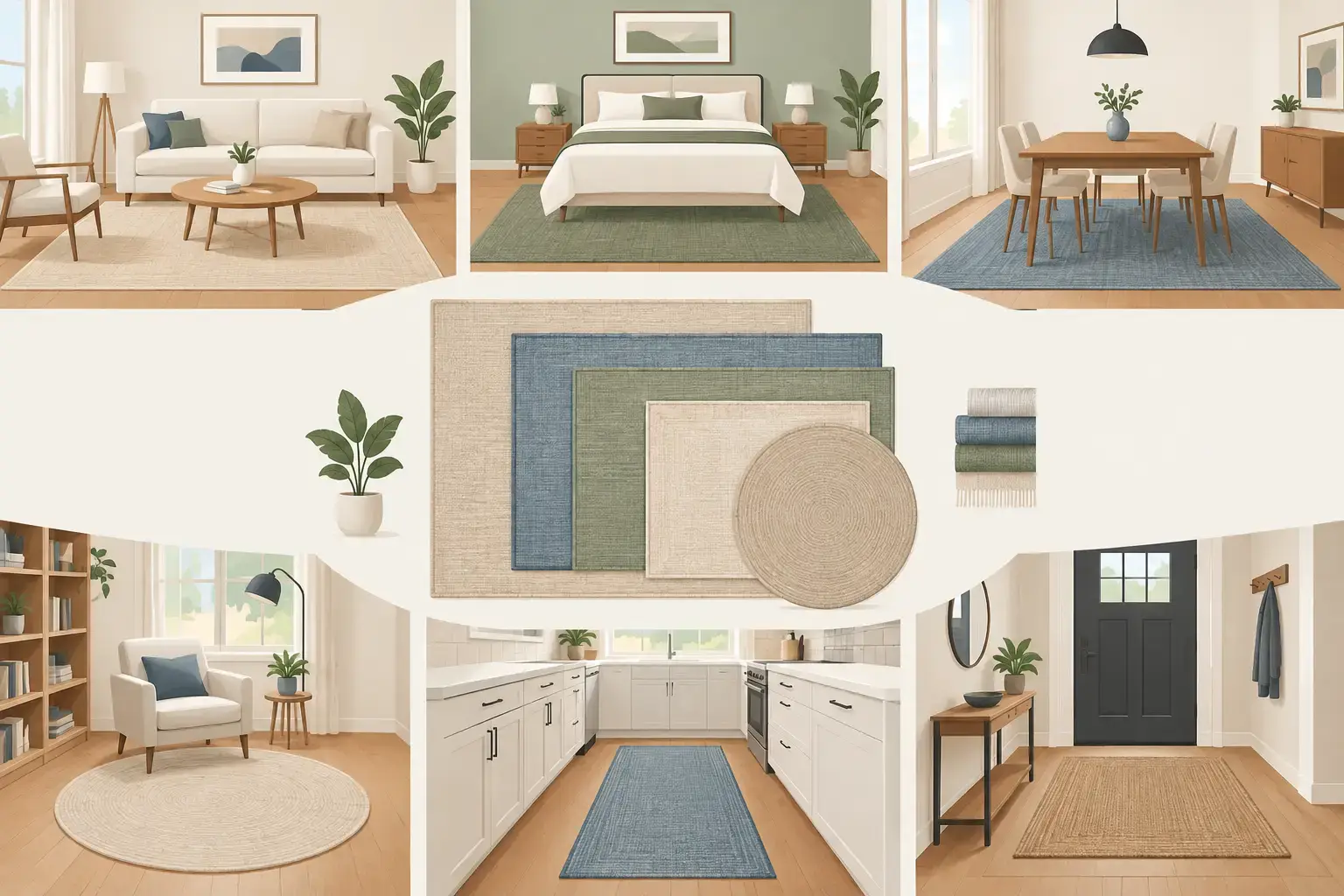
Consider the rug shape as well as its size. Rectangular rugs suit most seating arrangements, while a square rug can bring order to a square room or a pair of facing sofas. A round rug can soften a room with strong architectural lines, although it needs enough scale to make an impact. A circular rug tucked timidly beneath a coffee table rarely has the same presence as one that reaches confidently towards the surrounding chairs.
Give dining chairs room to move
In a dining room, the rug must accommodate the table and chairs when they are in use, not just when they are neatly tucked in. Measure from the outer edge of the table and add at least 60cm on every side. This allows dining chairs to remain fully on the rug when pulled back, avoiding an awkward rocking movement between pile and hard flooring.
A rectangular table generally calls for a rectangular rug, with the longer sides running in the same direction. For a round dining table, a round rug can look excellent, provided it is wide enough for every chair. An undersized circular rug is one of the most common mistakes in dining schemes because the table may fit while the chairs do not.
Pile choice matters here. A deep-pile velvet wool rug creates pure luxury underfoot in a formal dining space, but consider how often the room is used and whether young children or frequent entertaining are part of the brief. A deep-pile twist in an 80/20 wool-nylon blend provides a practical, resilient alternative while retaining a substantial, quality feel.
Plan bedroom rugs around the bed
A bedroom rug should make the first step out of bed feel warmer and more inviting, while giving the bed an appropriate visual anchor. For a large master bedroom, the most polished arrangement is often a rug placed beneath the lower two-thirds of the bed, extending beyond both sides and the foot. This allows bedside tables to remain on the floor while the rug frames the bed itself.
As a guide, allow enough projection for your feet to land on the rug – commonly 45 to 60cm on either side of the bed. If there is a bench at the foot, consider whether it should sit fully on the rug or just beyond it. Both can work, but the choice should look deliberate.
In a narrower bedroom, two matching runners on either side of the bed may be the better answer. They preserve more visible flooring, work well where wardrobes restrict space and can be made precisely to suit the gaps available. A bespoke border can provide a smart finishing line and coordinate with the wider scheme without overwhelming the room.
Do not overlook hallways, stairs and awkward spaces
Hallways benefit from runners that are centred and leave an even reveal of the floor on both sides. Before choosing the width, check door swings, radiator projections and the clearance needed for everyday traffic. A runner that is too wide can feel cramped, while one that is too narrow may look lost in a broad entrance hall.
For landings, bay windows, dressing rooms and rooms with chimney breasts, standard sizes often force compromises. This is where bespoke manufacture has a clear advantage. A rug can follow the useful area of the room rather than leaving a strip that is too narrow, too wide or visually unbalanced.
Measure at several points rather than assuming walls are perfectly parallel. Older properties in particular can vary by several centimetres from one end of a room to the other. A professional survey removes guesswork and helps identify details such as thresholds, door clearances and changes in floor level before the rug is made.
Match the rug to the room’s visual weight
Size and colour work together. A pale rug can make a compact room feel more open, but it still needs enough scale to define the furniture. A rich, darker tone can ground a large room beautifully, particularly when colour matched to curtains, painted joinery or upholstered pieces. The border is equally influential: a contrasting edge can make the rug appear more formal and more precisely tailored, while a self-coloured border creates a quieter, more contemporary effect.
Think carefully about pattern too. In a room with patterned wallpaper, statement artwork or decorative fabrics, a plain wool rug gives the eye a calm resting point. In a simpler scheme, a coloured border can introduce definition without the busyness of an all-over pattern. Requesting samples and viewing them in the room is always worthwhile, as daylight, evening lighting and adjacent finishes can alter the apparent shade.
Why bespoke sizing is often better value
Buying an off-the-shelf rug can appear straightforward, but a near-enough size is not always good value if it leaves the room looking unresolved. It may also lead to compromises in colour, border detail, pile quality and proportion. A custom-made rug is manufactured to your plan, so the dimensions are chosen for the room rather than dictated by available stock.
At Colourmatched Custom Carpets, bespoke rugs can be produced in over 3,000 colours and to substantial custom widths, allowing homeowners and interior designers to create a truly coordinated finish. The same specialist team can advise on measuring, provide samples, prepare a no-obligation quotation and arrange professional fitting, with no hidden extras appearing later in the process.
The final decision should feel calm and obvious when you stand in the room. Mark out the dimensions, walk around them and picture the furniture in place. When the rug gives every piece a purpose, leaves comfortable room to move and brings the colours together, you have found the size that will make the whole scheme feel complete.