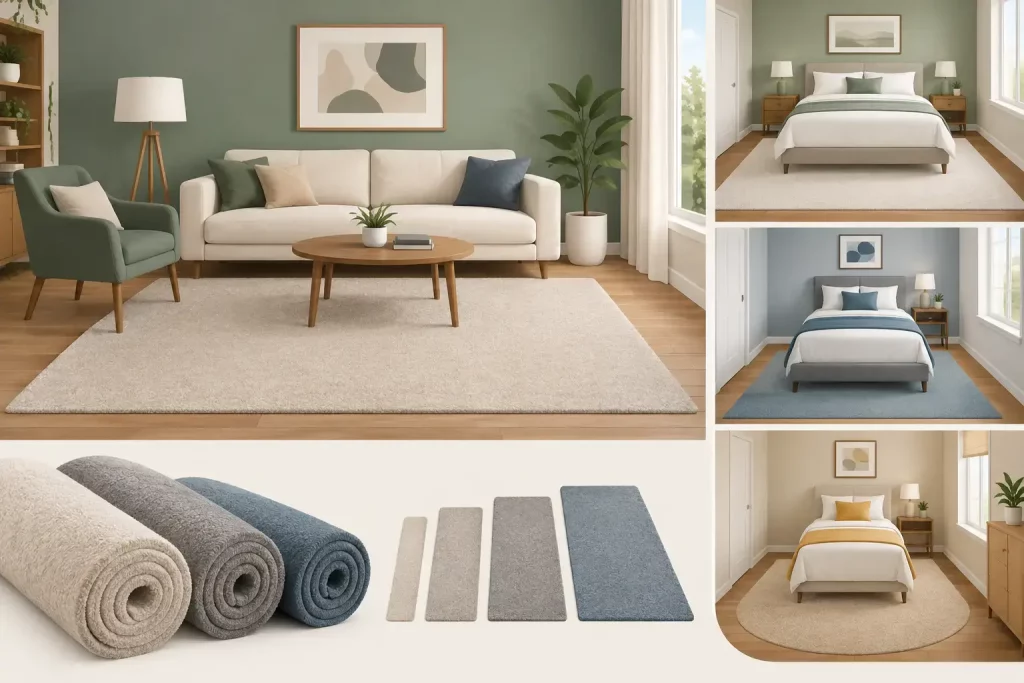
A carpet can look right in a showroom and still be wrong for the way a room is used. The difference often comes down to the carpet fibres beneath the surface: how they feel underfoot, how they recover after furniture, how they take colour and how they will look after years of daily life.
For a premium home or carefully planned interior scheme, fibre choice should come before pile style, border detail or final colour. At Colourmatched Custom Carpets, our luxury ranges are made in 100% pure new wool deep-pile velvet and 80/20 wool-nylon deep-pile twist. Both have a place, but they suit different rooms, expectations and lifestyles.
Why carpet fibres matter more than first impressions
The term ‘carpet fibre’ describes the material used to create the yarn. That yarn is then made into a carpet construction, such as a velvet or twist pile. Fibre and construction work together, but they are not interchangeable. A dense velvet made from pure wool will give a different appearance, softness and performance from a wool-nylon twist, even when the two carpets share a similar colour.
This matters particularly when flooring is being selected for a whole room rather than as a small off-the-roll purchase. A large expanse of carpet makes its texture, colour depth and surface shading much more apparent. The right material gives the room a considered, luxurious finish. The wrong one can leave a beautiful scheme looking flatter than expected or less practical for its setting.
There is no single best fibre for every house. A formal drawing room, a busy family staircase and a peaceful principal bedroom place very different demands on a carpet. The best choice is the one that balances the feel you want with the wear the space will receive.
Pure new wool carpet fibres
Wool has earned its place in quality interiors for good reason. It is a natural fibre with a softness and richness that synthetic-only carpets struggle to replicate. It accepts dye beautifully, giving colours depth rather than a hard or artificial-looking finish. For customers choosing from thousands of colour options or matching a carpet to curtains, paint, upholstery or a designer’s scheme, that quality is invaluable.
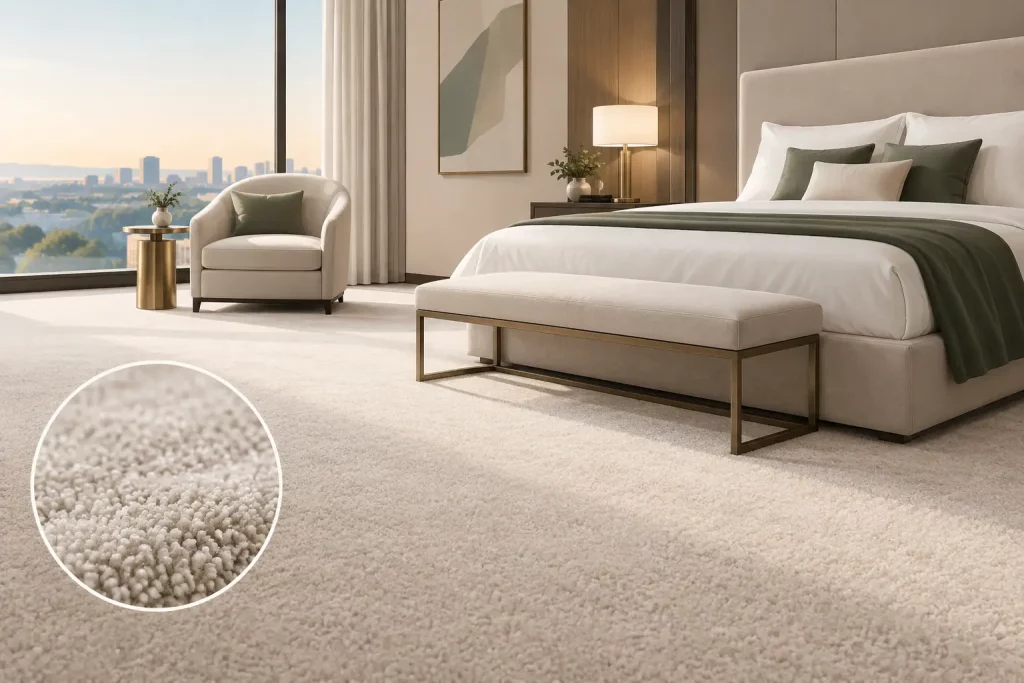
Our 100% pure new wool deep-pile velvet is chosen for its refined, sumptuous appearance. The pile has a smooth, even surface which catches the light in a subtle way, creating the depth associated with luxury fitted carpet. It is particularly effective in bedrooms, dressing rooms, reception rooms and other spaces where comfort and visual calm are the priority.
Wool also has a naturally resilient character. Its crimped fibres can spring back after moderate compression, helping the carpet retain its inviting feel. It has useful natural insulating properties too, adding warmth underfoot and helping a room feel quieter and more settled.
That said, wool is not a promise that a carpet will never show an impression. Any deep-pile carpet may display pressure marks beneath heavy furniture, and velvet pile can show light and shade as the pile is brushed in different directions. This is part of its character, not a fault. In a room designed for a clean, uniform surface at all times, a twist construction may be the more forgiving choice.
Where pure wool velvet works best
Pure wool velvet is ideal where the brief is unmistakable luxury: a master bedroom, elegant lounge, guest suite or a carefully furnished low-to-medium traffic room. It offers pure comfort underfoot and an exceptional canvas for rich neutrals, soft pastels and confident statement colours.
It is also a strong choice when the carpet itself is a central design feature. A bespoke bordered carpet, for example, can frame furniture beautifully while allowing the main field colour to coordinate precisely with the wider interior.
80/20 wool-nylon carpet fibres
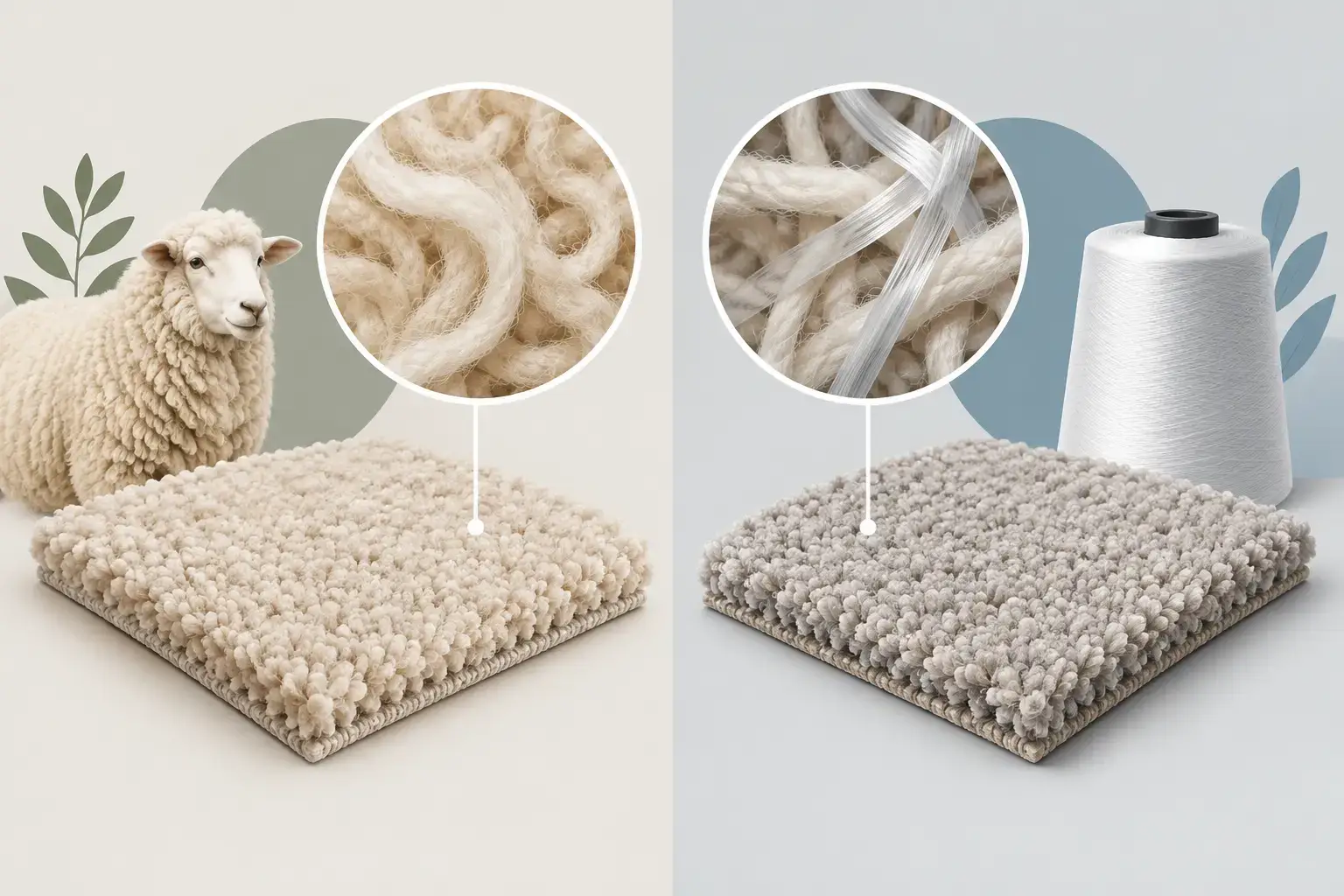
An 80/20 wool-nylon carpet combines 80% wool with 20% nylon. This is not a compromise range made for the sake of a lower specification. It is a purposeful blend that retains the natural warmth, colour quality and comfort of wool while introducing added resilience from nylon.
Nylon contributes strength and helps the pile recover in areas subject to repeated footfall. That makes an 80/20 wool-nylon deep-pile twist an excellent practical choice for stairs, landings, hallways, family rooms and other hard-working areas. It has a more textured surface than velvet, so it is generally better at disguising day-to-day shading, vacuum tracks and minor marks between cleans.
For many households, this blend offers the most sensible balance. You still have a substantial wool-rich carpet with a luxurious feel, but with added reassurance where children, pets, guests or regular movement make demands on the floor.
The trade-off is visual rather than negative. A twist pile has a more relaxed, textured appearance than a velvet. It will not produce quite the same smooth, formal surface, but that texture is precisely what makes it so adaptable in busy homes. It looks considered without asking the room to be treated like a show home.
When a wool-nylon twist is the better answer
Choose 80/20 wool-nylon twist when durability and a consistently neat appearance are high on the list. It is especially well suited to a staircase and landing, where pile direction, frequent traffic and the shape of each tread can make wear more visible.
It is also a sensible option for open-plan family spaces. In these rooms, the carpet needs to feel comfortable enough for relaxing while standing up to the realities of everyday use. A properly specified underlay and professional fitting are equally important here, as they support the carpet and help it perform as intended.
Fibre is only part of the specification
A good fibre cannot overcome poor planning, unsuitable underlay or inadequate fitting. The finished result depends on the whole installation. This is particularly true with bespoke carpet, where dimensions, room shape, door thresholds, stairs and the direction of the pile must all be considered before manufacture.
Standard retail widths can force joins into a floor simply because the room is wider than the available roll. Those joins may be unavoidable with stock carpet, but they can interrupt the clean sweep of a carefully designed room. Bespoke wide-width manufacture, with carpets available up to 35 feet wide, can remove that limitation and provide a more seamless finish where the room allows.
Made-to-plan production also means the carpet is created for the space rather than cut down from a larger, unsuitable roll. This reduces unnecessary waste and gives greater freedom over dimensions, border proportions and colour placement. It is a more exacting approach, but it is how a luxury floor should be planned.
Underlay deserves the same attention. It affects comfort, insulation, acoustics and the way the pile is supported under traffic. A carpet may feel impressive in a sample, but without the correct underlay it cannot deliver the same level of comfort or long-term performance once fitted.
Choosing carpet fibres room by room
Start with how the room is actually used, rather than how you hope it will be used. A rarely occupied guest bedroom can welcome the softness and smooth finish of pure wool velvet. A hall that connects the front door, kitchen and staircase needs a surface prepared for repeated use, making 80/20 wool-nylon twist the more practical choice.
Consider daylight as well. Strong side light can make pile shading more visible, particularly on plain velvet carpets. This is often a beautiful feature, bringing movement and depth to the floor, but it should be selected knowingly. Ordering samples and viewing them in the room at different times of day is the sensible way to judge both colour and texture.
For interior designers, fibre selection should be discussed alongside the colour palette from the outset. Wool-rich yarns offer excellent colour character, but the same shade can appear warmer or cooler depending on the pile style, surrounding finishes and natural light. Samples placed beside paint, timber, fabrics and metal finishes give a far more reliable impression than viewing a colour in isolation.
Care that protects a luxury finish
Regular vacuuming is the simplest way to keep both wool and wool-nylon carpets looking their best. It removes dry soil before it is worked down into the pile. Use a vacuum setting suited to the carpet construction, avoiding an overly aggressive action that can disturb a deep pile.
Attend to spills promptly by blotting rather than rubbing. Rubbing can spread a stain and roughen the surface. For more significant marks or an occasional deeper clean, use a reputable professional who understands wool-rich carpet. Harsh treatments and excessive wetting are not appropriate shortcuts for a quality floor.
Furniture cups or glides can help spread the load beneath particularly heavy items, and moving furniture slightly when a room is rearranged can prevent one area from carrying pressure indefinitely. These small measures are worthwhile on any premium carpet.
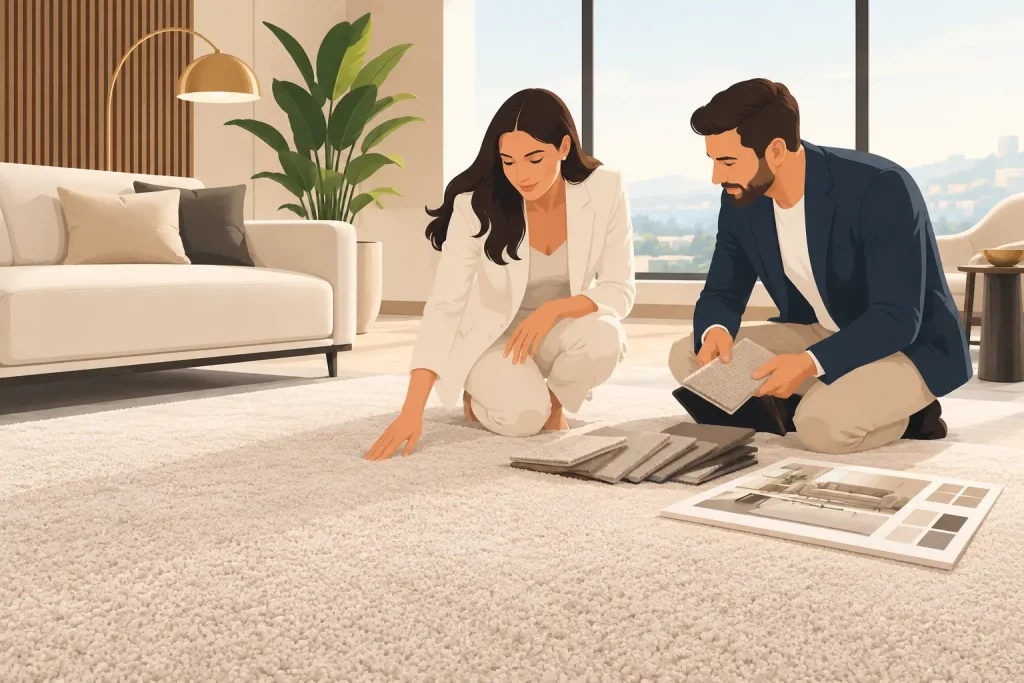
The most useful next step is to see the fibres for yourself. Hold samples against your walls and furnishings, walk on them in bare feet, and consider the room as it will be lived in rather than photographed. With the right material, precise colour and a made-to-measure fit, the floor will not merely complete the scheme – it will make the whole room feel properly finished.