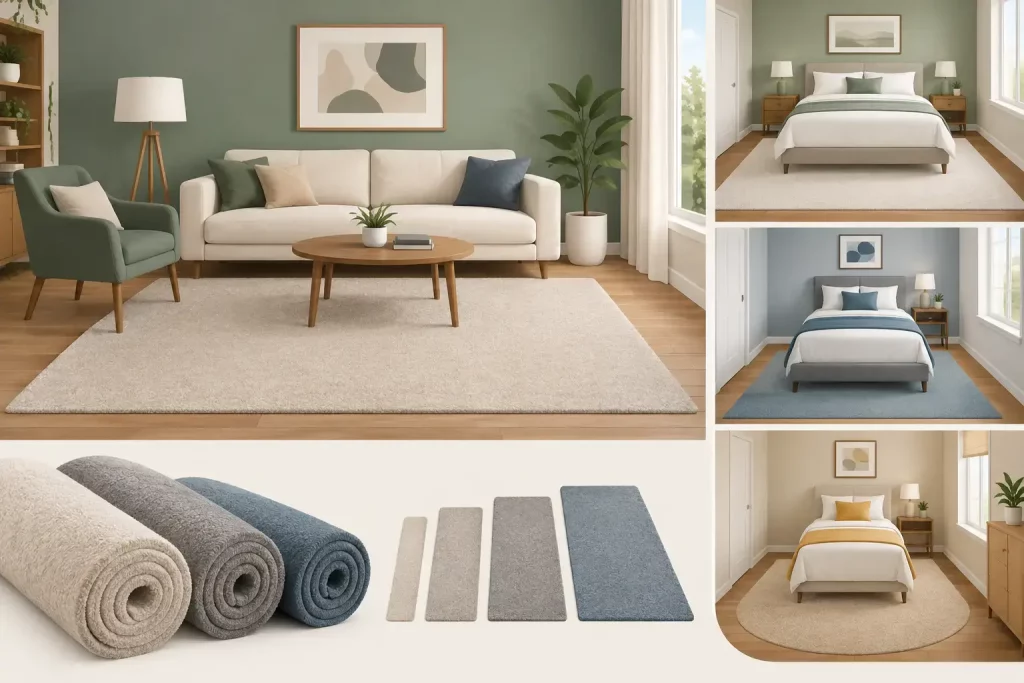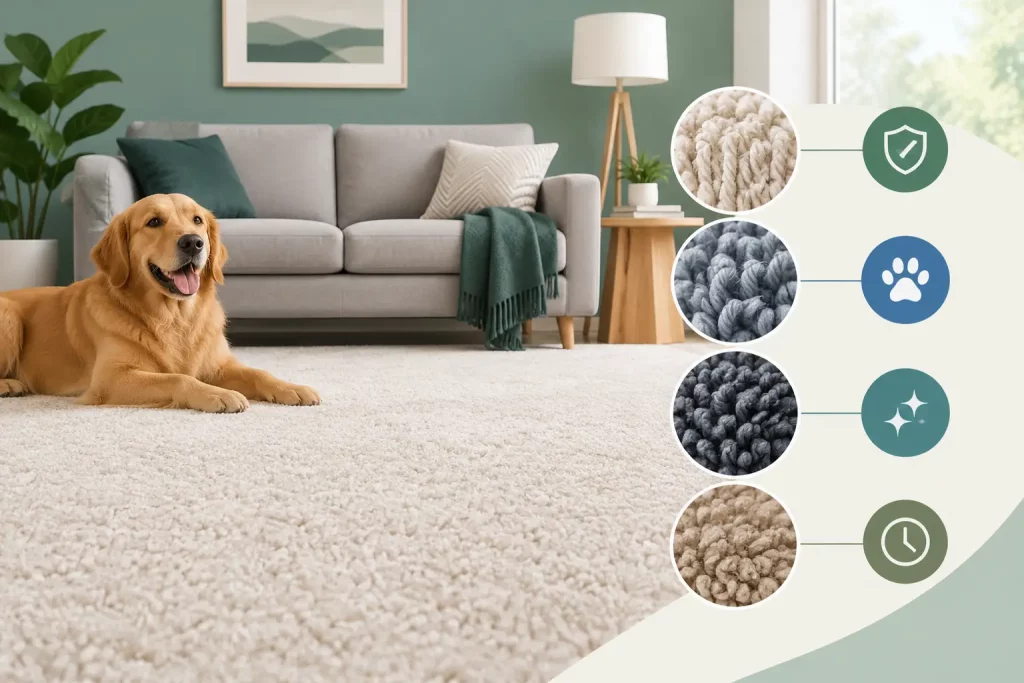
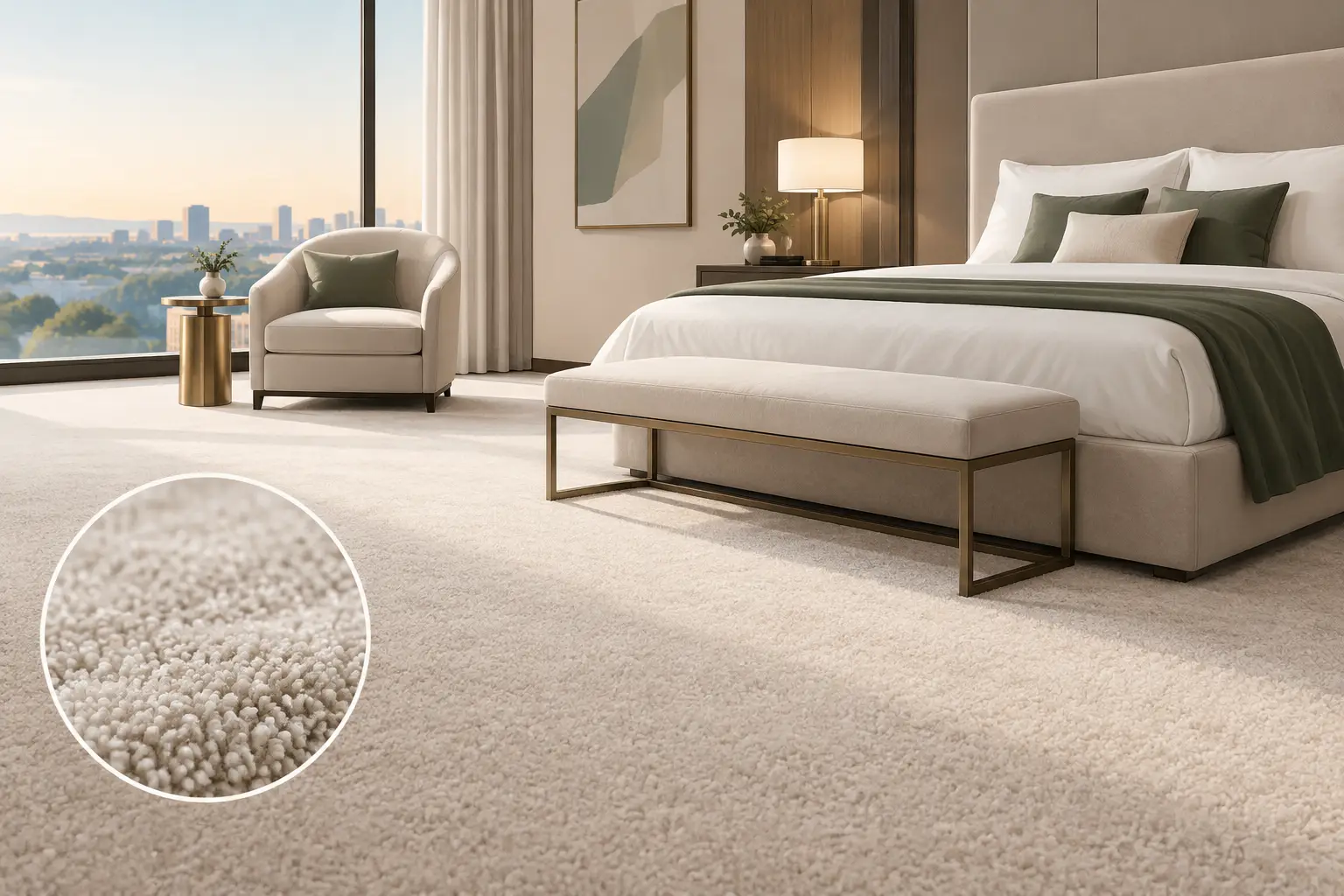
A carpet can look impressive on a small sample and still disappoint once it covers an entire room. True carpet quality is revealed in the weight underfoot, the way the pile catches the light, how accurately the colour sits with the furnishings, and whether the finished floor is free from distracting joins. For a premium renovation, these details are not finishing touches. They are central to the result.
A well-made carpet should bring warmth and comfort without making a room feel heavy or over-designed. It should suit the purpose of the space, work with the proportions of the room, and continue to look considered after years of daily use. That is why choosing on colour alone is rarely enough.
What carpet quality really means
Carpet quality is often reduced to one question: how thick is the pile? Pile depth matters, particularly when you want a luxurious feel, but it is only one part of the specification. Fibre type, yarn quality, construction, density, backing, underlay and fitting all affect the performance and appearance of the finished carpet.
A deep pile with loose construction can flatten quickly, while a denser carpet with a slightly lower pile can feel substantial and retain its character more successfully. Equally, an excellent carpet fitted over poor underlay may lose much of its comfort and resilience. The floor is a complete system, not simply a roll of material.
For homeowners and interior designers, the best starting point is to consider how the room will be used. A formal drawing room, a bedroom and a busy staircase have different demands. There is no single specification that suits every area, but there is a clear difference between a carpet selected for the job and one chosen only because it was available in a convenient width or colour.
Fibre is the foundation of quality
Wool remains one of the finest carpet fibres for a reason. It has a natural softness and richness that synthetic fibres struggle to replicate, along with an ability to recover from compression. Its natural crimp gives the pile body, while its light-reflecting qualities create depth of colour that changes gently through the day.
For rooms where indulgence is the priority, 100% pure new wool deep-pile velvet offers pure luxury underfoot. Velvet construction gives a smooth, refined surface and a beautiful, even appearance. It is particularly effective in bedrooms, dressing rooms, reception rooms and other spaces where the carpet is intended to feel as special as it looks.
An 80/20 wool-nylon deep-pile twist is a practical alternative where stronger day-to-day durability is required. The wool retains the warmth, natural appearance and comfort that clients expect, while the nylon content provides added resilience. It is often a sensible choice for family rooms, halls, stairs and landings, where footfall is higher and recovery from pressure marks matters.
Neither option is automatically better. A pure wool velvet may be the perfect choice for a quietly elegant bedroom, while a wool-rich twist can be the more suitable investment for a hard-working hallway. Quality comes from matching the construction to the setting rather than applying one solution throughout the house.
Pile construction changes the finished look
The construction of the pile has a major influence on both style and performance. A velvet carpet has closely cut fibres that create a clean, uniform surface. Its finish feels polished and luxurious, making it an excellent partner for tailored curtains, upholstered furniture and carefully planned colour schemes.
Twist carpet has yarns twisted together before they are set into the backing. This creates more texture and a slightly more relaxed appearance, while helping the carpet cope well with regular use. It is forgiving in practical spaces and offers depth without the formality of a velvet finish.
Density deserves as much attention as pile height. Closely packed yarn provides support and gives the carpet a more substantial feel. When comparing samples, do not only stroke the surface. Bend the sample gently and look at how much backing is visible between the fibres. A well-constructed carpet should have a generous, consistent pile that does not feel sparse.
It is also wise to expect some shading and tracking from a cut-pile carpet. Footprints, vacuum lines and changes in light can alter the way the surface appears. This is a natural characteristic of quality wool carpet, not a fault. In fact, the subtle movement can add to the richness of a room, especially with velvet styles.
Colour, width and proportion are part of carpet quality
A luxurious material can still look compromised if it is supplied in the wrong width. Standard retail carpet widths often force a join into the centre of a room, particularly in larger spaces or open-plan areas. Even when fitted carefully, a visible seam interrupts the clean, continuous appearance that premium interiors demand.
Bespoke manufacture allows the carpet to be produced to the room plan rather than asking the room to fit the carpet. With widths available up to 35 feet, it is possible to cover many larger rooms without joins. The result is calmer, more refined and easier on the eye, particularly where sunlight falls across the floor or where furniture placement leaves a wide expanse of carpet visible.
Colour deserves the same level of care. A shade that appears right under showroom lighting may look very different beside painted walls, timber finishes and upholstery at home. Sampling in the intended room is the sensible approach. It allows you to see the colour in morning light, evening light and artificial light before any final decision is made.
For schemes that require precision, colour matching from a choice of more than 3,000 shades gives far more freedom than a limited stock range. A bespoke border can also define the edge of a room, echo a curtain trim or introduce a darker outline around a lighter field. Done well, it gives the floor the composed appearance of a custom-made rug while retaining the comfort and practicality of fitted carpet.
Underlay and fitting should never be afterthoughts
The quality of a carpet installation is as visible as the quality of the carpet itself. Poorly prepared floors, unsuitable underlay or rushed fitting can create ripples, uneven edges and premature wear. These are avoidable problems, but only if the measuring, planning and installation are treated as part of one service.
A professional survey identifies the practical points before manufacture begins. Door clearances, stair details, fireplaces, thresholds, room shapes and furniture all need consideration. Accurate measurement also avoids ordering more material than the plan requires, reducing unnecessary waste and helping customers pay for what their room actually needs.
Underlay affects comfort, insulation and how the carpet performs over time. A suitable quality underlay supports the pile, improves the feel underfoot and helps protect the carpet from the pressure of everyday use. It should be specified alongside the carpet, not added as a low-cost afterthought once a price has been discussed.
At Colourmatched Custom Carpets, stated square-metre prices include underlay and professional fitting, so the quotation reflects the complete finished floor rather than an attractive headline figure followed by extra charges. One accountable specialist overseeing survey, manufacture and installation also removes the uncertainty that can arise when several separate suppliers are involved.
How to judge a carpet sample with confidence
A sample is essential, but it needs to be assessed properly. Place it against the walls, curtains and key furniture finishes. Walk on it in bare feet and shoes. View it from the doorway as well as close up. The question is not only whether you like the colour, but whether it gives the room the character you want.
Ask what the fibre content is, whether the carpet is velvet or twist, and what underlay and fitting are included in the stated price. Confirm the proposed width and where any joins would sit. If the room is unusually shaped, ask to see how the layout will be planned before the carpet is made.
It also helps to be honest about maintenance. Wool carpet rewards regular vacuuming and prompt attention to spills, but a busy household may prefer a resilient twist in the most heavily used areas. A considered home often uses different constructions in different rooms while maintaining a coordinated colour palette throughout.
The most satisfying carpet choices are rarely made in a hurry. Request samples, see them in your own light, and allow the room plan to guide the specification. When the material, colour, width and fitting are all planned together, the finished floor has the quiet confidence that quality should always bring.