
A luxury carpet should not be chosen from a small swatch card and forced to fit the room. Planning luxury carpet projects properly begins with the space itself: its proportions, natural light, adjoining finishes and the way it will be used. When the carpet is made to plan rather than cut from a standard roll, the result is more considered underfoot and more convincing as part of the interior.
For homeowners, this is often the finishing decision that brings a renovation together. For interior designers, it is the element that can quietly support every colour, texture and line in the scheme. The right wool carpet gives a room warmth, depth and pure luxury underfoot, but material alone is not enough. Width, colour, pile, borders and fitting all need to be resolved as one project.
Start Planning Luxury Carpet Projects with the Room
A sitting room, principal bedroom and staircase may all benefit from luxurious wool carpet, yet they ask different things of it. A bedroom can favour a softer, deeper velvet feel, while a busy family room or hallway may need the practical resilience of an 80/20 wool-nylon deep-pile twist. Both offer a refined appearance, but the better choice depends on traffic, household habits and the character of the room.
Begin with the room plan rather than a preferred shade. Consider where daylight falls, whether the room opens onto timber, stone or tiled flooring, and how the carpet will relate to curtains, upholstery and painted joinery. A pale neutral can make a smaller room feel calm and expansive, but may be less forgiving in a heavily used entrance area. A deeper tone can give a large room definition and warmth, although it may absorb light in a north-facing space.
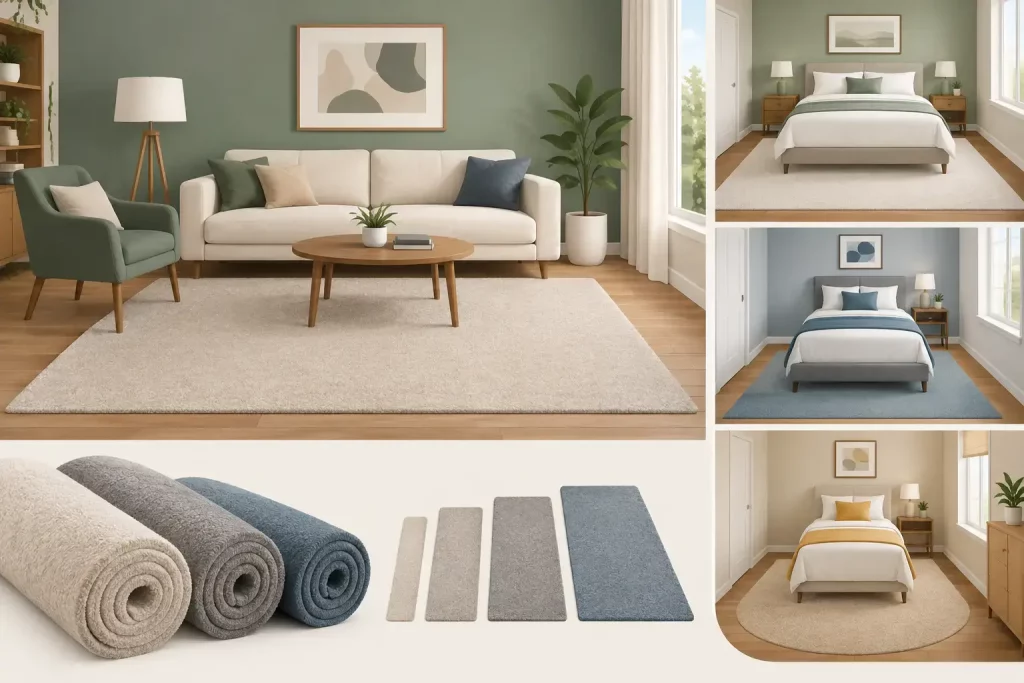
This is also the point to decide whether the carpet should be a quiet foundation or a deliberate feature. A carefully colour-matched plain carpet can allow artwork and furnishings to lead. Alternatively, a contrasting or tonal border can frame the floor, echoing a curtain trim, wall colour or accent fabric. There is no universal right answer. The best choice is the one that gives the room a clear visual purpose.
Choose the pile for how the room is lived in
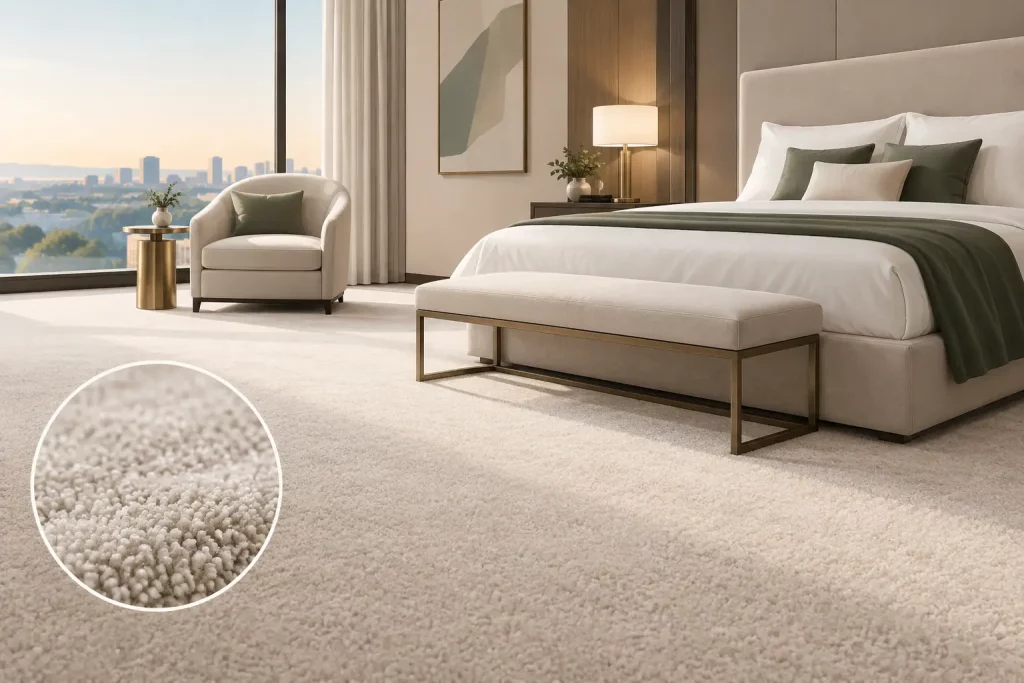
Deep-pile velvet in 100% pure new wool has a particularly rich, elegant surface. It is well suited to bedrooms, drawing rooms and other spaces where softness and a luxurious finish are central to the brief. Like any velvet carpet, its pile may show shading or tracking as it is walked on and brushed in different directions. This is a natural characteristic of the construction, not a fault, and many clients value the movement it gives the floor.
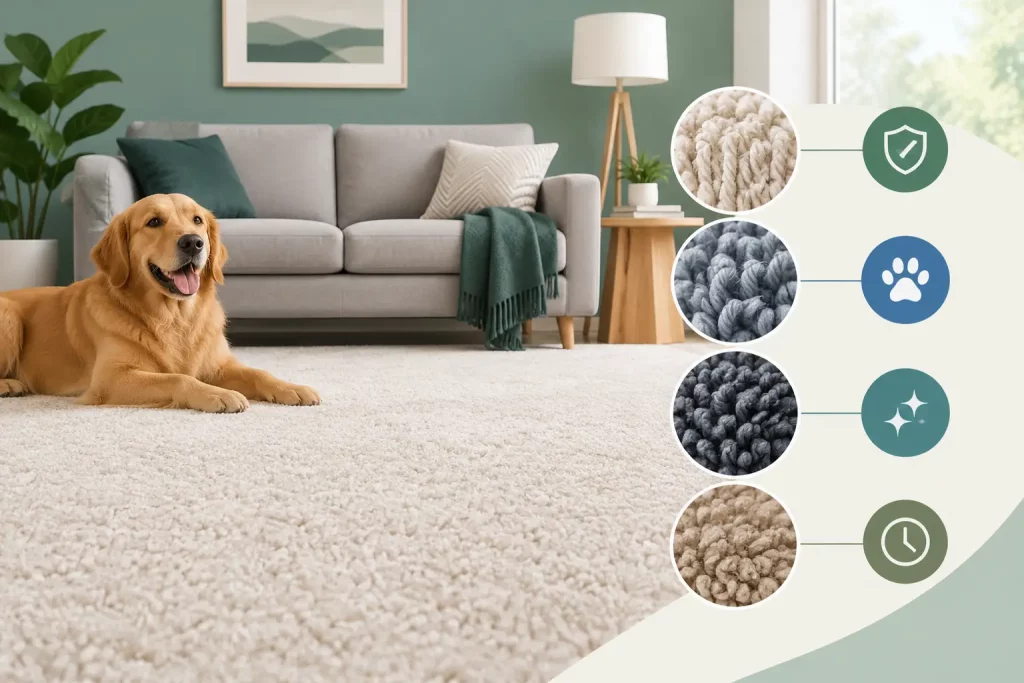
An 80/20 wool-nylon deep-pile twist is a strong option where a luxurious appearance must work harder. The wool provides warmth, texture and natural beauty, while nylon supports durability in areas with more regular footfall. It can be an especially sensible choice for stairs, landings, corridors and family living spaces.
Measure for a Join-Free, Made-to-Plan Finish
Standard carpet widths can dictate the design of a floor far more than they should. If a room is wider than the available roll, a join may be unavoidable with off-the-roll carpet. Even when expertly fitted, joins can interrupt a clean expanse of colour and become more noticeable in strong daylight or open-plan rooms.
Made-to-measure manufacture changes the starting point. Custom widths of up to 35 feet make it possible to produce a single, continuous piece for many larger rooms, avoiding visible joins and delivering a more refined finish. This matters particularly in principal rooms, wide hallways and spaces with a simple, uncluttered design, where every line is easy to see.
Accurate measurement is equally important in rooms with bays, fireplaces, alcoves, angled walls or fitted furniture. Measuring only the broadest length and width may appear straightforward, but it can lead to excessive waste, avoidable seams or a carpet that does not allow correctly for the details at the edges. A professional survey establishes the true shape of the space, considers pile direction and identifies any preparation needed before fitting.
It also provides a clearer basis for quotation. Carpet pricing can look attractive until underlay, measuring, delivery, fitting and disposal arrangements are added later. A stated square-metre price that includes the essentials makes it easier to compare like with like and protects the project budget from unwelcome surprises.
Build Colour Around the Actual Interior
Colour is where bespoke carpet comes into its own. A broad choice is useful, but it only becomes valuable when it is assessed in the actual room. Paint, fabrics and timber all change through the day. A grey that appears soft and warm in a showroom may read cool against a south-facing window; a cream can pick up yellow, pink or green undertones from nearby finishes.
Samples should be viewed on the floor, not only held against a wall. Look at them in morning light, evening light and with the lamps normally used in the room. Place them next to skirting, upholstery and curtains, then step back. This gives a much more reliable impression of how the carpet will sit within the finished scheme.
With more than 3,000 colour options, it is possible to work towards a close match rather than settling for the nearest standard retail shade. That could mean drawing out the warmth in an oak floor, softening a strong wallpaper, or selecting a border colour that repeats a subtle detail elsewhere in the room. For designers, this degree of control can be the difference between a scheme that feels coordinated and one that feels merely assembled.
Use borders with purpose
A border can add structure without making the floor overly decorative. In a large room, it can define a central seating area and give the carpet the presence of a fitted rug. In a bedroom, a narrow contrasting edge can make a plain carpet feel tailored and draw attention to the room’s proportions.
The proportions need care. A very wide border can make a modest room feel smaller, while a narrow border may disappear in a grand space. Borders also need to follow the room plan accurately around hearths, doorways and architectural details. This is another reason a survey and design discussion should happen before manufacture, not after the carpet has been selected.
Treat Underlay and Fitting as Part of the Specification
A fine carpet fitted over inadequate underlay will never perform as it should. Underlay affects comfort, insulation, sound reduction and the way the pile recovers from foot traffic. It also helps support the carpet over time, particularly on stairs and in frequently used areas.
Professional fitting is not an optional final extra on a bespoke project. It is where the planned width, pile direction, borders and edge details are turned into the finished floor. Doors may require assessment for clearance, subfloors may need attention, and transitions to hard flooring should be neat and appropriate to the room. The fitter must work with the carpet as it was designed, not try to make a standard product work around an unusual space.
For this reason, it is worth choosing a supplier that remains accountable from measurement through to installation. When surveying, manufacturing, supply and fitting are handled as one service, there is less scope for misunderstandings between separate parties. Colourmatched Custom Carpets provides this complete approach throughout the UK, with free measurement, design advice and no-obligation quotations, then manufactures and fits each order to the agreed plan.
Allow Time for Decisions That Cannot Be Changed Later
Bespoke manufacture rewards decisiveness at the right stage. Once dimensions, colour and border details have been agreed, the carpet can be produced specifically for the room, reducing the material waste associated with buying oversized lengths from stock. However, those choices deserve proper consideration because they are not easily altered once production is under way.
Before confirming an order, revisit the samples, check the room plan and make sure any decorating, joinery or electrical work that could affect the floor is accounted for. If furniture is still on order, confirm its final footprint. If walls are to be painted, choose the carpet colour against the intended paint sample rather than the old finish. A little care before manufacture is far preferable to compromise after fitting.
The most successful luxury carpet projects feel effortless because the difficult decisions were made early and professionally. Take time with the samples, ask for practical advice about the room, and specify a carpet that has been made for your home rather than adapted to it.