A bordered carpet gives a room a deliberate, tailored appearance that standard off-the-roll flooring rarely achieves. The border frames the main field of carpet in much the same way as a well-chosen picture frame: it brings proportion, definition and a sense that every part of the scheme has been considered. For homeowners and interior designers working on premium rooms, it is a practical design detail with a substantial visual effect.
Unlike a ready-made rug, a bespoke bordered carpet can be produced to the exact dimensions and shape of the room. This allows the border to sit at a considered distance from walls, fireplaces, furniture and doorways, rather than looking squeezed in on one side or lost beneath seating. The result is pure luxury underfoot, with a finish designed for the architecture of the room.
What makes a bordered carpet different?
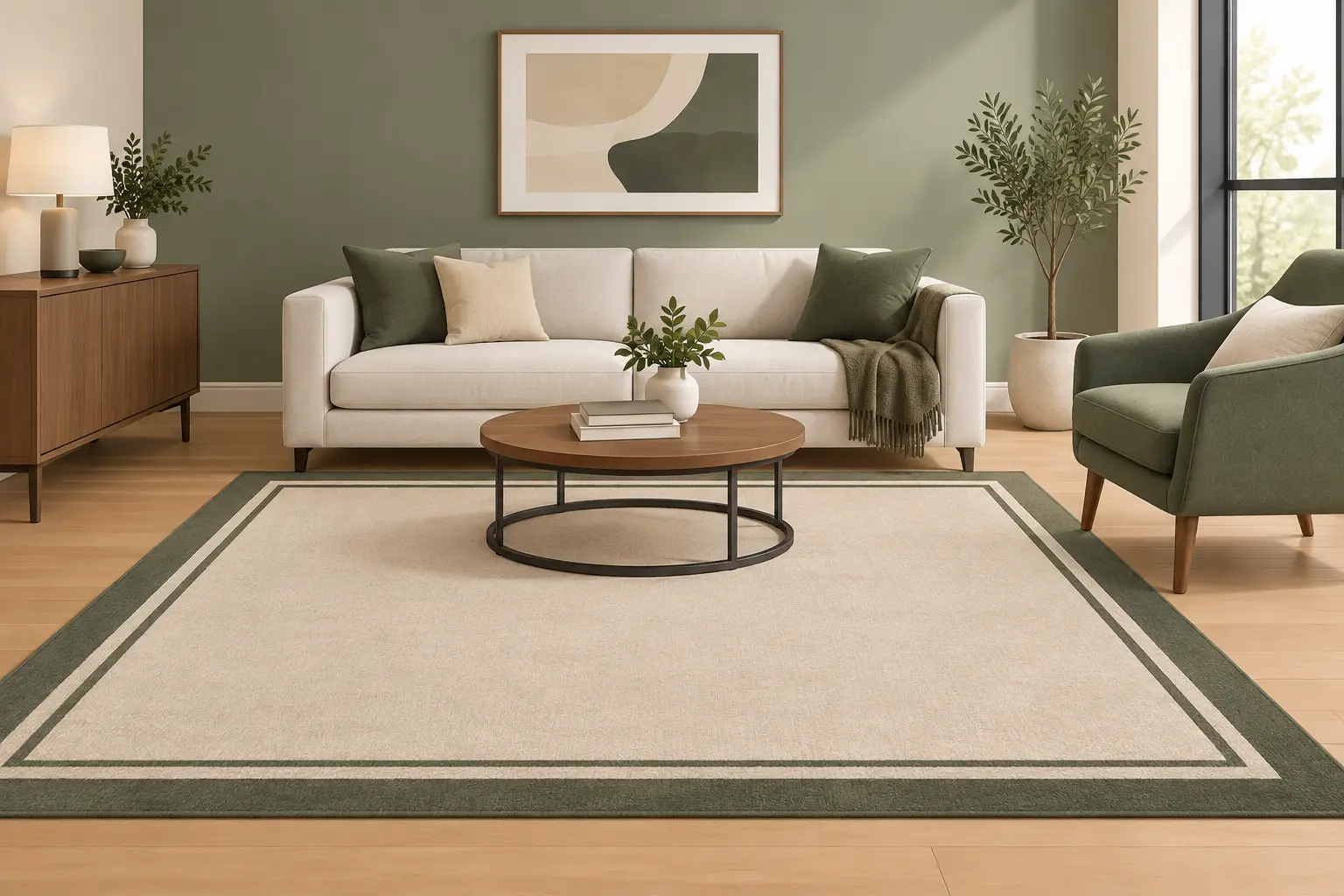
A bordered carpet is made with a central area of one carpet colour and a perimeter border in a contrasting or complementary shade. The contrast can be subtle, such as warm ivory with a soft mushroom edge, or much more defined, such as a pale neutral centre set against charcoal, navy or deep green.
The appeal is not simply decorative. A border creates a visual boundary across an open floor, which can make a large drawing room feel more composed or give a dining area a clear identity within an open-plan space. It can also pick up a paint colour, curtain trim, upholstery fabric or joinery detail, bringing several elements of the interior together without introducing a patterned carpet.
This style works especially well in reception rooms, principal bedrooms, dressing rooms, stair landings and larger hallways. In a compact room, however, the proportions need particular care. An overly wide dark border can reduce the apparent size of the central floor area, while a narrow tonal border can add detail without making the room feel enclosed. There is no universal measurement that suits every property. The best border width depends on the dimensions of the room, the furniture layout and the strength of the colour contrast.
Choosing the right border proportions
The most successful bordered carpets look calm because their proportions are right. In a generously sized room, a broader border has sufficient space to make an elegant statement. In smaller rooms, a slimmer border is often the more refined choice. The aim is for the perimeter to feel intentional, not like a stripe added as an afterthought.
Furniture placement matters just as much as room size. Where sofas and armchairs sit close to the walls, the border should remain visible enough to do its job. In a bedroom, consider the view from the doorway and the amount of carpet that will be seen around the bed. A well-planned border can provide a smart outline at the sides and foot of the bed, even when much of the central field is covered.
Door swings, hearths, bay windows, fitted wardrobes and irregular alcoves should all be measured before the design is finalised. This is where a professional survey is invaluable. It prevents the common disappointment of a border that runs too close to a threshold, disappears beneath a built-in unit or varies awkwardly around a feature of the room.
Contrast does not have to mean dark
A dark edge on a lighter centre is a classic choice, but it is only one option. A slightly deeper version of the centre colour can create a sophisticated tonal effect. Pale stone with taupe, soft grey with slate, or cream with biscuit can give the floor definition while keeping the overall scheme quiet.
For interiors with strong painted joinery or bold furnishings, a clearer colour contrast may be exactly what is required. A navy or bottle-green border can anchor a pale room, while a rich burgundy or chocolate edge brings warmth to traditional interiors. Requesting samples is essential. Carpet colour changes with natural light, lamp light and the surrounding surfaces, so a shade that looks perfect in isolation should always be viewed in the room where it will be fitted.
Wool carpet gives the border its depth
A border is a clean geometric detail, which means the quality of the carpet surface is highly visible. A dense, luxurious pile helps both colours appear rich and even, while a poorly made carpet can make a carefully planned design look flat.
For a particularly sumptuous finish, 100% pure new wool deep-pile velvet offers a soft, elegant surface with a beautiful depth of colour. It is well suited to bedrooms and formal living spaces where comfort and appearance are central to the brief. An 80/20 wool-nylon deep-pile twist provides a similarly luxurious feel with added practical resilience, making it an excellent choice for busier family rooms, halls and stairs.
The right construction depends on how the room is used. Velvet has a more uniform, polished appearance, although pile shading and tracking can be more noticeable in strong light. Twist carpets have a more textured character and can be the more forgiving option in high-traffic areas. Neither is automatically better. The correct choice balances the look you want with everyday use, pets, children and the level of maintenance you are comfortable with.
Made-to-measure manufacture avoids compromised layouts
Standard carpet widths can dictate a room layout rather than follow it. They may require joins across wide rooms, create unnecessary offcuts or leave little flexibility in how a border is positioned. A visible join can be particularly distracting in a plain carpet, and even more so when it interrupts the crisp line of a border.
Bespoke manufacture changes that. Producing a bordered carpet to plan allows the central panel and perimeter to be arranged around the room dimensions, with custom widths available up to 35 feet. In larger spaces, this can remove the need for visible joins and retain the uninterrupted look that gives a bordered floor its distinction.
It also reduces avoidable material waste. Rather than buying a fixed-width roll and cutting away surplus carpet, the flooring is planned for the space from the outset. This is a more considered approach to value: you are paying for a carpet designed around your room, not trying to make a stock product fit it.
Colour matching makes the scheme feel complete
The border is often the link between the floor and the rest of the interior, so colour choice deserves more than a quick decision from a small showroom swatch. With more than 3,000 colour options, it is possible to create a close relationship with existing fabrics, wall finishes and furniture, whether the intention is a gentle tonal transition or a sharper contrast.
Interior designers may use the border to echo the piping on an upholstered chair, the colour of a painted skirting board or a trim within curtains. Homeowners often prefer it to coordinate with a favourite fabric or a newly chosen wall colour. Both approaches work when the colours are assessed together in the actual light of the room.
A practical point is worth considering here. Very pale centre carpets look exceptional but show day-to-day marks more readily, particularly near entrances or around dining tables. Selecting a slightly deeper border can help define the floor without relying on a stark white centre. In high-use areas, a mid-tone main carpet and darker edge can be both elegant and easier to live with.
Survey, fitting and underlay are part of the finish
A bespoke floor should not be treated as a supply-only purchase. Accurate measurement, design advice, manufacture and fitting all affect the final result. The finest wool carpet can still look disappointing if the border is set out incorrectly, the subfloor has not been assessed or the underlay is unsuitable.
At Colourmatched Custom Carpets, the process is controlled from free measurement and no-obligation quotation through to manufacture, supply and professional fitting throughout the UK. Underlay and fitting are included in stated square-metre prices, so customers can compare costs with greater confidence and without hidden extras appearing later.
During the survey, the fitter can identify details that are easily missed when measurements are taken remotely: uneven walls, floor levels, radiator pipes, thresholds and the direction in which the carpet will be seen on arrival. These details matter because a bordered design needs to read correctly from the key viewpoints in the room.
A bordered carpet should feel like it belongs to the house from the moment it is fitted. Take time with the samples, plan the border around the room rather than around a standard roll width, and let the final proportions do the quiet work of making the whole interior feel finished.