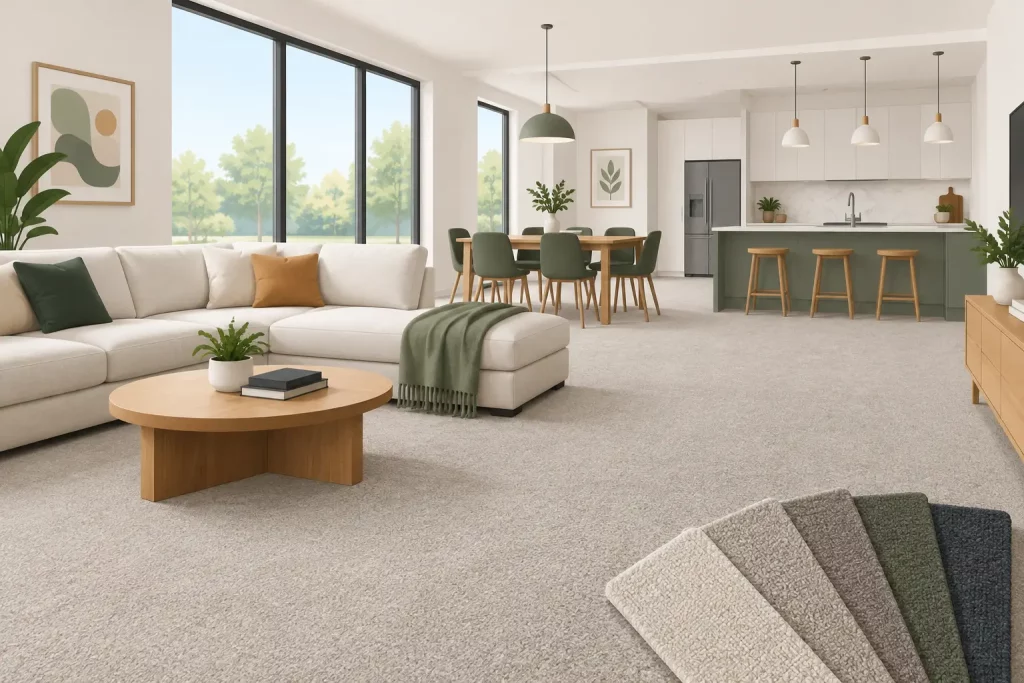
A room can be beautifully planned, furnished and decorated, yet still lose its sense of calm when a carpet join runs straight through the floor. That is the practical reason a carpet widths comparison should happen before a colour is chosen or a quotation is accepted. Width affects the number of joins, the amount of material purchased, the direction of the pile and, ultimately, how refined the completed room feels.
For homeowners and interior designers specifying premium wool carpet, standard roll widths can be limiting. A bespoke width gives greater freedom to fit the room rather than forcing the room to fit the carpet.
Carpet widths comparison: standard rolls versus bespoke manufacture
Most residential carpet is supplied from standard-width rolls. In the UK, 4 metre and 5 metre widths are the most familiar, with narrower options available in selected qualities. This arrangement works well for straightforward rooms whose dimensions sit comfortably within the roll width. It can also be cost-effective where a room is narrow, square and free from awkward projections.
The difficulty begins with larger rooms, open-plan spaces, wide landings and rooms that are wider than the chosen roll. When no single piece will cover the floor, the installer must seam two or more lengths together. A carefully made join is part of normal professional carpet fitting, but it is still a join. Depending on the light, pile direction and use of the room, it may remain visible.
Bespoke manufacture changes the calculation. Rather than selecting the nearest available roll and accepting its limitations, the carpet can be made to the width and length required by the plan. At Colourmatched Custom Carpets, custom dimensions can be produced up to 35 feet wide, allowing many substantial rooms to be fitted in one continuous piece.
That difference is not simply cosmetic. It can reduce waste, avoid unnecessary seams and produce a quieter, more considered floor finish.
Why carpet width matters more than many buyers expect
Carpet is not cut like a loose fabric allowance where excess can always be put to good use. It has a pile direction, a backing, a repeat where a patterned design is involved and practical limits on how it can be carried, positioned and fitted. Every room should therefore be measured as a flooring project, not merely as length multiplied by width.
A standard-width roll may require a room to be divided into strips. The leftover offcuts can be considerable if the room dimension falls just over a roll width. For example, a room that is 5.3 metres wide cannot be covered in one piece from a 5 metre roll. It will need an additional section, even though only a relatively small extra width is required. The result may be a join and a quantity of surplus material that has been paid for but cannot be meaningfully used.
A made-to-plan carpet is produced for the actual dimensions. This is particularly valuable where the floor includes bay windows, chimney breasts, recesses, angled walls or connecting doorways. It does not mean every room should automatically have a bespoke width – a neat 4 metre room may be perfectly suited to a 4 metre carpet – but it gives you the option to choose the finish first rather than compromise it later.
The visual effect of joins
Even when expertly installed, a carpet seam can catch the light differently from the surrounding pile. Deep-pile velvet carpets are especially sensitive because their surface reflects light in a distinctive direction. In a large south-facing room, or beneath strong ceiling and wall lighting, the line can become more noticeable at certain times of day.
A join is not a fault when it is necessary, and a skilled fitter will position it as discreetly as possible. However, it is sensible to ask the question early: can this floor be supplied in one width? If it can, a seamless installation usually gives the most luxurious result.
How to assess the right width for your room
The first measurement should be the widest point of the floor, not the dimension that appears on an estate agent’s plan. Measure into bays, alcoves and recesses, and allow for walls that may not run perfectly square. Older properties frequently reveal small variations that make a major difference to the required cut.
Then consider the room’s layout. A join hidden beneath a large fitted wardrobe may be less of a concern than one passing through the centre of a drawing room. Equally, a room with French doors or a feature window may benefit from having the pile laid in a particular direction, so it looks consistent when viewed from the main entrance.
For larger schemes, adjoining spaces matter too. A wide hallway leading into a reception room can look more composed when the carpet direction and colour are considered as one design. This is where a professional survey earns its place. It identifies the best fitting plan before manufacture, rather than leaving decisions to be made on site with limited options.
Width is only one part of material efficiency
It is tempting to assume that the narrowest standard roll creates the lowest price. In reality, the most economical choice depends on the entire cutting plan. A 5 metre roll might reduce the number of joins compared with a 4 metre roll, but still leave a large offcut. A custom width may use less material overall and remove the need for seaming, even if it is not the cheapest option per metre at first glance.
Ask for the quotation to show what is included. The meaningful comparison is not just carpet price per square metre; it is the finished, fitted floor price, including underlay, measuring, fitting and any unavoidable waste. This approach makes it easier to compare genuine value and avoids discovering additional costs after a carpet has been selected.
Choosing a carpet quality that suits the width and room
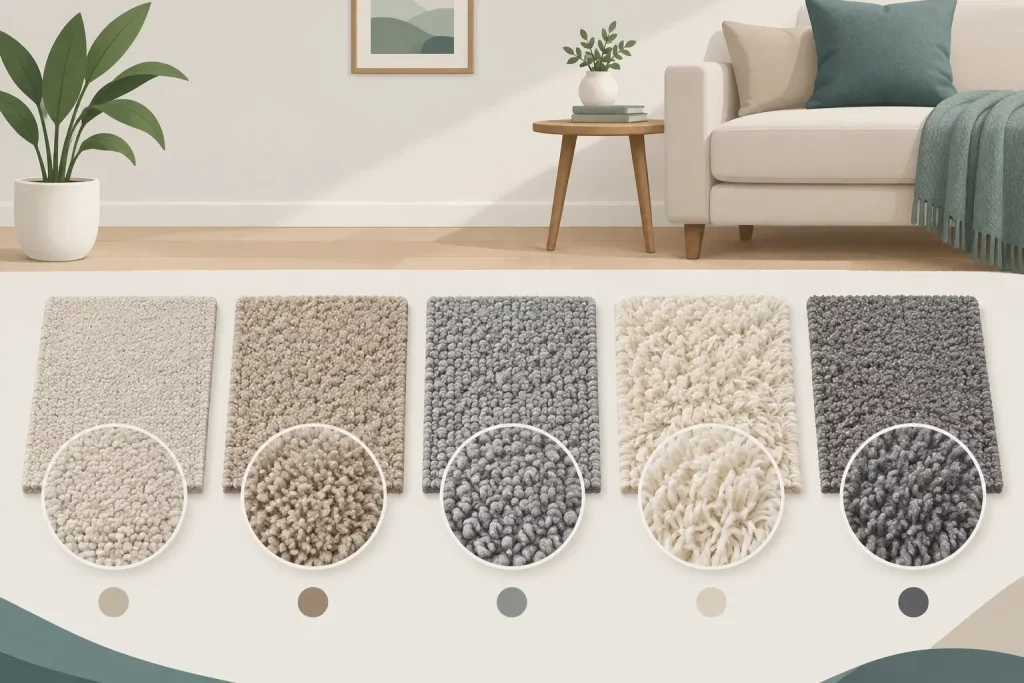
Width should be considered alongside the carpet construction. A 100% pure new wool deep-pile velvet has an exceptionally rich appearance and a luxurious feel underfoot. Its directional pile makes careful planning important, particularly in broad rooms where natural light travels across the floor.
An 80/20 wool-nylon deep-pile twist is a practical luxury choice for active family areas, stairs and spaces with regular foot traffic. The wool brings warmth, resilience and natural character, while nylon supports durability. Both qualities can create an elegant fitted floor, but the right selection depends on how the room is used, how much daylight it receives and the finish you want to achieve.
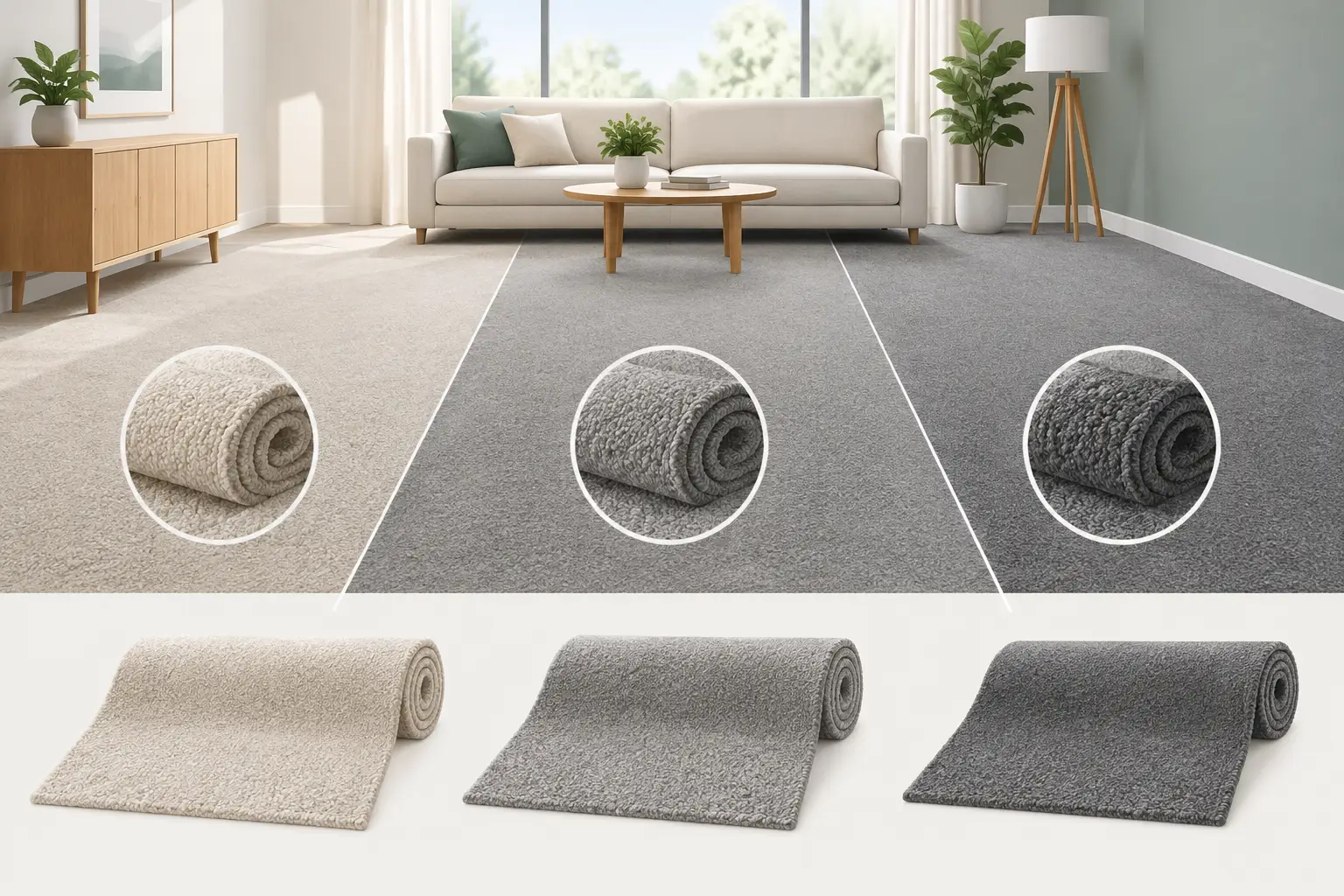
Colour also changes the way width is perceived. Pale shades can make a room feel open but may reveal shadows and pile movement more readily. Darker or more tonal shades can create depth and drama, while a carefully matched neutral can carry a scheme from one room to the next without visual interruption. With more than 3,000 colour options available for colour matching, it is possible to coordinate the carpet with upholstery, paint, curtains or a designer’s specified palette rather than settling for a near match.
When a border changes the measuring plan
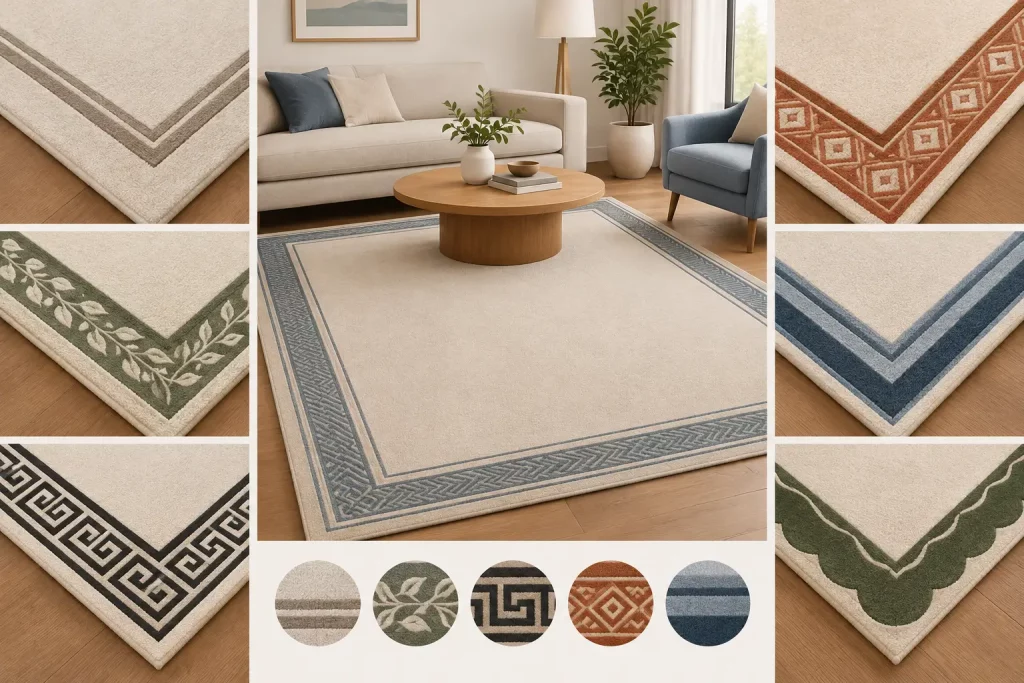
Bordered carpets and rugs require extra care because the border needs to sit evenly around the room or within the chosen rug dimensions. A floor that is out of square can make a standard, pre-cut border look uneven unless it is designed and made for the space.
For a fitted bordered carpet, the field colour, border width and position of the joins all need consideration. A bespoke width can help preserve clean, balanced border lines and avoid interrupting the design with a seam. In a large bedroom or formal reception room, this level of planning is often what separates a good-looking floor from one that feels properly tailored.
Questions worth asking before you order
Before committing to a carpet, establish whether the quoted width will cover the room in one piece and where any joins would be placed if it cannot. Ask how much material has been allowed for, whether underlay and professional fitting are included, and how the pile direction will run.
It is also sensible to inspect samples in your own home. Wool colours and pile can appear different in daylight, evening light and beside existing furnishings. A sample lets you assess the shade, texture and comfort underfoot without pressure.
A free survey and no-obligation quotation provide the clearest route to a confident decision. They allow the fitting plan, dimensions and finish to be discussed before the carpet is manufactured, with one accountable specialist overseeing the work from measurement through to installation.
The best carpet width is the one that respects the room, the material and the standard of finish you expect. If a seamless floor, controlled waste and exact colour coordination matter to your scheme, having the carpet made to plan is a choice you will appreciate every time you walk into the room.