A velvet carpet is chosen first with the eye and the hand: the dense, closely cut pile has a rich surface, a refined finish and a feeling of pure luxury underfoot. But velvet carpet performance is about far more than first impressions. For a successful long-term result, the fibre, pile construction, room use, underlay and fitting all need to work together.
For homeowners and interior designers planning a premium scheme, this matters. A beautifully matched carpet can make a room feel considered from wall to wall, but it should also suit the way that room is actually lived in. The right velvet carpet can perform exceptionally well in the right setting, with the proper preparation and sensible care.
What gives velvet carpet its distinctive finish?
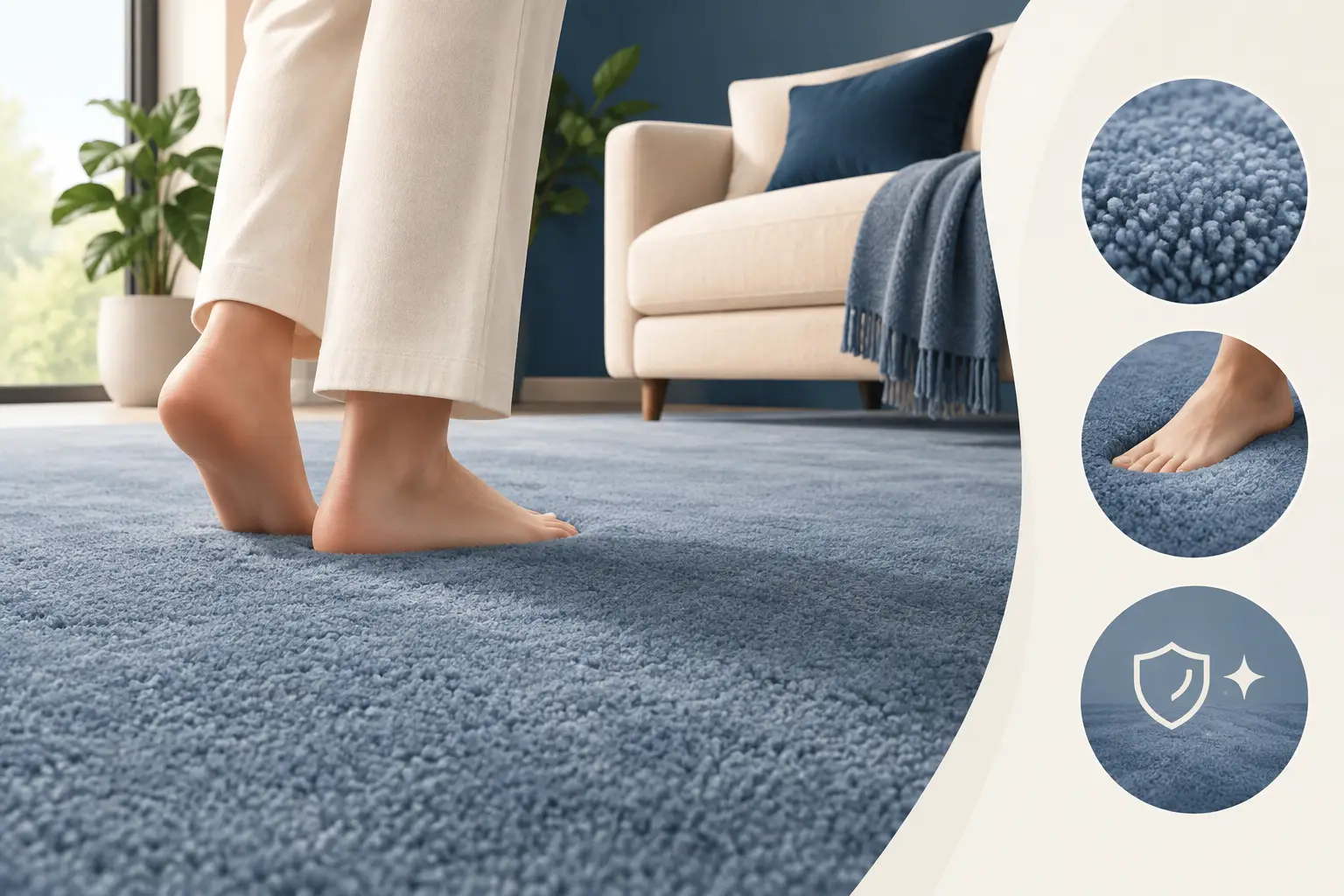
Velvet carpet is made with a cut pile. The yarn ends are sheared to create an even, smooth surface rather than the more textured appearance associated with loop pile or twist carpet. In a deep-pile velvet, the close density of the pile creates a plush, almost furniture-like finish that reflects light differently as the pile is brushed in different directions.
That change in appearance is part of velvet carpet’s character, not a defect. A room may look subtly lighter or darker from one side to the other, and footsteps, vacuum marks and the movement of furniture can leave temporary tracking. On a plain, richly coloured carpet, this is often especially noticeable. It is one of the reasons velvet is so effective in formal bedrooms, dressing rooms, sitting rooms and spaces where visual quality is the priority.
The best results come from specifying a quality pile with sufficient density and selecting a colour that suits the room’s light levels. Sampling is invaluable here. A shade that looks perfect in a showroom or on a screen can show a very different depth beside your curtains, paintwork and natural daylight.
Velvet carpet performance in everyday rooms
There is no single answer to whether velvet is suitable for a busy home. It depends on the quality of the carpet, the fibre used, the level of footfall and the expectations for its appearance. A deep-pile velvet is a luxury floor covering, and it should be selected with that in mind.
In bedrooms and low-to-medium traffic reception rooms, 100% pure new wool velvet offers warmth, resilience and an exceptionally luxurious handle. Wool has natural crimp and spring, helping the pile recover after normal use. It is also naturally insulating, helping a room feel warmer and quieter underfoot.
A hallway, staircase or busy family living room demands a more careful conversation. These areas receive concentrated traffic, often in the same pathways each day. Any cut-pile carpet can show flattening over time where feet repeatedly pass, particularly near doorways, sofas and stairs. A high-quality wool velvet can still be an excellent choice where luxury is the overriding aim, but customers who need a more hard-wearing visual finish may prefer a deep-pile 80/20 wool-nylon twist for these demanding locations.
The distinction is not about one being good and the other poor. It is about choosing the construction for the job. Velvet provides a more uniform, sumptuous surface; twist has a more textured finish that can disguise the effects of day-to-day traffic more readily. A well-planned home can use both, retaining velvet’s elegance where it will be most appreciated and specifying twist where practical wear is a greater concern.
Pile flattening, shading and pressure marks
A common concern is whether velvet carpet will mark. It will show signs of use more readily than a heavily textured carpet, because its surface is smooth and directional. Pressure marks beneath furniture, vacuum lines and temporary tracking are normal features of a dense cut pile.
Over time, some areas may develop shading, where the pile lies in a slightly different direction and catches the light differently. This is a characteristic that can occur in all plain cut-pile carpets, including wool velvet, and is not necessarily related to wear, fading or a manufacturing fault. It is worth considering before choosing a very pale or very dark plain shade in a room with strong side lighting.
Good planning reduces the impact. Positioning rugs in the most heavily used areas, fitting suitable door mats at entrances and occasionally moving lightweight furniture can all help spread use more evenly. More importantly, choosing a carpet width and layout that avoids unnecessary joins gives the floor a quieter, more continuous appearance from the outset.
Fibre choice makes a real difference
The performance of a velvet carpet begins with its fibre. Pure new wool has long been valued for its natural beauty, comfort and ability to recover. It has a depth of colour and softness that are difficult to replicate, making it particularly suited to luxurious plain carpets and bespoke rugs.
Wool does require considered care. Prompt attention to spills, regular vacuuming and professional cleaning when needed will protect its appearance. It is not a material to treat casually in a home with muddy dogs, very young children and constant traffic through one room, unless the owner is happy to maintain it properly and accept the honest signs of a well-used home.
A wool-nylon blend brings a different balance. The wool retains warmth and a natural feel, while nylon contributes additional durability and resilience. This can be a sensible choice for projects where a soft, deep-pile carpet is wanted throughout but certain rooms will work harder than others.
For either option, pile quality matters as much as the fibre label. A dense, well-made carpet supports the pile more effectively than a loose construction. This is where a specialist manufacturer can make a meaningful difference, rather than treating carpet as an off-the-roll commodity.
Underlay and fitting are part of the performance
Even the finest velvet will not give its best over poor preparation. A suitable underlay cushions the pile, improves comfort, assists with insulation and helps protect the carpet from the hard subfloor beneath. It also contributes to the way the carpet feels and recovers under foot.
Professional fitting matters just as much, particularly with a plain velvet surface. The pile direction must be planned consistently, edges must be neatly finished, and seams need to be positioned with care. Where a room can be made in one width, avoiding joins altogether gives a particularly refined result. Joins are sometimes unavoidable in very large or complex rooms, but they should never be an afterthought.
At Colourmatched Custom Carpets, carpets are made to the plan rather than cut down from standard stock. This allows the width, colour and layout to be considered before manufacture, reducing avoidable waste and helping achieve a more polished fitted floor. Measurement, underlay and professional fitting are all central to the finished result, not optional extras to be added later.
Caring for a velvet carpet without overdoing it
Routine care is straightforward, but consistency is better than aggressive cleaning. Vacuum regularly using the setting recommended for your machine and carpet type. A brush action that is too harsh can disturb the pile, while a gentle, appropriate setting removes surface dust before it settles into the fibres.
Attend to spills quickly by blotting rather than rubbing. Use a clean, white absorbent cloth and work carefully from the outside of the spill towards the centre. Avoid soaking the carpet or applying untested household treatments, which can spread a stain or leave a residue that attracts further dirt.
For a valuable wool velvet carpet, periodic professional cleaning is a sensible investment, especially in rooms used daily. It refreshes the pile and removes embedded soil that ordinary vacuuming cannot reach. The timing will depend on the household, but a carpet that is cleaned before it looks visibly dirty will generally retain its original character for longer.
Choosing velvet with confidence
Velvet is not the anonymous, low-maintenance option. It is a deliberate interior choice: softer in appearance, richer underfoot and more responsive to light and movement than a practical textured carpet. That is precisely why it remains so desirable in carefully designed homes.
Before committing, inspect a sample in the intended room, view it at different times of day and be candid about how the space will be used. A free survey and no-obligation discussion can establish the right fibre, pile, colour and layout before anything is made. When velvet is chosen for the right room and fitted properly, its performance is measured not only in years of service, but in the pleasure of walking into a room that still feels exceptional.